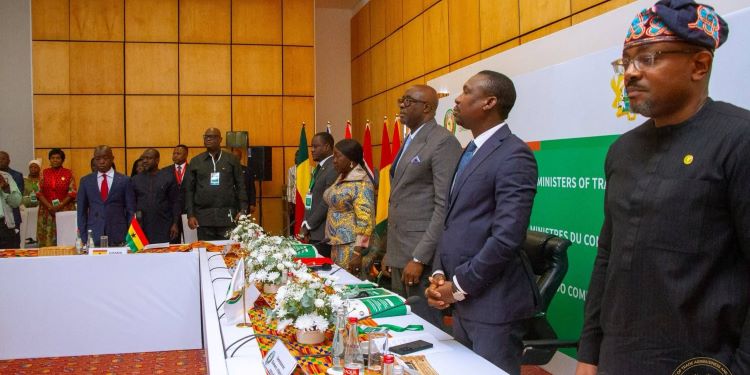
The Ministry of Trade, Agribusiness and Industry has launched a decisive diplomatic push for sub-regional economic integration, calling on member states of the Economic Community of West African States (ECOWAS) to aggressively eliminate cross-border trade bottlenecks and harmonize industrial policies.
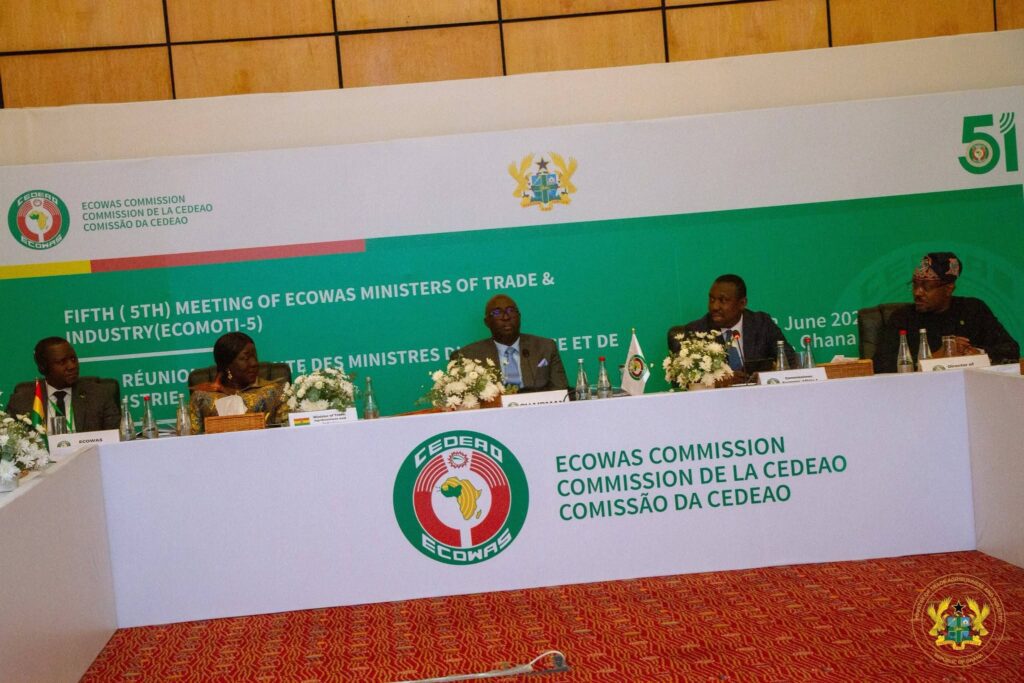
Speaking at the formal opening of the Fifth Joint Meeting of ECOWAS Ministers of Trade and Industry (ECOMOTI-5) in Accra, Ghana’s Minister for Trade, Agribusiness and Industry, Hon. Elizabeth Ofosu-Adjare, warned that the full economic potential of West Africa will remain locked unless member states transition from fragmented domestic strategies to highly synchronized regional value chains.
Delivering the keynote address on behalf of President John Dramani Mahama, the Minister re-anchored Ghana’s position as a central driver of continental economic transformation.
“She noted that as host of the Secretariat of the African Continental Free Trade Area, Ghana recognizes its responsibility to support decisions that promote seamless trade, industrialization, and job creation across the continent, and emphasized that West African citizens expect markets and industries that create opportunities and improve livelihoods”
Ministry of Trade, Agribusiness and Industry
Despite representing a highly lucrative consumer market of more than 350 million people with a combined gross domestic product approaching 700 billion US dollars, intra-regional trade within the ECOWAS bloc remains stagnated below 15 percent. This glaring economic disconnect highlights deep structural vulnerabilities that continue to compromise West Africa’s self-reliance.
Trade Stakeholders at the Accra summit attributed this low performance to an array of persistent infrastructural and institutional failures, including severely fragmented transport networks, unreliable and expensive energy supplies, multiple competing currencies, and unharmonized customs clearing procedures.
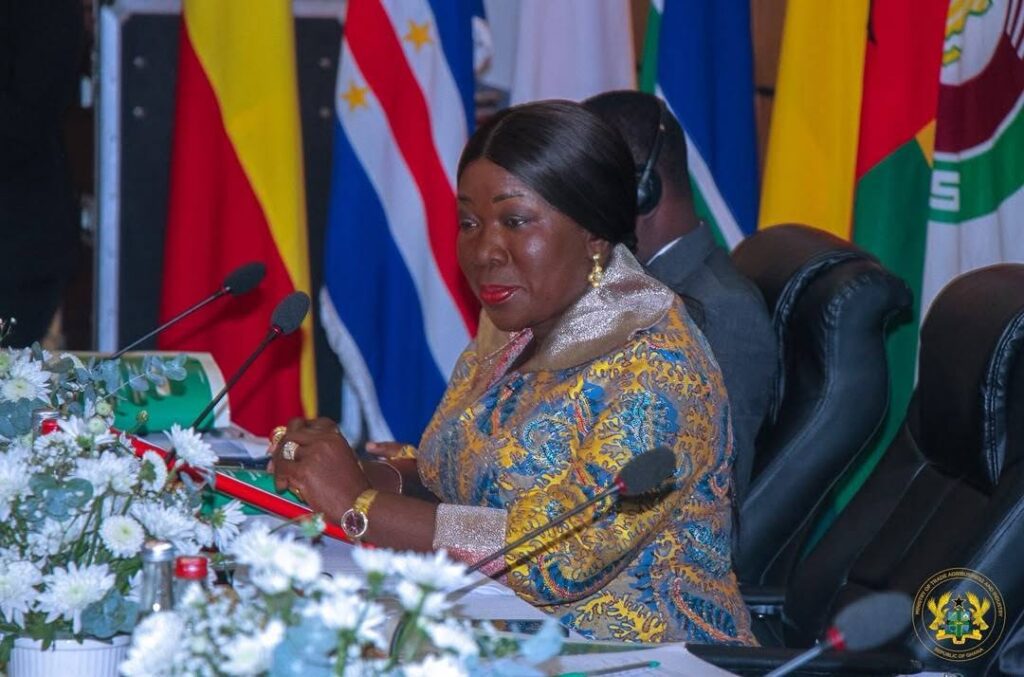
Hon. Ofosu-Adjare noted that West African citizens are no longer content with high-level policy declarations; instead, they demand integrated markets and functional domestic industries that generate actual economic opportunities and elevate rural and urban livelihoods across the sub-region.
A focus of the ECOMOTI-5 deliberations was the severe macroeconomic damage inflicted by non-tariff barriers, which continue to choke cross-border supply chains, underscoring the fact that institutional delays, redundant administrative procedures, multiple checkpoints, and duplicated product certifications act as a hidden tax on regional commerce.
Ministerial assessments disclosed that these artificial obstacles add between 15 and 20 percent to the baseline cost of cross-border trade within West Africa, directly inflating the cost of doing business and raising consumer prices on essential goods.
To counteract these inefficiencies, Hon. Ofosu-Adjare demanded immediate, coordinated legislative and enforcement measures across all ECOWAS borders to eliminate unnecessary transit checkpoints and administrative redundancies that consistently undermine integration efforts.
The summit highlighted that reducing these transaction costs is a prerequisite for making West African enterprises competitive on both continental and global stages, particularly as the region adjusts to evolving international trade frameworks following the Fourteenth WTO Ministerial Conference in Yaoundé.
Ministers agreed that West African nations must speak with a unified voice in international trade negotiations to ensure that multilateral trade commitments do not run counter to the industrial development aspirations of emerging African economies.
WACIP and Cross-Border Value Chains
To transition the sub-region from an exporter of raw commodities to a powerhouse of value-added manufacturing, the conference focused on the execution of the West Africa Common Industrial Policy (WACIP) spanning the years 2026 to 2030.
According to MoTAI, the updated WACIP framework encourages member states to establish interconnected regional value chains, with the primary industrial targets for this integrated manufacturing push including textiles, apparel, and automotive assembly operations.
Under this model, raw material inputs sourced from one West African state can be efficiently processed and assembled in another, maximizing regional input percentages and capital retention.
This industrial transformation is backed by a suite of newly harmonized sub-regional frameworks, including uniform regional food safety standards, the Cross-Border Consumer Protection Regulation, and the overarching ECOWAS Common Investment Market architecture.
Together, these frameworks are to build a predictable, legally secure environment for private capital, ensuring that manufactured goods can circulate freely without facing arbitrary standard rejections at national boundaries.
The political consensus at the Accra summit extended beyond industrial alignment to encompass the strict protection of West Africa’s collective trade boundaries.
The Chair of the 5th ECOWAS Ministers of Trade and Industry, who also serves as Sierra Leone’s Minister for Trade, His Excellency Alpha Ibrahim Sesay, issued a strong warning to delegates regarding the long-term dangers of institutional fragmentation.
He cautioned that individual member states entering into uncoordinated bilateral trade agreements with external global powers could directly compromise the structural integrity of the ECOWAS Customs Union.
This perspective was strongly reinforced by the legislative branch of the regional body, as the Chairperson of the Committee on Trade, Customs and Free Movement of the ECOWAS Parliament, Hon. Amdiatta Diaby, noted that the legal architectures for a completely integrated West African market have already been drafted, meaning that the true deficit is not a lack of policy but a lack of sustained political will.

The parliamentary leadership called for rigid enforcement of existing regional trade agreements to ensure that the economic benefits of open borders are fully realized by local manufacturers, transport operators, and agricultural enterprises.
Invoking the foundational pan-African integration philosophies of Ghana’s first President, Dr. Kwame Nkrumah, the Ghanaian delegation concluded the summit by reminding West African leaders that collective economic sovereignty is the only viable shield against global market volatility.
READ ALSO: Sarkodie and Shatta Wale Set to Drop ‘Everlasting’ Collab Tonight