
The structural integration of regulatory compliance within Ghana’s private sector has taken a significant step forward following a high-level institutional dialogue between the Ghana Standards Authority (GSA) and the Ghana National Chamber of Commerce and Industry (GNCCI)
Aimed at strengthening national quality infrastructure, the executive leadership of the GSA hosted a high level delegation from the Chamber in Accra. Led by the Director-General of the GSA, Professor George Agyei, alongside his complete team of top management officials, the bilateral consultation was established as a crucial collaborative platform.
“The visit provided an opportunity for both institutions to discuss issues of mutual interest, with a strong focus on deepening collaboration to support and enhance the operations of Ghana’s business community. Addressing the delegation, Prof. Agyei commended the Chamber for its active role in promoting standards awareness amongst its members”
Ghana Standards Authority
The engagement focused on streamlining compliance mechanisms, and creating a more supportive, standards-driven operational environment for the domestic business community, especially as local businesses face the challenge of aligning their production lines with both domestic consumer safety regulations and evolving international trade metrics.
Bringing together the state’s primary regulatory watchdog for standards enforcement and the premier advocacy body representing the private commercial ecosystem, the dialogue aimed to remove administrative friction and actively embed strict standardization practices into the daily operations of Ghanaian manufacturers, exporters, and service providers.

The core objective of the working visit centered on developing practical frameworks to support and enhance the capacity of Ghana’s diverse business community, noting that small and medium-sized enterprises (SMEs) as well as large-scale industrial operators view regulatory standards compliance as an expensive administrative hurdle rather than a valuable asset for market growth.
Both institutions confronted this misconception, exploring ways to transform standard certification into a powerful tool for commercial expansion – emphasizing the need for a unified approach to trade facilitation to achieve this transformation.
Professor George Agyei and his management team outlined internal initiatives within the GSA to simplify access to technical regulations, offering the Chamber of Commerce a more direct channel to clear up technical questions regarding product standardization and metrology requirements.
Elevating Standards Awareness
A key highlight of the high-level dialogue was the formal recognition of the private sector’s role in advocating for quality assurance across domestic supply chains as Prof. Agyei praised the Chamber for its consistent, proactive work in educating its corporate members on the importance of standardization.
This institutional endorsement highlighted the growing realization among policy architects: state-enforced regulations are significantly more effective when backed by strong, voluntary private-sector advocacy.

By keeping its members informed about international quality expectations, the Chamber of Commerce helps protect the broader domestic economy from the risks of sub-standard goods, while preparing Ghanaian enterprises to successfully enter competitive foreign markets.
The GSA noted that businesses with high standards awareness are much better equipped to handle strict international border inspections, reducing product rejection rates and protecting the global reputation of Ghanaian exports.
The discussions also detailed the shared responsibility of both organizations to protect the domestic market from unfair trade practices and counterfeit imports. In an increasingly open regional market, maintaining rigorous conformity assessment frameworks is essential to shield local manufacturers from unfair competition against substandard foreign products.
The GSA and the Chamber reviewed ways to streamline domestic testing, inspection, and verification processes, ensuring that local businesses can quickly confirm the quality of their raw materials and finished products without facing long operational delays.
Furthermore, this collaborative effort aims to improve workforce capacity across various industrial sectors, tailoring the GSA’s specialized training and calibration services to match the actual, day-to-day needs of modern factories and agribusinesses.
This responsive regulatory model ensures that national quality infrastructure adapts alongside private sector innovations, encouraging local manufacturing enclaves to adopt high-value production methods that meet strict global benchmarks.
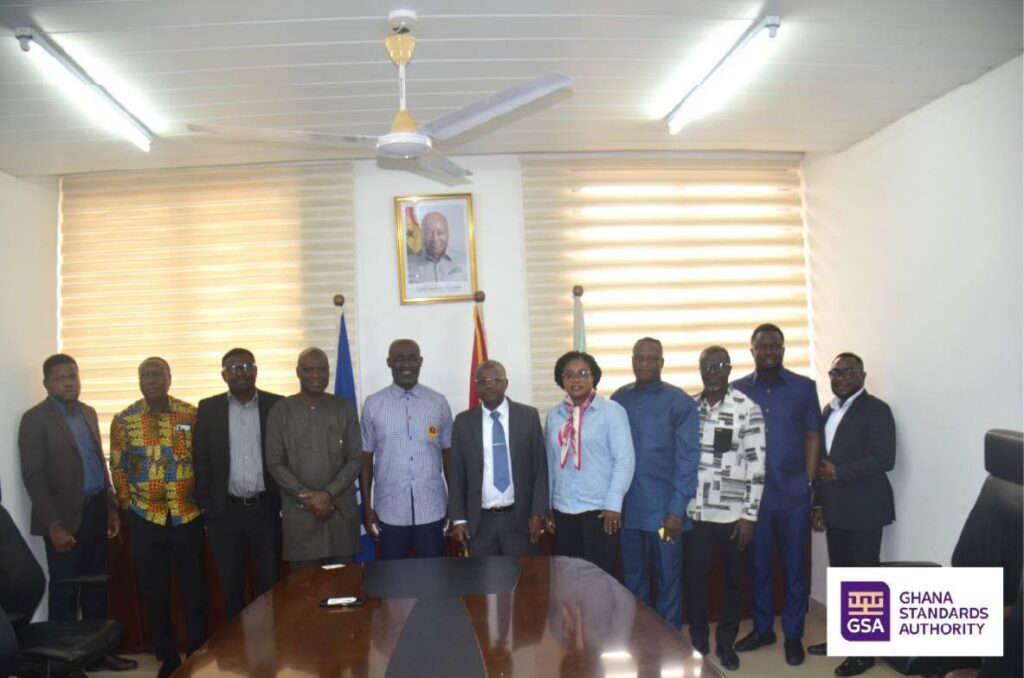
The high-level engagement at the GSA headquarters concluded with a mutual commitment to establish regular, structured consultations between the two organizations, to ensure that future policy changes, tariff adjustments, and standardization updates are developed with clear input from the business community.
The Authority noted that as it continues to expand its technical testing facilities and testing laboratories across the country, its partnership with the Ghana Chamber of Commerce and Industry serves as an effective model for public-private synergy.
READ ALSO: Diddy Hit with New Lawsuit Alleging Sexual Assault of Minor Child Actor