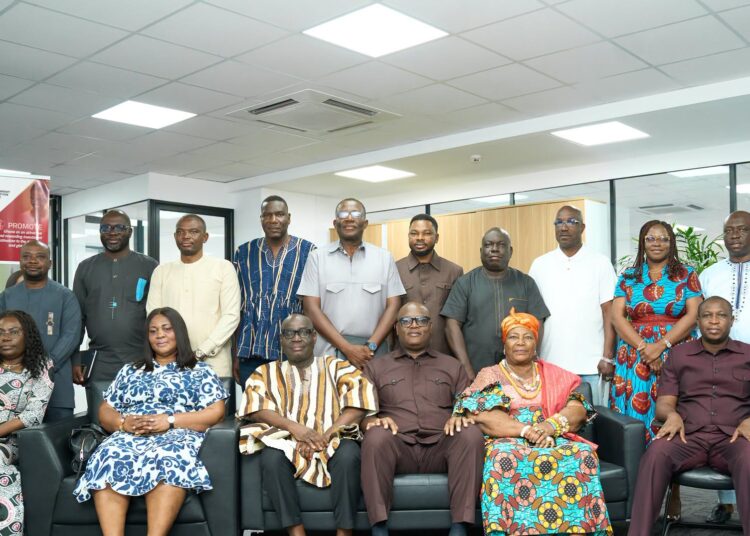
The Parliamentary Select Committee on Trade, Industry and Tourism has reaffirmed its support for the Ghana Investment Promotion Authority’s (GIPA) expanded mandate following a working visit to assess its operations, reforms and investment strategy.
Led by Committee Chairman Hon. Alexander Hottordze Roosevelt, the visit formed part of Parliament’s oversight responsibility to examine GIPA’s role in attracting investment, supporting businesses and advancing job creation under its new legislative framework
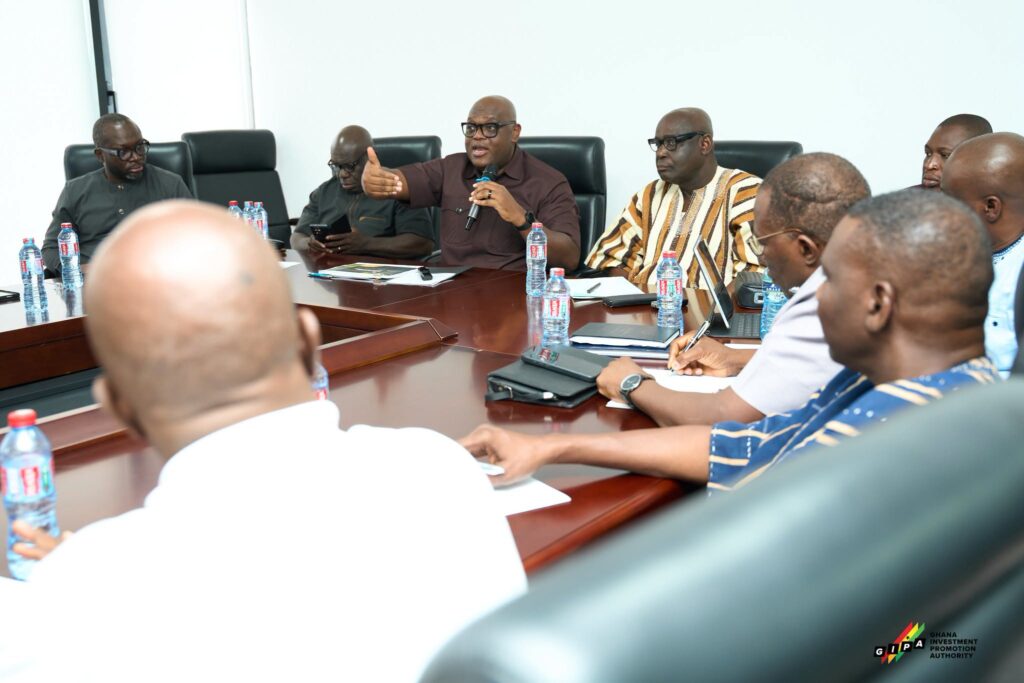
Welcoming the delegation, GIPA Chief Executive Officer, Mr. Simon Madjie, briefed the Committee on the Authority’s expanded mandate under the Ghana Investment Promotion Authority Act, 2026 (Act 1173).
He highlighted key reforms to Ghana’s investment framework, current investment performance, and GIPA’s efforts to strengthen investment promotion across all 16 regions.
The engagement comes just weeks after President John Dramani Mahama assented to Act 1173 in July 2026, formally transforming the Ghana Investment Promotion Centre into the Ghana Investment Promotion Authority and granting it broader powers to regulate, promote, and facilitate investment.

Expanded Mandate and Key Reforms Under Act 1173. Mr. Madjie explained that Act 1173 represents the most comprehensive reform of Ghana’s investment regime in over a decade. The law repeals the Ghana Investment Promotion Centre Act, 2013 (Act 865) and repositions GIPA as a stronger, more investor-friendly institution.
He noted that under the new Act, GIPA’s mandate has been significantly expanded beyond attraction and facilitation of foreign direct investment.
The Authority is also responsible for promoting and supporting outward investment by Ghanaian enterprises into regional and global markets, in line with the African Continental Free Trade Area agenda.
“Act 1173 gives us the tools to do more; we are no longer just focused on bringing investment into Ghana. We are equally mandated to help Ghanaian companies expand, reinvest, and compete internationally.”
GIPA Chief Executive Officer, Mr. Simon Madjie,
Several key Reforms Introduced by the Act
The CEO outlined several key reforms introduced by the Act. These include the removal of blanket minimum capital requirements for most enterprises, the retention of a reduced threshold for trading enterprises, and stronger provisions for investor protection.
The law also aligns Ghana’s investment regime with regional and international standards, including the AfCFTA Protocol on Investment, for which GIPA now serves as the national focal institution.
Mr. Madjie further informed the Committee that GIPA has begun implementing measures to improve the ease of doing business. These include simplified registration processes, fully digitalised services, and faster turnaround times for investors.
He said the Authority is working to provide end-to-end support to investors, from initial inquiry through to expansion and reinvestment. On investment performance, the CEO reported that Ghana continues to attract interest across priority sectors such as manufacturing, agro-processing, ICT, renewable energy, and pharmaceuticals.
He emphasized that the new legal framework is already boosting investor confidence and positioning Ghana as a preferred destination within the AfCFTA market of 1.4 billion people. He also highlighted GIPA’s ongoing decentralization drive, which seeks to strengthen the Authority’s presence in the regions.
According to him, regional offices are being equipped to provide investment advisory services, identify local opportunities, and support small and medium enterprises to access markets and financing. Committee Commends GIPA,
Government Pledges Support for Capacity Building
Hon. Alexander Hottordze Roosevelt, Chairman of the Select Committee, commended GIPA for the critical role it plays in promoting investment and advancing Ghana’s investment climate. He noted that the Authority remains central to the government’s efforts to create jobs, transfer technology, and grow the private sector.
“The work of GIPA is very important to the economic transformation agenda of this country; we are here encouraged by the reforms under Act 1173 and the direction in which the Authority is headed.”
Hon. Alexander Hottordze Roosevelt, Chairman of the Select Committee
The Committee Chairman pledged Parliament’s support towards strengthening GIPA’s capacity to effectively deliver on its expanded mandate. He assured the CEO that the Committee will work with the Ministry of Trade, Industry and Tourism to address some of the institutional challenges raised during the engagement.
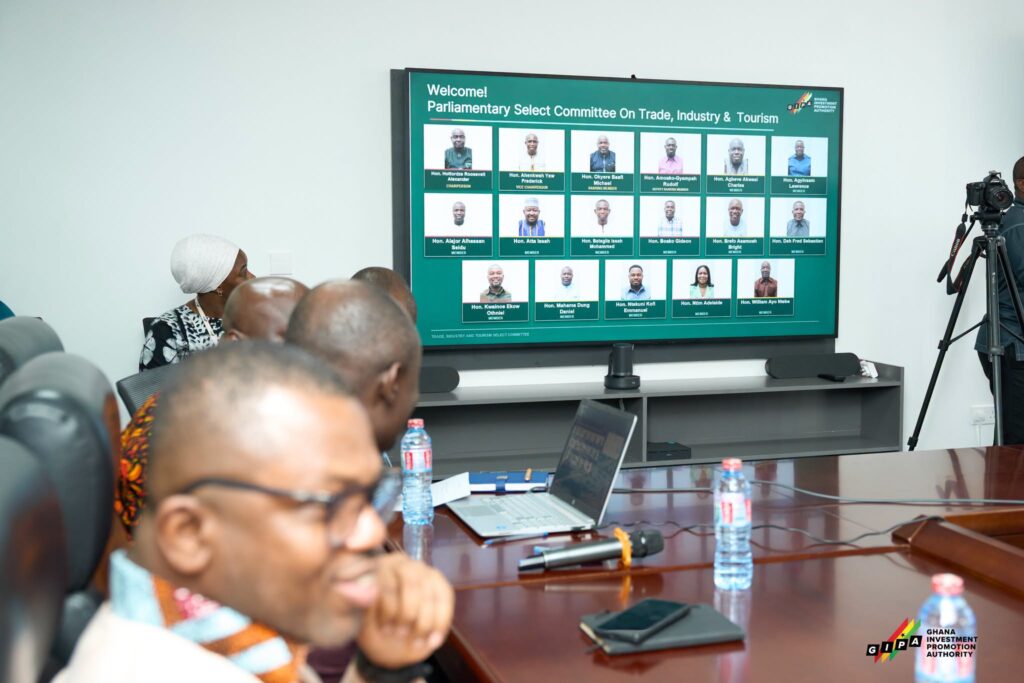
Members of the Committee engaged GIPA’s management on a range of issues, including the Authority’s budgetary needs, staffing, enforcement mechanisms, and collaboration with other agencies such as the Ghana Free Zones Authority, Ghana Enterprises Agency, and the Registrar General’s Department.
In his presentation, Mr. Madjie outlined three priority areas where continued support is needed to enable GIPA to deliver on its mandate effectively. First, he called for measures to strengthen GIPA’s financial sustainability.
He explained that as the Authority takes on additional responsibilities under Act 1173, it requires adequate and predictable funding to invest in technology, human capital, and regional expansion.
Technology Transfer as a Deliberate Component of Investment Promotion
Second, the CEO emphasized the need to advance technology transfer as a deliberate component of investment promotion. He noted that attracting high-quality investment should go beyond capital inflows to include skills development, research and development, and linkages with local suppliers.
“Technology transfer is how we ensure that investment leaves a lasting impact. We want investors who will train our people, share knowledge, and help build local capacity.”
GIPA Chief Executive Officer, Mr. Simon Madjie
Third, Mr. Madjie highlighted the importance of improving enforcement of reserved sectors for Ghanaian participation. Under the new law, certain sectors of the economy are reserved exclusively for Ghanaians or require joint ventures with majority Ghanaian ownership.
He noted that effective enforcement of these provisions is critical to ensuring inclusive growth and protecting local entrepreneurs. The CEO added that GIPA is also focused on improving aftercare services for existing investors.

He said retaining and supporting current investors to reinvest is often more cost-effective than chasing new ones, and that the Authority is building systems to monitor investor satisfaction and address bottlenecks quickly.
He noted that Parliament has a duty to ensure that laws passed are backed with the resources and policies required for implementation. He also urged GIPA to continue engaging the private sector, development partners, and academia to ensure that Ghana’s investment promotion strategy remains responsive to global trends.
As Ghana seeks to leverage AfCFTA and attract quality investment, stakeholders agree that a strong and well-resourced GIPA will be critical. With Parliament’s backing and the new powers granted under Act 1173, the Authority says it is ready to play a leading role in driving the country’s industrialization and economic transformation agenda.
READ ALSO: Mahama Links School Indiscipline to Phones, Backs Under-16 Internet Restriction