UNICEF has warned that millions of vulnerable children in the Democratic Republic of the Congo face growing risks from an Ebola outbreak that is spreading through the country’s east, where years of conflict, displacement, malnutrition and fragile healthcare systems have left communities ill-equipped to cope with another crisis.
The warning comes as health authorities report 676 confirmed Ebola cases and 136 confirmed deaths in the DRC as of 11 June, while neighbouring Uganda has also recorded infections, raising concerns about cross-border transmission in one of Africa’s most fragile regions.
Speaking at a press briefing in Geneva after a recent visit to Bunia, the epicentre of the outbreak in eastern DRC’s Ituri Province, UNICEF Global Lead for Public Health Emergencies and Global Incident Manager for Ebola, Dr. Douglas Noble, presented a sobering picture of the humanitarian conditions facing impacted communities.
According to Noble, the Ebola outbreak is unfolding against a backdrop of chronic instability that has already stretched communities and healthcare services to their limits.
“The context is the first thing that hits you. Eastern DRC has endured decades of conflict. Many children and families have been displaced. Hospitals and clinics are often short on supplies.
“People are constantly on the move fleeing violence, following mining routes, seeking services which makes surveillance and response especially difficult.”
Dr. Douglas Noble
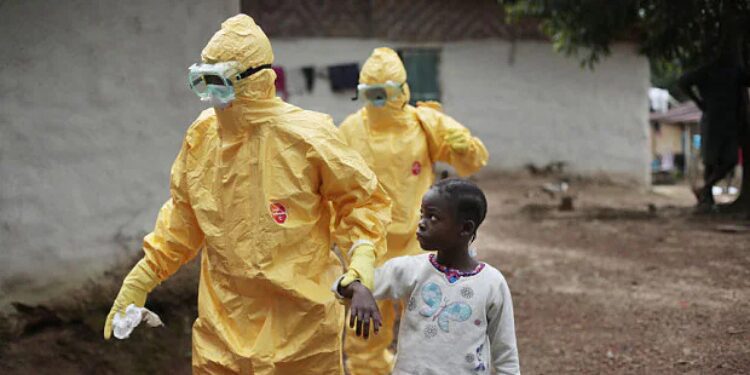
The situation is particularly alarming for children, many of whom were already struggling with severe health challenges long before Ebola emerged.
In Ituri Province, more than half of children under the age of 5 are chronically malnourished, while more than one in five have never received even the first dose of the basic diphtheria, tetanus and pertussis vaccine.
Moreover, during his visit to Rwampara Hospital in Bunia, Noble highlighted that healthcare workers disclosed that “people had stopped coming in for routine care because they were afraid.” “But when families stop seeking care, children miss vaccinations and illnesses go untreated, and the outbreak starts costing lives it never directly touched,” Noble added.
According to UNICEF Global Lead for Public Health Emergencies and Global Incident Manager for Ebola, the challenge is further complicated by the difficulty of identifying Ebola in children. Early symptoms, including fever, diarrhoea, vomiting, fatigue and loss of appetite, closely resemble those of malaria and other common illnesses found throughout the region..
Dr. Douglas Noble further stressed that health professionals are facing an additional obstacle because, “for the Bundibugyo species, there is no approved vaccine or specific treatment beyond supportive care,” even though vaccine development programmes are currently being fast-tracked as part of an intensified global response to control a rare and highly lethal strain of Ebola.
Misinformation, Funding Gaps and Cross-Border Spread Raise New Concerns
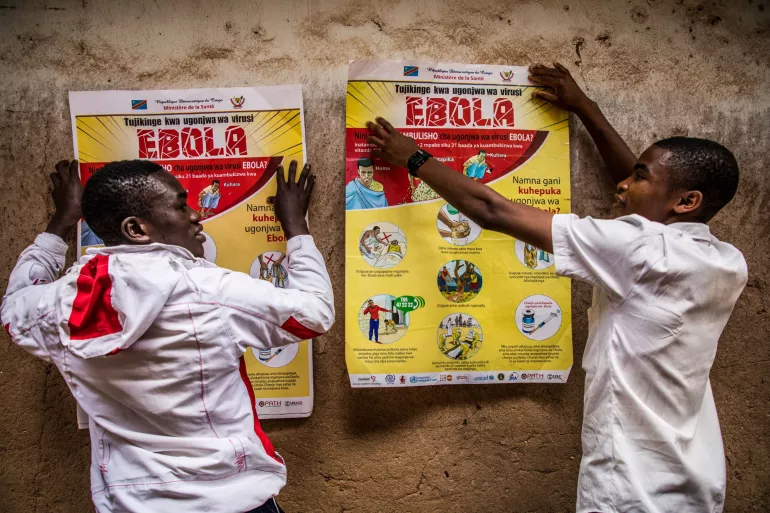
Moreover, UNICEF indicated that one of the greatest threats to controlling the outbreak may be misinformation and mistrust within affected communities.
According to a recent UNICEF U-Report survey involving 50,000 young people across the DRC, two-thirds of respondents were unaware of how Ebola spreads or how they could protect themselves.
Approximately one in five indicated they did not believe the disease was real, while nearly one-third indicated they would not welcome an Ebola survivor back into their community.
The findings illustrate the scale of the challenge facing health officials trying to build confidence in public health interventions.
“When in one of the hospitals, I was told there was a body in a nearby displacement camp, and the community were not yet ready to give it up.
“Dialogue between the health professionals and community were underway, but it was a reminder that building shared understanding and trust is essential.”
Dr. Douglas Noble
To strengthen the response, UNICEF has launched a six-month intervention plan targeting 3.7 million people.
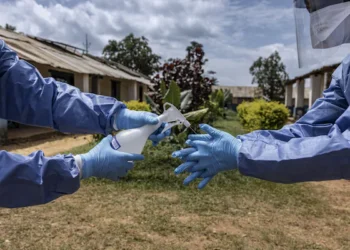
The agency has already delivered 150 metric tonnes of emergency supplies to Bunia, trained and deployed more than 1,600 community health workers and mobilisers, and established 24 decontamination teams that have reached more than 160,000 households.
“We are also establishing nurseries in facilities close to Ebola Treatment Centres, these are safe spaces where children can be cared for while their parents are treated. Our first crèche opens in Bunia in the coming days.”
Meanwhile, concerns are growing over regional transmission after Uganda confirmed 19 Ebola cases and two deaths. Health officials warn that the porous 800-kilometre border shared by Uganda and the DRC remains a significant vulnerability.
UNICEF is supporting preparedness and response activities across 37 high-risk districts in Uganda, including border communities, refugee-hosting areas and the greater Kampala region.
Despite the challenges, Noble stressed that there is reason for optimism. Both the DRC and Uganda have successfully contained Ebola outbreaks in the past, and health authorities believe the current outbreak can also be controlled if sufficient resources and community cooperation are secured.
READ ALSO: Reggie Osei Unveils Tracklist For New Asakaa Project ‘Guy Guy Mmienu’