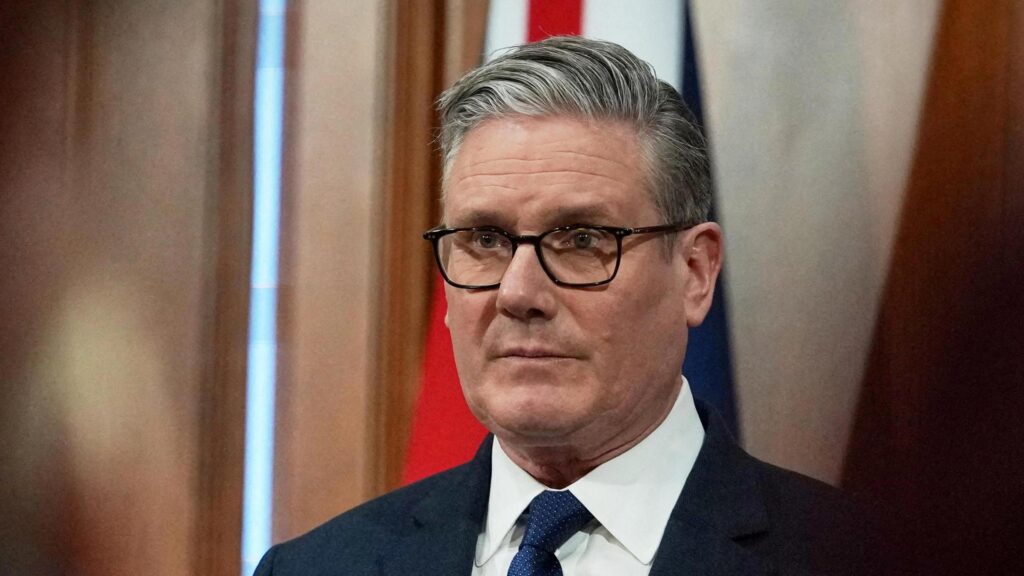
UK Prime Minister Keir Starmer has insisted he will not “walk away” from office or allow political instability to plunge United Kingdom into “chaos,” as his government faces mounting scrutiny over defence spending commitments, ministerial resignations and internal divisions over national security priorities.
In an interview, Starmer outlined his views on the future course of government policy, including defence, welfare reform, and budgetary planning, and also defended his leadership.
The remarks come at a politically sensitive time, following the resignations of Armed Forces Minister Al Carns and Defence Secretary John Healey, which has heightened debate over the legality and proper funding of the government’s defence spending plan and Starmer’s leadership.
According to Starmer, leadership is a matter of responsibility rather than personal preference.
“I am not going to walk away.I don’t think we should plunge the country into the chaos of a leadership election. In the last few weeks others have made their own case.
“I have been concentrating on the job I was elected to do, which is to deliver for this country. This is about a sense of service and duty. It’s not vanity. It’s not stubbornness. It’s duty.”
Keir Starmer
Starmer also responded to claims that his government had lost credibility as a result of the welfare reform controversy of the previous year.
In response, he maintained that reforms were already in place and cited initiatives like the “right to try” program, the youth guarantee, and modifications to Universal Credit that are meant to promote employment and lessen long-term reliance on welfare.
On public spending, Starmer confirmed that departments across government were being required to contribute to an expanded defence budget, while stressing that this would not come at the expense of day-to-day public services.
“Yes, everybody is contributing to this. Collective effort, if you like, towards a really important priority of the government.”
Keir Starmer
However, questions have intensified over the credibility of the government’s long-term defence funding plans.
Critics, including former Defence Secretary John Healey, have reportedly described aspects of the numbers as “fanciful,” raising doubts about whether the UK can realistically meet its stated ambitions of increasing defence spending to 3.5% of GDP by the middle of the next decade.
Starmer acknowledged the challenge, describing the financial environment as difficult and confirming that resources were being reallocated from other departments outside the formal spending review process.
“It is very important that commitments are properly funded. I have taken the decision to reallocate from other departments that’s not an easy thing to do, but it is the right thing to do.”
Keir Starmer
He also reiterated that defence would remain central to government policy going forward, stating it would be the “number one priority at every spending review.”
This comes against a broader backdrop of rising global insecurity and increasing pressure on NATO members to boost military spending.
UK has already committed to raising defence spending to 2.5% of GDP by 2027, with a longer-term ambition of reaching 3% in the next parliament and a NATO-aligned target of 3.5% by 2035.
Despite these commitments, internal disagreements have emerged over funding mechanisms, leading to political friction within government ranks and contributing to the recent resignations.
Opposition Questions Credibility as Political Pressure Mounts on Starmer
The fallout from the defence dispute has quickly become a focal point for opposition parties, who argue that the government’s strategy lacks clarity and fiscal realism.
Conservative figures have been among the most critical. Shadow housing Secretary James Cleverly indicated that, the crisis raises serious doubts about the government’s credibility on defence and international commitments.
“I like Dan Jarvis but I cannot see how he speaks with allies at Nato next week with any credibility.”
James Cleverly
He added that, “Healey and Carns said publicly what everyone was saying privately, Starmer and Reeves don’t take defence seriously.”
Meanwhile, Reform UK leader Nigel Farage accused the government of failing to address national security concerns, claiming that senior resignations reflected deeper policy disagreements over defence investment.
From the Liberal Democrats, Sir Ed Davey hasdescribed the situation as a “wake-up call,” warning that ongoing political instability could undermine the UK’s security posture at a time of growing international tension.
Moreover, Green Party leader Zack Polanski, however, took a broader view of national security, arguing that resilience also depended on strong public services and investment beyond traditional military spending.
Starmer’s appointment of Dan Jarvis as the new Defence Secretary has been presented by the government as an effort to stabilise the ministry following the resignations.
Dan Jarvis on the other hand, has described defence as “the first duty of government” and pledged to serve with “professionalism, courage, and extraordinary skill.”
Despite these assurances, the political instability shows little sign of easing. Questions remain over whether the government’s defence investment plan is financially sustainable.
READ ALSO: Stonebwoy to Perform at UniMAC Campus with Explosive WatsUp Performance