

The transition from primary agricultural cultivation to industrialized value addition remains a critical macroeconomic milestone for Ghana. However, a major structural disconnect between laboratory research and commercial application continues to stall progress within the domestic agro-processing sector.
The Council for Scientific and Industrial Research – Food Research Institute (CSIR-FRI) has issued a direct policy warning regarding this persistent mismatch, noting that while state-funded research bodies have successfully engineered and validated an array of food processing technologies to modernize local agriculture, small and medium enterprises (SMEs) lack the capital infrastructure required to deploy these innovations.
In a recent assessment of the sector’s operational limitations, the Director of the CSIR-Food Research Institute, Prof. Charles Tortoe, emphasized that the state research apparatus has fully completed its phase of technology generation.
“At the end of the food value addition, we have generated the technologies. These technologies are available. SMEs must take up these technologies. The primary impediment is not a deficit of domestic intellectual property, but rather an acute financing gap that prevents localized factories from purchasing high-cost commercial machinery”
Prof. Charles Tortoe, Director of the CSIR-Food Research Institute
For Prof. Tortoe, the inability of domestic food processing firms to absorb state-developed scientific breakthroughs highlights an ongoing paradox within Ghana’s industrial landscape. For decades, institutions like the CSIR-FRI have worked to create sustainable, market-oriented solutions for post-harvest preservation, nutrient enrichment, and crop processing.
These research efforts have produced optimized protocols for turning perishable staples – such as roots, tubers, legumes, and local grains – into shelf-stable, high-value commercial items. Yet, the broader retail market has not seen a widespread rollout of these products because local small-scale operators are financially locked out of the manufacturing tier.

Now, with the fundamental task of developing processing methods, testing shelf-life stabilities, and establishing food safety compliance baselines executed, the bottleneck has shifted entirely to the private sector’s implementation phase, where small-scale businesses find themselves struggling to build mechanized assembly lines.
This dynamic forces a troubling economic reality where valuable scientific data remains underutilized. While large international conglomerates possess the capital to establish heavily automated processing facilities, local SMEs – which form the backbone of Ghana’s domestic employment and rural economy – remain dependent on inefficient manual methods.
According to the CSIR-FRI Director, this stagnation severely restricts the market competitiveness of locally manufactured consumer goods, keeping the nation dependent on imported processed foods while raw domestic harvests go to waste.
High Mechanical Costs
He stressed that effective industrial food processing requires absolute control over moisture content, microbiological activity, and packaging standards. This control cannot be achieved through traditional, open-air sun-drying techniques, which leave crops exposed to unpredictable weather changes and environmental contaminants.
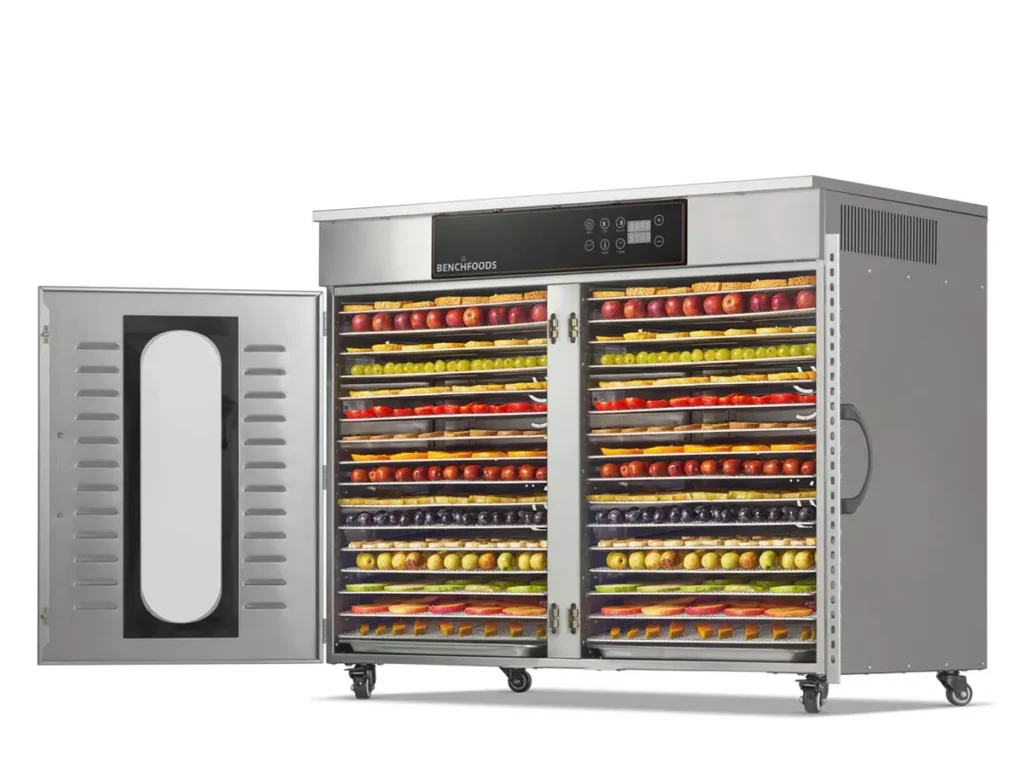
Modern processing demands specialized hardware, particularly industrial dehydrators, mechanized mills, automated sealing systems, and stainless steel holding tanks, to preserve the nutritional profile of agricultural raw materials while ensuring compliance with international phytosanitary standards.
Prof. Tortoe pointed out that these essential tools remain financially out of reach for the typical Ghanaian agribusiness entrepreneur, citing that the acquisition of a single commercial-grade dehydrator demands an intense capital outlay that easily exhausts the liquid reserves of an early-stage company.

With local commercial banks offering high interest rates on credit, asset financing becomes an unrealistic option for most small business owners. Consequently, many entrepreneurs are forced to abandon their modernization plans entirely, as the mechanical reality of the sector dictates that sub-standard or makeshift alternatives cannot replace specialized industrial machinery.
Without precise thermal regulation, consistent airflow velocities, and food-safe contact surfaces, processors cannot guarantee uniform product batches. This operational constraint means that a business’s capacity to scale up production volumes is directly tied to the acquisition of these heavy machines.
The broader macroeconomic implications of this financing deficit extend far beyond individual factory floors, as Ghana consistently loses a substantial percentage of its annual horticultural and root crop harvests to post-harvest spoilage.
This loss occurs because raw seasonal yields flood local markets simultaneously during peak harvest periods, causing prices to crash and leaving excess produce to rot in fields due to inadequate storage and processing capacity.
If local SMEs were properly equipped with industrial dehydration and preservation machinery, they could act as economic shock absorbers, purchasing surplus crops from rural farmers and converting them into high-margin powders, flours, and dried consumer goods.
Prof. Tortoe called for structured assistance programs specifically designed to lower the entry barriers for agro-processors, as addressing this equipment bottleneck requires targeted state interventions and creative financial engineering.
Such interventions could include import duty exemptions on essential food manufacturing machinery, state-backed equipment leasing facilities, and the establishment of dedicated industrial parks where multiple small businesses can share access to centralized processing hardware.
Only by shifting the policy focus from basic agricultural inputs toward mid-stream manufacturing equipment can the government protect rural livelihoods, reduce reliance on foreign food imports, and position Ghana’s agribusiness sector as a highly competitive force in regional trade.
READ ALSO: Stonebwoy to Perform at UniMAC Campus with Explosive WatsUp Performance