The Republic of Ghana and The Gambia are set to deepen their educational cooperation following a high-level policy exchange initiative on June 16, 2026.
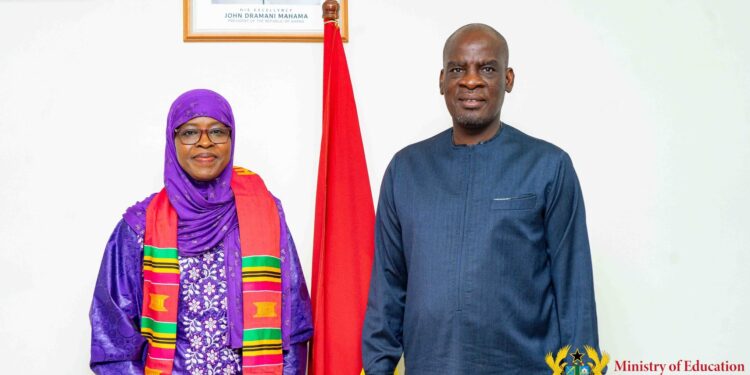
The study visit, led by The Gambia’s Minister for Basic and Secondary Education, Hon. Dr. Habibatou Drammeh, focused on Ghana’s successes in education governance, workforce management, digital transformation, and accountability systems, with both nations expressing optimism for a stronger partnership.
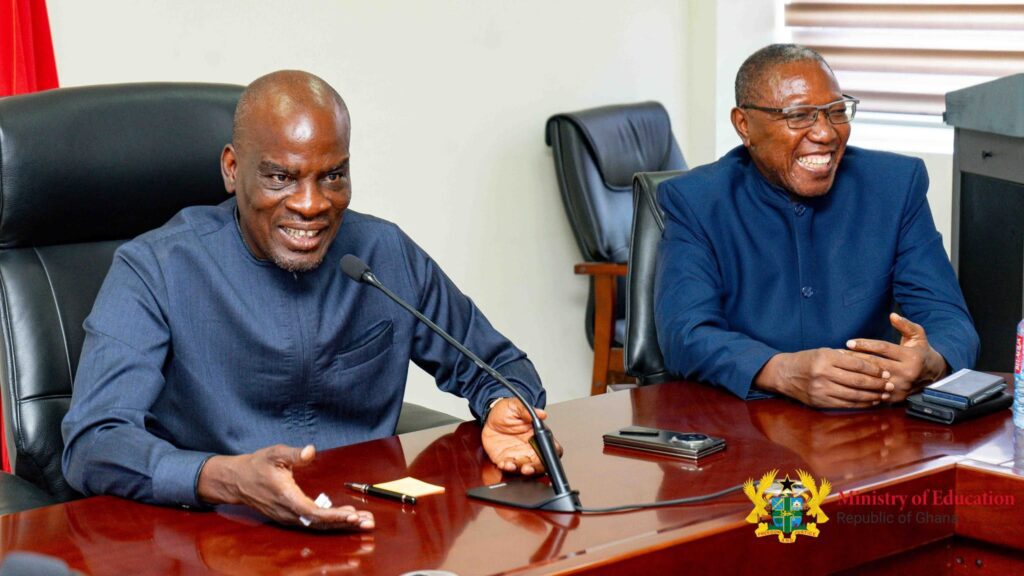
Welcoming the delegation, Ghana’s Minister for Education, Honourable Haruna Iddrisu, expressed Ghana’s commitment to providing free education from kindergarten through tertiary level and outlined the country’s education governance structure.
He explained that the Ministry of Education provides policy direction while the Ghana Education Service (GES) oversees the implementation of basic and secondary education programmes nationwide.
Hon. Iddrisu mentioned that Ghana’s renewed focus is now on foundational education; strong literacy and numeracy skills at the basic level remain essential to the success of the country’s education system .
Ghana’s Commitment Foundational Education
The Minister said, “No education system can succeed if its foundation is weak“, adding that the government is investing in improving learning outcomes, teacher quality, and access to quality basic education across the country.
He further disclosed that Ghana is reviewing its curriculum to equip learners with skills needed for the future economy. He said the revised curriculum will introduce Artificial Intelligence (AI), coding, robotics, financial literacy and collaborative learning into schools as part of efforts to prepare students for emerging global opportunities.
The Gambian delegation also held engagements with officials of the Ghana Education Service, where they were introduced to several education management and accountability systems that support policy implementation and service delivery.
Among the initiatives that attracted significant attention was Ghana’s School Report Card programme, alongside its digital education management systems that monitor teacher attendance, school performance, infrastructure conditions and learning outcomes.
He described these digital platforms as effective tools for strengthening accountability, improving transparency and supporting evidence-based decision-making within the education sector.
The Gambia T Learn from Ghana
Also speaking at the forum was Dr. Habibatou Drammeh, The Gambia Minister for Basic and Secondary Education. He indicated that The Gambia is currently implementing a World Bank-supported Public Administration Modernization for Citizen-Centric Service Delivery Project and considers Ghana’s experience valuable to its ongoing reforms.
She explained that lessons from Ghana’s education governance model, particularly in digital transformation and performance monitoring, would help inform similar initiatives in The Gambia.

Dr. Drammeh proposed the establishment of a Memorandum of Understanding (MoU) between the Ministries of Education of Ghana and Gambia to institutionalize cooperation between the two countries.
According to her, such an agreement would facilitate continuous exchanges of best practices, technical expertise and policy innovations while strengthening collaboration in education planning and implementation.
“The establishment of a Memorandum of Understanding will create opportunities for continuous exchange of best practices, technical expertise and policy innovations between our two countries,”.
Dr. Habibatou Drammeh, The Gambia Minister for Basic and Secondary Education
The visit reflects growing cooperation among African countries seeking practical solutions to improve education delivery through knowledge sharing and peer learning.
Education experts have increasingly advocated stronger collaboration among African governments, arguing that countries facing similar development challenges can benefit from exchanging successful policies and innovations rather than relying solely on external models.
Ghana’s education sector has undergone significant reforms in recent years, including the implementation of Free Senior High School, curriculum reforms at the pre-tertiary level, expansion of Technical and Vocational Education and Training (TVET), digitalisation of education management systems and programmes aimed at improving foundational literacy and numeracy.
The Ghana Education Service has also expanded the use of digital data systems to support planning, monitor school performance and improve accountability across the country’s basic and secondary education institutions.
Similarly, The Gambia has embarked on reforms to modernise public administration and improve service delivery, with support from development partners including the World Bank.
Commitment to Deepening Institutional Collaboration
Closing the forum both countries expressed confidence that the study visit have deepen institutional collaboration and create opportunities for regular exchanges between education professionals, policymakers and technical experts.

The engagement is also expected to strengthen cooperation in areas such as teacher development, education management, digital innovation, policy research and curriculum development.
As both nations continue implementing reforms to improve learning outcomes, the partnership is expected to promote the exchange of practical solutions that address common educational challenges while supporting the achievement of quality, inclusive and equitable education.
The visit concluded with both Ghana and Gambia reaffirming their commitment to sustained collaboration, expressing optimism that the engagement would mark the beginning of a stronger partnership dedicated to improving education systems and advancing quality learning opportunities for children and young people in both countries.
READ ALSO: Sierra Leone First Lady Denies Supporting Female Genital Mutilation