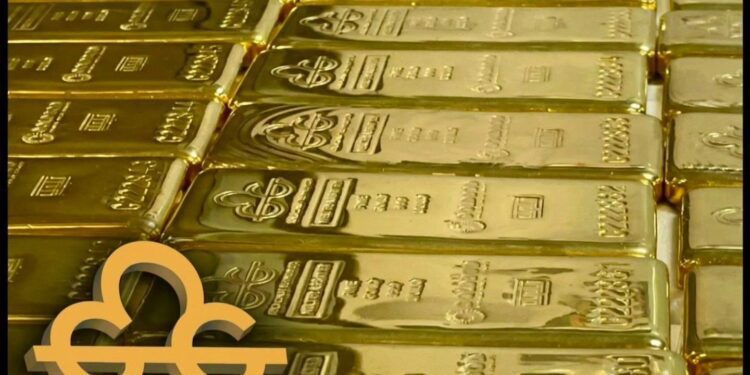
Gold successfully held onto its recent upward momentum, remaining anchored near the $4,315 per ounce mark after US President Donald Trump announced that the strategic Strait of Hormuz could reopen as early as Friday.
This stabilization in bullion valuation directly followed a substantial 2.2% surge during the preceding trading session, which was triggered by the unexpected joint declaration from Washington and Tehran detailing an interim peace agreement designed to systematically dismantle the ongoing war and lift respective maritime blockades across the volatile region.
It is highly anticipated that the breakthrough will alleviate the acute energy shortages and severe inflationary pressures that have disrupted global financial systems for months.
“Both gold and silver remain underpriced in comparison with their reactions during past Middle East conflicts. If the peace deal holds, traders are expected to ease off selling and revert to treating gold as a haven and an alternative to US assets, including the dollar.”
Nicky Shiels, head of research and metals strategy at trader and refiner MKS PAMP SA
Market participants are closely observing the details of this diplomatic breakthrough as it promises to fundamentally reshape international trade and monetary policies. While the initial market response reflected widespread relief, a visible undercurrent of caution persists across global trading floors.



The skepticism stems primarily from the fact that key US allies have expressed a far less optimistic timeline regarding how rapidly the flows of crude oil, liquefied natural gas, and other vital commodities can safely resume transit through the highly militarized waterway.
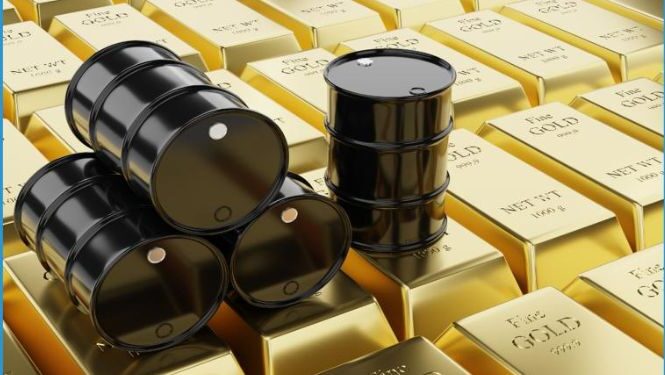
Mirroring this geopolitical friction, oil markets maintained their losses with West Texas Intermediate crude trading near $81 a barrel after a sharp 5% plummet on Monday, while Brent crude settled near $83.
This price action solidifies a notable trend observed throughout the conflict, where gold has plummeted roughly 18% since the US and Israel launched coordinated airstrikes on Iran in late February, moving in an inverse relationship to crude oil due to aggressive central bank rate hikes intended to curb energy-driven inflation.
Geopolitical De-escalation and Global Market Re-alignment
Precious metals traders are shifting their primary focus toward upcoming central bank decisions, most notably the impending Federal Reserve meeting which will be convened under the leadership of the newly appointed Chair, Kevin Warsh, for the very first time.
Financial institutions and market strategists are currently aligning their expectations toward a potential interest rate hike later this year, a macroeconomic variable that traditionally presents strong headwinds for non-yielding assets like bullion.
However, the potential normalization of supply lines through the Strait of Hormuz could dramatically alter the Fed’s hawkish trajectory if energy-driven inflationary pressures begin to subside globally.

The unwinding of the geopolitical risk premium has already sent shockwaves through the energy sector, dragging oil down and forcing a reassessment of classic defensive positions.
In contrast to historical patterns where Middle East wars send precious metals soaring to record heights, this specific conflict saw gold suppressed by the sheer weight of global monetary tightening. High interest rates increased the opportunity cost of holding physical bullion, prompting large-scale liquidations.
As diplomatic resolutions enter the framework, the sudden stabilization of gold at $4,315 indicates that the market is actively digesting a structural transition back to baseline economic fundamentals.
Sub-Saharan Resource Pipelines and Sovereignty Risks
The stabilization of gold gains and the subsequent easing of global energy shocks carry profound structural implications for the African continent’s resource development sector.
Sub-Saharan Africa, which contains massive gold reserves across nations like Ghana, South Africa, Mali, and Burkina Faso, often experiences intense economic volatility during global transitions of financial resources.

When gold prices sustain elevated thresholds like $4,315 per ounce, African state treasuries experience boosted fiscal revenues via mineral royalties and corporate taxes, which can directly subsidize large-scale infrastructure and domestic energy initiatives.
However, this dynamic also introduces critical macroeconomic challenges, particularly the threat of “Dutch Disease,” where a booming mineral export sector artificially inflates the local currency’s value, consequently making non-resource sectors like manufacturing and agriculture less competitive globally.
Furthermore, prolonged periods of high gold valuation frequently intensify local regulatory scrutiny and trigger host-government demands for renegotiating fiscal stabilization clauses with transnational mining corporations.
This shifting landscape can inadvertently create a highly complex investment climate, forcing institutional investors to thoroughly gather and evaluate extensive political risk data before deploying capital into long-term African greenfield exploration projects (Ofori, 2020).
Capital Inflows and Greenfield Exploration Dynamics
A stabilizing global gold market paired with cooling energy prices is poised to significantly reshape foreign direct investment (FDI) trends across African mining jurisdictions.
Lower global oil prices directly reduce the operational cost of mineral extraction, as heavy machinery, transport logistics, and remote mine-site power generation are all heavily dependent on diesel fuel.

This margin expansion enhances the commercial viability of marginal deposits and deep-underground reserves across the continent, potentially reversing the weak correlations historically observed between raw FDI inflows and real GDP growth in developing host nations .
With the threat of an expansive global war receding due to the interim US-Iran agreement, speculative capital is anticipated to migrate away from short-term defensive liquidities and back into high-reward international mining equities.
African nations that have proactively established transparent mining codes, digitized their geological registries, and secured reliable energy grids stand to capture the lion’s share of this reallocated exploration capital.
Ultimately, whether these sustained gold gains translate into genuine, long-term human development and sustainable economic growth across the continent depends heavily on the capacity of domestic institutions to channel mining windfalls into comprehensive economic diversification.
READ ALSO: Government Distributes 40, 000 Fertilizers and Advanced Drones to Farmers