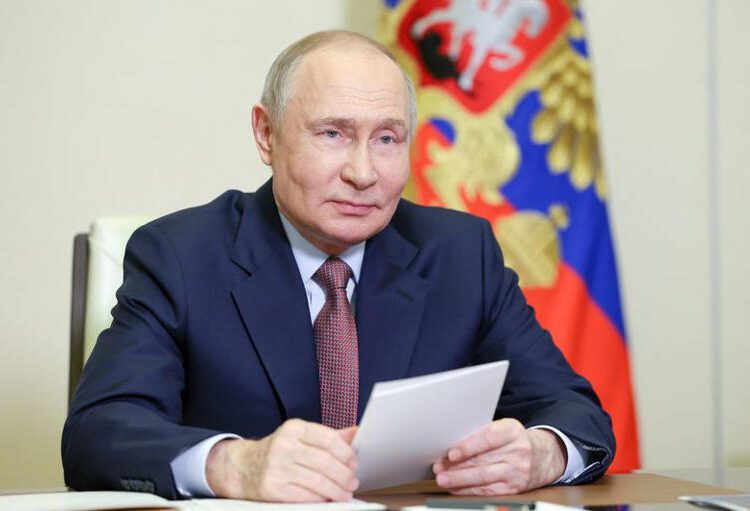
Russian President Vladimir Putin has held a meeting with Philippine President Ferdinand Marcos Jr.
This comes as Putin arrived in Kazan, where a two-day anniversary Russia-ASEAN Summit kicks off today.
The meeting with the Philippine President is the first of many bilateral contacts planned by the Russian leader on the sidelines of the Russia-ASEAN summit in Kazan.
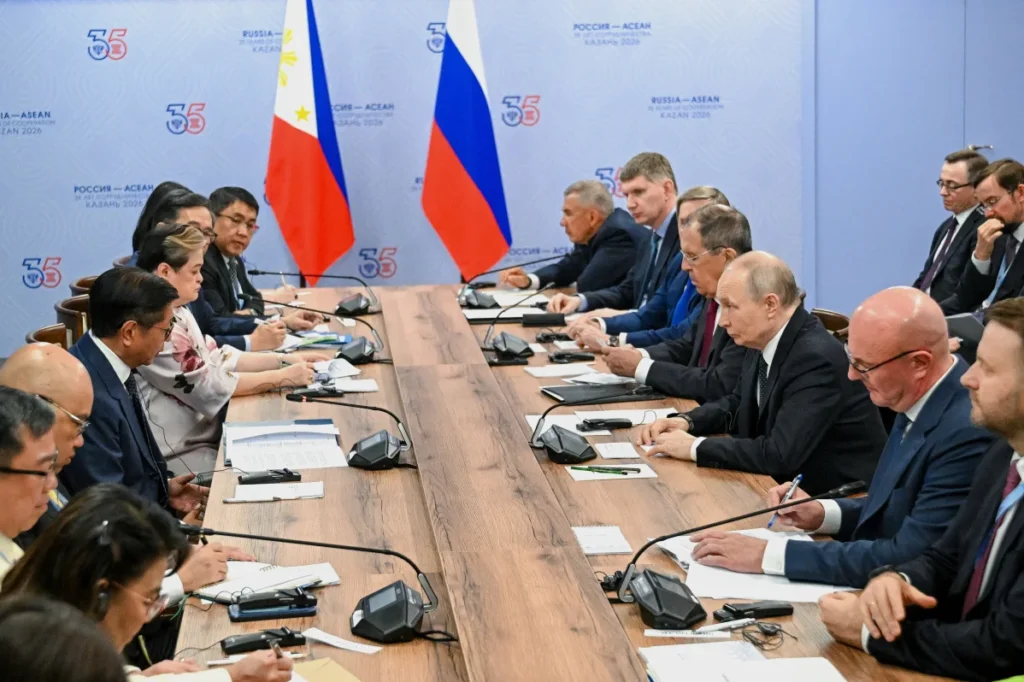
Marcos Jr. is visiting Russia for the first time.The Philippines heads the Association of Southeast Asian Nations (ASEAN) in 2026. Putin and Marcos Jr. are chairing the summit.
The Kremlin called the Philippines a crucial partner in the Asia-Pacific region and a respected ASEAN member. Trade and economic relations and humanitarian ties between Moscow and Manila are developing. There is a mutual interest in the development of tourist exchanges and Russians enjoy a 30-day visa-free stay in the Philippines.
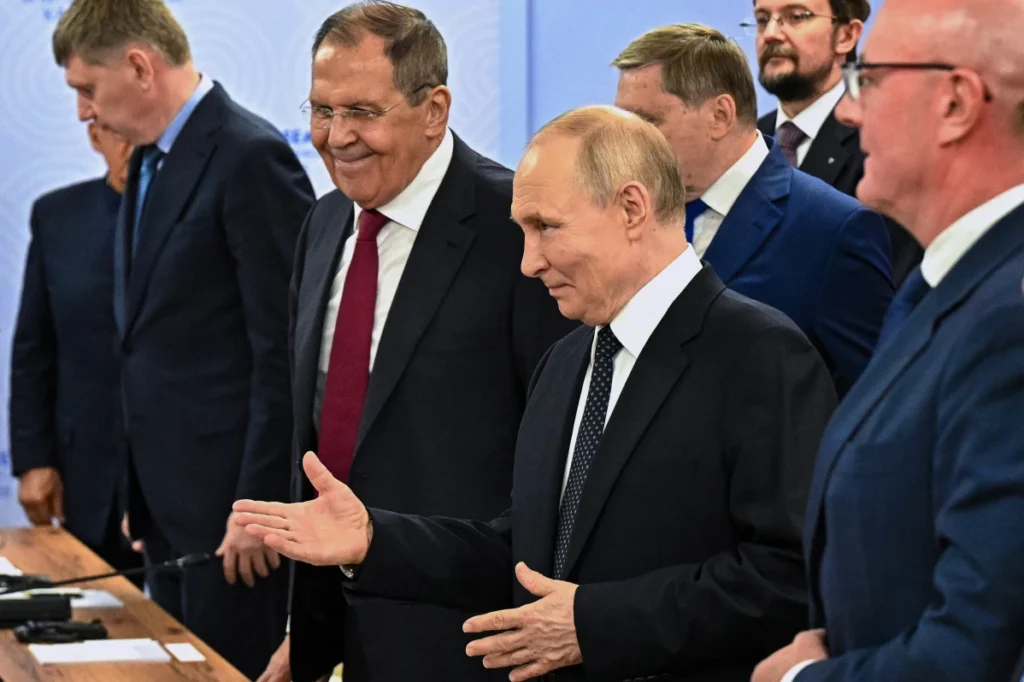
Besides multilateral discussions, Putin is scheduled to hold a number of bilateral meetings. Some of them will take place today, including meetings with Prime Minister of Malaysia Anwar Ibrahim and Sultan of Brunei Hassanal Bolkiah.
Kazan Hosts Russia-ASEAN Summit
The Russia-ASEAN summit will be held in Kazan, today and tomorrow,marking the 35th anniversary of relations between Russia and the Association of Southeast Asian Nations.
Representatives of all 11 members of the Association of Southeast Asian Nations (ASEAN) are participating in the event; Brunei, East Timor, Vietnam, Laos, Cambodia, Indonesia, Malaysia, Singapore, Myanmar, Thailand and the Philippines.
The summit’s agenda is packed with sessions where crucial documents will be adopted, as well as bilateral meetings. Several documents are expected to be signed at the event, including the Kazan Declaration and the Russia-ASEAN Comprehensive Plan of Action. The parties will need to define their approaches to international issues and the direction of their partnership through 2030.
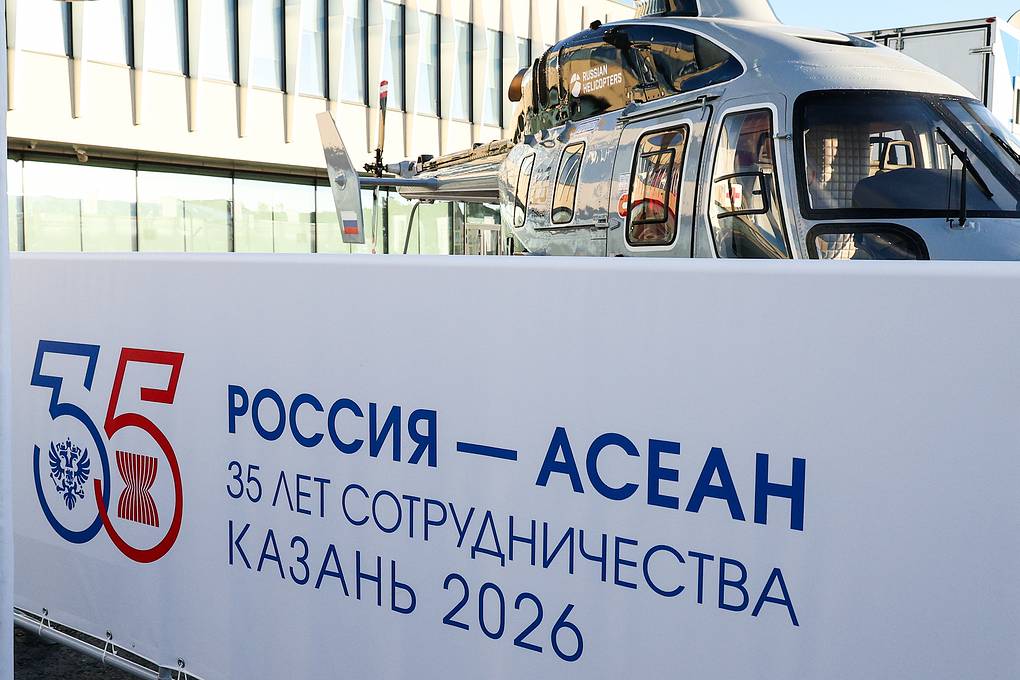
According to Kremlin Foreign Affairs Adviser Yuri Ushakov, the agenda includes exchanging views on global and regional issues and reviewing efforts to develop Russia-ASEAN ties. He emphasized that the participants are set to underline their adherence to “forming a just and democratic multipolar world order based on the principles of international law and the United Nations Charter.”
This is not the first time Russia has hosted such a summit, as in 2016 the country’s Black Sea resort city of Sochi hosted a similar event marking the 25th anniversary of Russia-ASEAN relations.
Previous Russia-ASEAN summits were held in person in Malaysia in 2005, Vietnam in 2010, Sochi in 2016, and Singapore in 2018. Due to the pandemic, the 2021 meeting was held via videoconference,
Experts say Southeast Asia is establishing itself as a new, stable center of power on the international stage. Moscow’s active rapprochement with ASEAN allows it to effectively diversify its “pivot to the East.”
Pavel Shaternikov, a senior lecturer at the National Research University Higher School of Economics, told a news agency that Russia has a history of cooperation with ASEAN countries in various fields: from high technology to agriculture.
“The main thing is that Russia’s pivot to the East should not be reduced to a pivot solely toward China. The more actively we cooperate with countries in Southeast Asia, the more positively we will be perceived there. Currently, many residents of the Asia-Pacific region still see Russia as either a remnant of the Soviet Union or an incomprehensible, cold northern country. Russia is, of course, becoming better known in the region, but there is still much work to be done along this path.”
Pavel Shaternikov
Also, Mikhail Terskikh, a research fellow at the Center for the Indian Ocean Region at the Russian Academy of Sciences’ World Economy and International Relations Institute, opined that the main value of such summits lies in bilateral negotiations because that is where real progress can be achieved.
Russia’s cooperation with various countries in the region proceeds along different tracks. Undoubtedly, some countries are interested in establishing oil and gas cooperation under current conditions. This effectively includes about half of the countries in Southeast Asia. Terskikh noted that however, there are also countries with which Russia traditionally develops military-technical cooperation, such as Myanmar, Vietnam, Laos, and to a certain extent, Cambodia.
Some of ASEAN’s diverse member countries, including the Philippines, are seen to be aligned with the United States, while others have heavy trade and security engagements with China and Russia.
READ ALSO: Trump Signals Recomposition Of Sanctions On Russian Oil Shipments