Afghanistan’s humanitarian crisis has deepened dramatically as prolonged drought, worsening food insecurity and severe funding shortages leave millions of people struggling to survive, with aid agencies warning that conditions in some of the country’s most remote communities are becoming increasingly untenable.
The latest assessments from the United Nations paint a troubling picture of a nation where hunger, displacement and economic hardship continue to compound the suffering of vulnerable families, particularly children and women.
According to the United Nations Office for the Coordination of Humanitarian Affairs (OCHA), nearly 22 million people across Afghanistan currently require humanitarian assistance.
Yet despite the scale of the crisis, the international response remains severely underfunded, with only 14 per cent of the UN’s $1.7 billion humanitarian appeal having been financed so far.
Aid officials warn that the funding gap is restricting efforts to reach vulnerable populations and increasing the risk of worsening hunger and malnutrition in some of the country’s most fragile communities.
According to Olga Cherevko, an OCHA official, communities that once relied on agriculture are finding it increasingly difficult to cultivate crops as irrigation systems fail and rainfall remains insufficient. As harvests disappear, families lose both food and income, leaving them with few options but to relocate.
“This particular village that I went to, they told me that around half of the population had left, actually, because there’s simply no water to irrigate the lands, and so all the crops that they were growing, they dried up.”
Olga Cherevko
Olga Cherevko also revealed that survival has become a more difficult task for those who are left behind.Many families are compelled to put up with deteriorating living conditions and rely on whatever food they can find because they lack the funds to relocate.
“One of the men that I met had nine family members. He showed me what they were having for lunch. It was essentially a bowl of what looked like rotten potato peelings, cooked into a soup just to survive.”
Olga Cherevko
The effects on youth are especially concerning. Acute malnutrition is predicted to affect 3.7 million Afghan children in 2026, making it one of the nation’s most urgent humanitarian issues.
In some instances, children have died because parents were unaware of the warning signs associated with severe malnutrition.
To address the crisis, humanitarian agencies are expanding nutritional screening programmes, supporting clinics and conducting awareness campaigns aimed at helping families recognise symptoms earlier.
However, aid workers caution that these interventions alone cannot solve the underlying drivers of food insecurity without increased financial support and broader improvements in living conditions.
The challenges facing Afghanistan have been further compounded by the continued return of thousands of Afghans from neighbouring countries.
According to the United Nations refugee agency, UNHCR, approximately 8,000 people returned to Afghanistan during the week ending 20 June 2026.
Many of these returnees have spent most or all of their lives outside Afghanistan and often arrive with limited resources, uncertain prospects and no established support networks.
Humanitarian agencies provide emergency assistance and registration services upon arrival, but many returnees face significant obstacles once they leave reception centres.
Some returnees reportedly attempt to leave the country again, only to face deportation and another forced return, creating a cycle of displacement and uncertainty.
The continued movement of vulnerable populations is placing additional pressure on already strained humanitarian services and local communities struggling with their own economic difficulties.
Uncertainty Mounts for Women and Girls as Restrictions Persist
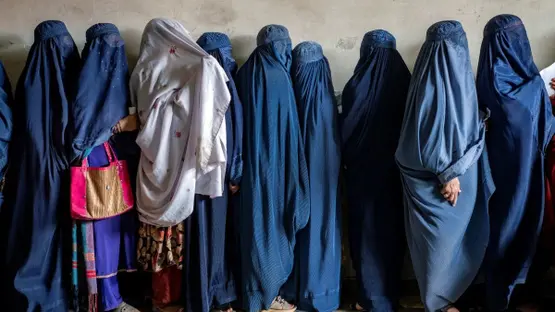
Beyond the immediate challenges of hunger and displacement, aid officials are expressing deep concern about the long-term consequences of restrictions affecting women and girls across Afghanistan.
According to Olga Cherevko, women repeatedly raised concerns about the future of their daughters and the limited opportunities available to them.
Restrictions on girls’ education imposed by the Taliban continue to prevent many young women from attending school, leaving families fearful about what lies ahead.
“All the women I spoke to are deeply worried about their daughters, who can no longer attend school and may have no future.”
Olga Cherevko
Humanitarian organisations caution that the effects go beyond schooling.
In many regions of the nation, there is a growing scarcity of female professionals, especially those in the healthcare industry. There are gaps in vital services for women and girls as experienced female doctors leave their jobs, making it challenging to replace them.
Access to life-saving treatments including nutritional support, neonatal care, and maternity healthcare is being impacted by this shortage.
According to aid organisations, these restrictions are impeding attempts to address some of the nation’s most pressing health issues and adding to more general worries about the welfare of women and children.
Despite these obstacles, humanitarian organisations continue to provide assistance wherever possible.
According to a UN estimate, aid partners provided at least one type of humanitarian assistance to about 5.9 million people in Afghanistan between January and April 2026. 3.5 million of them received food assistance, highlighting the severity of the situation and the millions of people who still rely on foreign aid.
However, humanitarian officials stress that one-off interventions are not enough.
READ ALSO: Manchester United Secure Key Land Deal for New 100,000-Seat Stadium