United Nations has launched a major humanitarian response in Venezuela following two devastating earthquakes that killed at least 164 people and injured nearly 1,000 others, triggering widespread destruction and fears that more victims remain trapped beneath collapsed buildings.
According to the United States Geological Survey, the first quake measured 7.2 in magnitude and was centred near the city of San Felipe, which is home to approximately 220,000 people. Less than a minute later, a second and even more powerful 7.5-magnitude earthquake struck, making it the strongest seismic event recorded in Venezuela in more than 125 years.
The capital, Caracas, was among the hardest-hit areas. Buildings collapsed in several districts, power supplies were disrupted and healthcare facilities struggled to cope as waves of injured residents sought urgent treatment.
Authorities declared a state of emergency as the scale of the destruction became clearer. However, officials have cautioned that casualty figures are likely to rise significantly as search and rescue teams gain access to heavily affected areas, including the coastal state of La Guaira, where communications challenges have complicated efforts to assess the full extent of the disaster
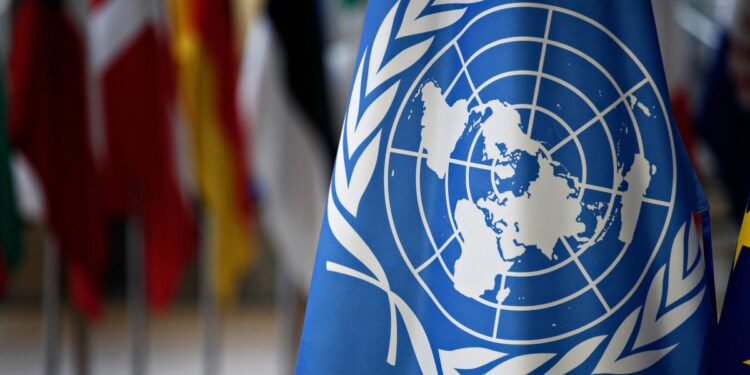
United Nations Office for the Coordination of Humanitarian Affairs (OCHA) confirmed that emergency operations were underway across affected regions.
According to UN Emergency Relief Chief Tom Fletcher, United Nations Office for the Coordination of Humanitarian Affairs is “fully mobilised to support the people of Venezuela following the deadly and devastating earthquakes that hit the country yesterday.”
“I’m in constant contact with our team in Caracas, led by Humanitarian Coordinator Gianluca Rampolla, to ensure a swift and effective response. He has spoken this morning to the interim President and we are assessing urgently what is needed. Our team in Venezuela is working with the authorities to identify priorities.”
Tom Fletcher
Moreover, UN Aid Coordination Office has begun deploying specialised Urban Search and Rescue Teams through the International Search and Rescue Advisory Group, an international network designed to rapidly mobilise emergency personnel following major disasters.
For many Venezuelans, however, the earthquake disaster comes at an exceptionally difficult time. Even before the tremors struck, the country was facing a severe humanitarian situation marked by economic hardship, strained public services and widespread vulnerability among millions of people.
According to OCHA, nearly 7.9 million people in Venezuela required humanitarian assistance at the beginning of 2026. Persistent shortages in healthcare, water, education and energy services had already placed immense pressure on communities, particularly among women, children, older persons, indigenous populations, people with disabilities and those struggling to earn a stable income.
“This disaster risks deepening existing vulnerabilities,” Fletcher warned.
The combination of extensive earthquake damage and pre-existing humanitarian needs is raising concerns that recovery efforts could become one of the most complex emergency operations the country has faced in recent years.
International Rescue Teams Rush to Support Survivors
As emergency responders searched collapsed structures and assessed damaged infrastructure, specialised United Nations agencies moved swiftly to provide technical and humanitarian support.
The International Organization for Migration (IOM) announced that it was mobilising emergency shelter, water and health assistance for communities affected by the earthquakes. The agency warned that thousands of families could require temporary accommodation and basic relief supplies in the coming days as assessments continue.
Meanwhile, the UN Satellite Centre, known as UNOSAT, has been activated to provide geospatial analysis and satellite imagery to support emergency operations. The organisation is helping authorities identify the most severely affected locations, map damaged infrastructure and guide rescue teams toward areas where survivors may still be trapped.
OCHA has also requested support from the United Nations Disaster Assessment and Coordination (UNDAC) system, a highly specialised international mechanism created to assist countries struck by sudden-onset disasters.
Established in 1993, UNDAC has responded to hundreds of emergencies in more than 100 countries. Its roster includes over 300 trained experts drawn from governments, humanitarian organisations and technical institutions worldwide. These specialists provide expertise in emergency coordination, logistics, information management, environmental response and rapid needs assessments.
Alongside the humanitarian response, attention has also turned to information access and communication challenges.
The Independent International Fact-Finding Mission on Venezuela issued a statement stressing that respect for human rights must remain central to both national and international relief efforts.
According to the Fact-Finding Mission, “it is crucial that a full commitment to human rights guide all aspects of the national and international response to this immense tragedy.”
The group has also called on authorities to ensure unrestricted access to information during the emergency.
READ ALSO: Pochettino Set to Rotate USA Squad Ahead of Türkiye Encounter