His Excellency John Dramani Mahama has reaffirmed the central place of civil society in shaping governance and democratic progress in Ghana, describing civic organizations as essential partners in national development and accountability.
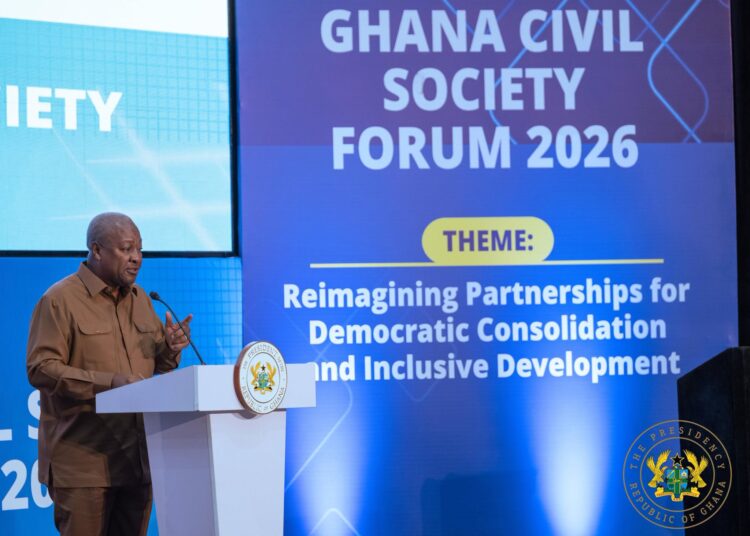
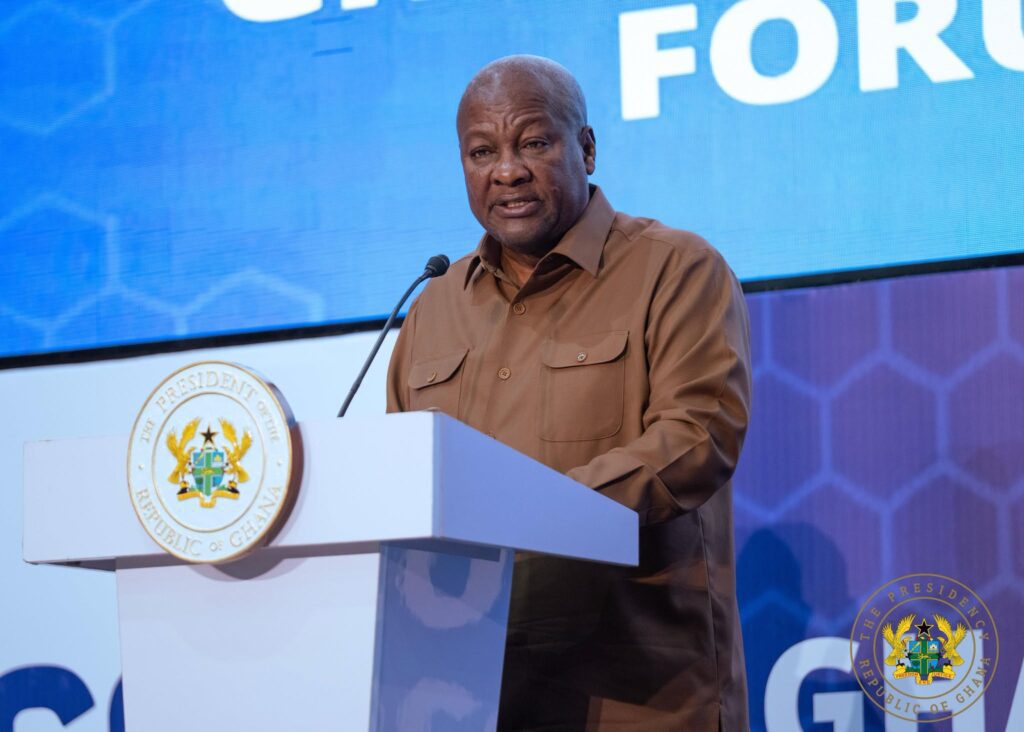
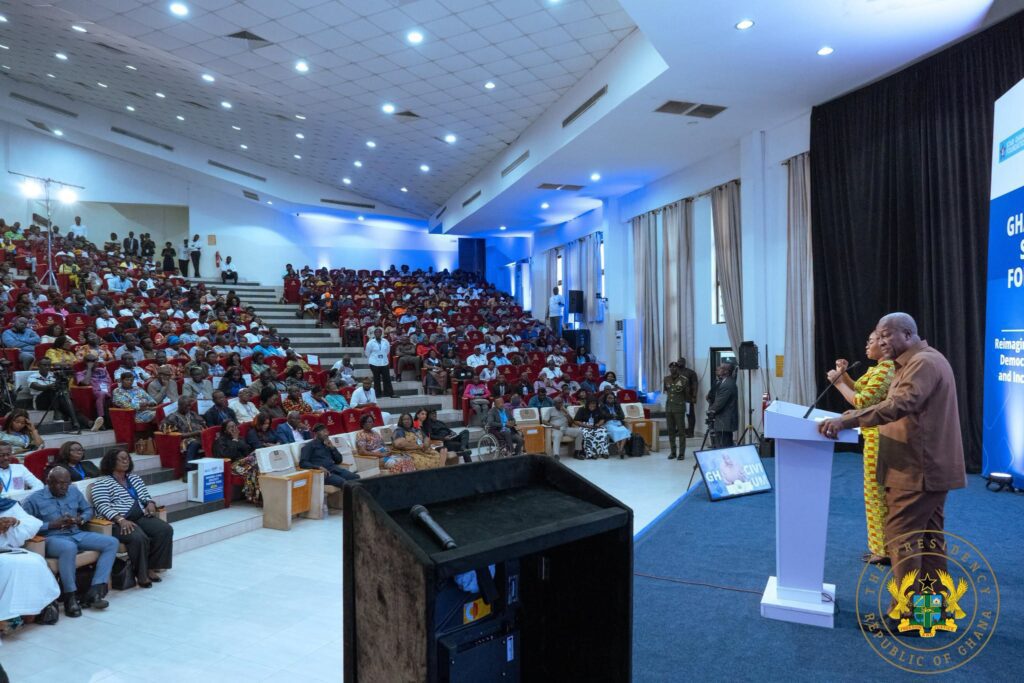
Speaking at the 4th Annual Convening of the Ghana Civil Society Forum, 2026, he said civil society remains one of the strongest pillars of Ghana’s democracy.
The President noted that from the country’s democratic evolution to present-day governance reforms, civic actors have consistently influenced policy direction and strengthened institutional performance.
He said civil society organizations have played critical roles as advocates for vulnerable groups, defenders of human rights, champions of transparency, and providers of social services.
Beyond these roles, he added, they have also become development partners working alongside the state to improve public outcomes. According to him, many of Ghana’s democratic gains have emerged through sustained engagement between government and civic actors.
Strengthening Accountability and Public Voice
President Mahama emphasized that civil society has helped shape public discourse and improve accountability systems by amplifying the voices of communities that might otherwise remain unheard. He said this function is vital to ensuring that governance reflects the realities of ordinary citizens.
He added that civil society contributes to policy formation by providing feedback, raising concerns, and bridging the gap between government decision making and lived experiences at the community level.
He noted that these contributions become even more important during periods of economic transition and institutional reform, when policy decisions carry wider social and economic consequences.
As Ghana advances reforms in economic transformation, governance, healthcare delivery, youth employment, education, social protection, climate resilience, and constitutional renewal, he said civic engagement remains indispensable.
Government Commitment to Partnership
The President stressed that his administration regards civil society not as an adversary but as a strategic partner in national governance.
“We welcome scrutiny. We welcome dialogue. And above all, we welcome partnership,” he stated, underscoring the importance of constructive engagement between the state and civic organizations.
He explained that strong democracies depend on trust between citizens and public institutions. According to him, this trust grows when citizens participate meaningfully in decision making processes and when governments remain transparent and accountable.
He added that trust also strengthens when institutions deliver results that respond to public needs and expectations.
Civil Society as a Bridge Between State and Citizens
President Mahama said civil society organizations play a key bridging role by connecting government institutions to citizens and communities. He noted that they help translate policy decisions into real-world understanding and ensure feedback flows back to policymakers.
He explained that this bridge function is critical for maintaining responsive governance systems that reflect the needs of the population. He further stated that democratic consolidation requires more than constitutional frameworks.
It also requires active citizenship, sustained civic engagement, and long term collaboration between state institutions and society. Without these elements, he warned, governance risks becoming detached from the people it serves.
Participatory Governance in Practice
The President highlighted his administration’s commitment to participatory governance, pointing to the national economic dialogue as an example of inclusive decision making.
The dialogue brought together citizens, labor representatives, business leaders, academics, civil society organizations, and development partners to help shape Ghana’s economic recovery and transformation agenda.
He said the process demonstrated the value of bringing multiple perspectives into national planning and policy formulation.

He also referenced a recent meeting with a broad coalition of civil society organizations at the presidency, where discussions focused on governance accountability, democratic participation, anti corruption efforts, social protection, and national development priorities.
He described the engagement as frank, constructive, and insightful, noting that it reinforced the importance of civil society in shaping national direction.
Reform, Accountability, and Inclusive Policy Making
President Mahama said the insights gathered from civil society engagements continue to inform government reforms across multiple sectors. These include governance restructuring, anti-corruption initiatives, public sector modernization, climate adaptation strategies, and social protection programs.
He emphasized that governance improves when diverse voices are included in the policy process and when institutions remain open to scrutiny and feedback.
He added that civil society engagement strengthens accountability by ensuring that government programs remain aligned with public expectations and measurable outcomes.
Development Built on Shared Responsibility
The President reiterated that civil society is not simply an observer of national development but an active participant in shaping it. He said sustainable development requires shared responsibility between government, citizens, and civic organizations.
He emphasized that development outcomes become stronger and more durable when citizens have ownership of decisions that affect their lives.
He added that government remains committed to sustaining dialogue with civil society as part of efforts to deepen democratic accountability and improve governance effectiveness.

President Mahama’s address positioned civil society as a central actor in Ghana’s governance framework. His remarks highlighted a model of democracy built on inclusion, trust, and continuous engagement between the state and society.
By elevating civil society as a strategic partner, he reinforced a governance approach that prioritizes participation, accountability, and responsiveness. As Ghana continues to pursue reforms across economic and social sectors, the message from the forum was clear.
Strong governance depends on strong civic engagement, and sustainable development requires enduring collaboration between government and civil society.
READ ALSO: Government Explores Renewable Energy Solutions for Universities