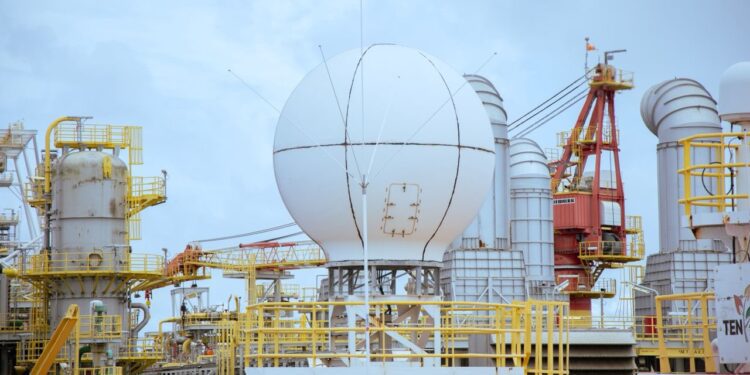
President John Dramani Mahama has broken ground for the highly anticipated phase two expansion of the Sentuo Oil Refinery in Tema, a strategic move set to scale up the facility’s crude processing capacity from 40,000 to 100,000 barrels per day.
The major downstream development is backed by a $200 million syndicated financing package coordinated by Ecobank Ghana, positioning the private refinery to aggressively address West Africa’s growing petroleum deficit.
By adding 60,000 barrels per stream day to its current output, the facility will structurally alter Ghana’s energy security matrix while advancing the nation’s ongoing agenda for domestic value addition.
“Against this backdrop, Sentuo Refinery’s decision to expand its refining capacity by 60,000 barrels per day, which will raise the total capacity from 40,000 to 100,000 barrels per day, is both bold and strategic. This expansion is not merely an investment in infrastructure. It is an investment in Ghana’s future.”
President John Dramani Mahama
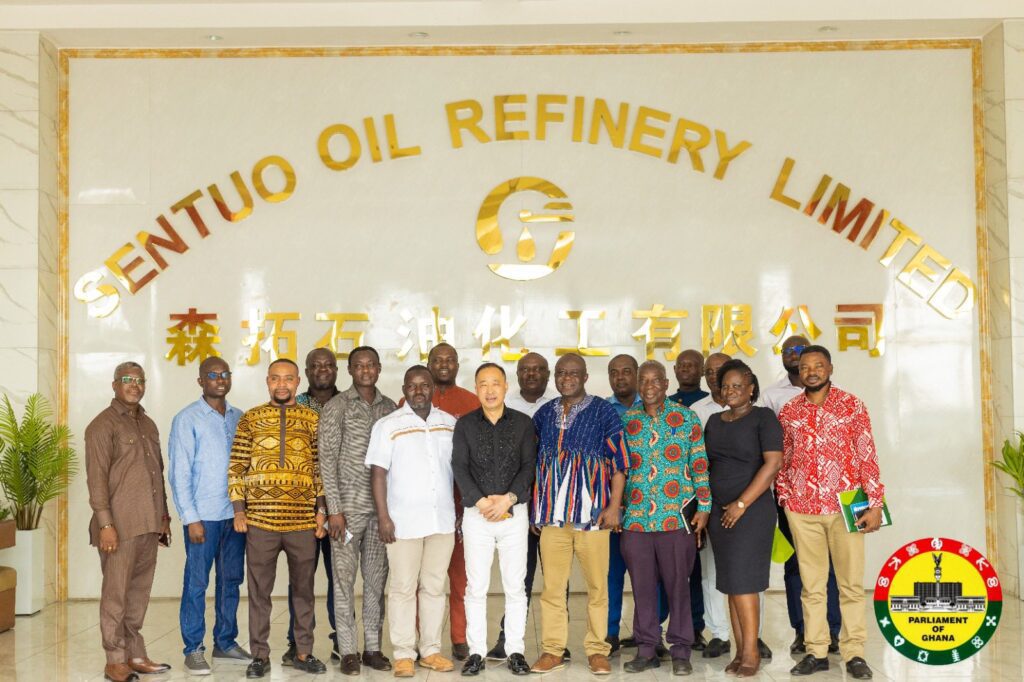
The expansion project transforms the single-stream refinery into an integrated industrial complex by introducing advanced petrochemical production capabilities alongside its primary fuel refining lines.
This scalability follows a historic milestone where the refinery successfully berthed its first domestic delivery of one million barrels of local Jubilee crude oil for local processing, steering the country away from its conventional model of exporting raw crude and importing finished products.
Amidst global market volatility, fluctuating international crude oil prices, and deep supply chain uncertainties, this multi-million-dollar private capital deployment serves as a massive boost to Ghana’s productive industrial sectors.
Shielding Macroeconomic Foundations and Retaining Foreign Exchange
Financially, transitioning from a heavy reliance on imported refined petroleum products to robust domestic production serves as an immediate shield for Ghana’s balance of payments.
By processing crude within the borders of Tema, the country substantially reduces the massive outward flight of foreign currency required to import over 97% of its historical liquid fuel consumption.
Retaining this monetary value within the domestic financial ecosystem builds immense macroeconomic resilience, helps to stabilize the local currency against dominant international trading pairs, and offers local businesses a predictable, non-volatile pricing structure for commercial planning.
Furthermore, the state benefits from an enhanced fiscal regime through corporate taxation, port throughput duties, and downstream levies that can be directly reinvested into national development.
The influx of institutional financing led by local and regional lenders demonstrates that financial markets are highly receptive to backing capital-intensive energy infrastructure when aligned with sound regulatory guarantees.
This financial anchoring allows the state to reallocate scarce foreign reserves into other critical sectors, accelerating the country’s broader timeline for total economic renewal.
Accelerating Industrial Transformation and Job Creation
The introduction of petrochemical refining means the facility will produce essential chemical inputs, polymers, and synthetic compounds that feed into ancillary manufacturing sectors such as agrochemicals, plastics, and pharmaceutical packaging.
This domestic availability of raw industrial materials removes import bottlenecks for thousands of Ghanaian small-to-medium enterprises, effectively making local manufacturing significantly more competitive.

On the labor front, the socioeconomic impact is directly measurable in high-value employment.
The expansion adds hundreds of new technical, engineering, and administrative roles to the refinery’s existing workforce, where Ghanaians currently make up 95% of the staff complement.
Beyond direct payrolls, thousands of indirect jobs are being activated across local logistics, maritime supply at the Tema port, wholesale distribution, and specialized engineering maintenance services, ensuring an extensive transfer of technical expertise to the local labor force.
Dominating the West African Sub-Regional Energy Market
Geopolitically, upgrading the Tema Industrial Area’s refining footprint to 100,000 barrels per day positions Ghana as a premier net exporter of refined petroleum products within the West African sub-region.
The refinery is structurally optimized to process local offshore crude blends, giving it a distinct geographical and logistical edge over European refineries that traditionally supply the West African market.

This asset layout allows Ghana to seamlessly supply landlocked neighbors and regional partners within the ECOWAS bloc, capturing critical market share as regional energy demands continue to surge.
This regional dominance works in tandem with ongoing operational revivals at the state-owned Tema Oil Refinery (TOR).
Rather than creating a counterproductive monopoly, the presence of a scaled-up, efficient private operator establishes a healthy, competitive refining ecosystem that drives down operational inefficiencies.
By establishing a reliable sub-regional hub for premium diesel, liquefied petroleum gas (LPG), and high-grade asphalt, Ghana effectively leverages its maritime infrastructure to turn energy security into a permanent engine for regional economic influence.
READ ALSO: Standard Chartered Targets Retail Banking Exit in Ghana