

As African oil producers compete for dwindling upstream investment, Angola’s efforts to revive its offshore petroleum industry are increasingly being viewed as a model for balancing regulatory reform with investor confidence, a lesson that could resonate with Ghana as it seeks to reverse declining crude production and attract fresh exploration capital.
The renewed attention follows an analysis published by the African Energy Chamber (AEC), which examined Angola’s deepwater petroleum sector and argued that long-term production depends as much on policy stability and investment conditions as it does on geological potential.
For Ghana, the discussion comes at a crucial time. The country has experienced several consecutive years of declining crude oil production, is pursuing renewed exploration in the Voltaian Basin and continues to position itself as an attractive destination for upstream investment amid growing competition from other African producers.
Investment is becoming Africa’s biggest oil challenge
Across the continent, oil-producing countries are increasingly competing for a shrinking pool of exploration capital.
Rather than focusing solely on discovering new reserves, governments are under pressure to create regulatory environments capable of attracting long-term investment into mature fields and frontier basins alike.
According to the African Energy Chamber’s analysis, Angola has sought to address this challenge through institutional reforms that separate regulation from commercial operations while introducing more competitive licensing and fiscal terms.

The changes have encouraged renewed interest from international operators in the country’s offshore acreage after years of slowing investment.
The report suggests Angola’s experience demonstrates that geological resources alone are no longer sufficient to sustain production growth.
Angola demonstrates how geology alone is not enough – what determines long-term production outcomes is the alignment between subsurface potential and a stable, competitive regulatory framework that allows capital to flow consistently into high-risk offshore environments.
NJ Ayuk, Executive Chairman, African Energy Chamber
From production boom to investment slowdown
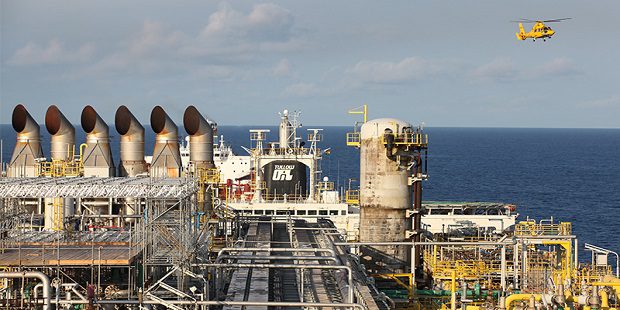
Angola’s offshore industry became one of Africa’s largest success stories after major discoveries in Blocks 14, 15 and 17 transformed the country into one of the continent’s leading crude exporters.
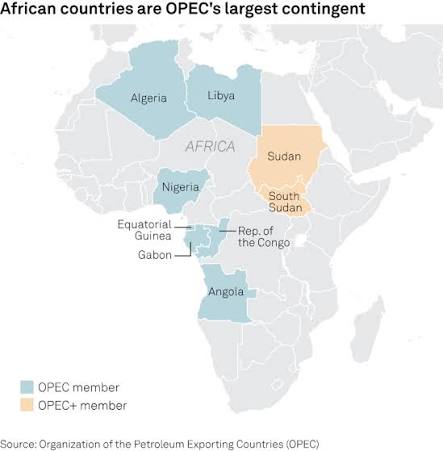
Supported by floating production storage and offloading (FPSO) vessels and large subsea developments, production climbed to almost two million barrels per day by 2008, establishing Angola as a major member of OPEC after joining the organisation in 2007.

However, the sharp fall in global oil prices in 2014 exposed structural weaknesses within the sector.
High development costs, declining output from mature fields, lengthy project approvals and reduced capital expenditure slowed exploration activity and accelerated production declines.
The African Energy Chamber notes that institutional bottlenecks also discouraged investment during that period, highlighting how governance can influence upstream performance just as much as resource potential.
Regulatory reforms begin attracting fresh capital
To reverse the decline, Angola introduced wide-ranging reforms under President João Lourenço’s administration.
Among the most significant changes was the creation of the National Agency for Petroleum, Gas and Biofuels (ANPG) as a dedicated concessionaire, separating regulatory responsibilities from state oil company Sonangol’s commercial operations.
Industry observers say the restructuring has improved transparency, streamlined licensing procedures and strengthened investor confidence.
The result has been renewed exploration activity across offshore blocks, with international companies including TotalEnergies, ExxonMobil and Chevron advancing appraisal programmes, redevelopment projects and new exploration campaigns.
The renewed momentum has helped Angola maintain crude production above one million barrels per day, providing greater stability for one of Africa’s largest petroleum industries.
What it means for Ghana
Although Ghana and Angola have different petroleum basins and production profiles, both countries face similar strategic questions.
Ghana is seeking to slow declining production from mature offshore fields while encouraging new exploration in frontier areas such as the Voltaian Basin.
At the same time, government continues to emphasise local participation, regulatory certainty and investment promotion as key pillars of its upstream strategy.
Recent discussions surrounding petroleum licensing, fiscal terms and licence renewals have also highlighted the importance of maintaining investor confidence while ensuring the country derives greater value from its natural resources.
Angola’s experience suggests that attracting investment requires more than promising geology.
It also depends on efficient institutions, predictable regulation and timely project approvals capable of reducing investment risk.
That lesson could become increasingly relevant as Ghana competes for capital against other African producers including Namibia, Côte d’Ivoire and Angola, all of which are actively marketing new exploration opportunities.
Competition for capital is intensifying
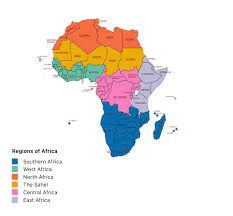
The broader African upstream landscape is becoming increasingly competitive.
Countries across the continent are introducing licensing reforms, updating petroleum legislation and offering more attractive fiscal regimes as companies become increasingly selective about where they invest.
Industry analysts have repeatedly argued that investors are placing greater emphasis on regulatory stability and project economics than ever before, particularly as energy companies balance traditional oil investments with lower-carbon opportunities.
For frontier producers, delays in approvals or uncertainty over regulatory processes can make projects less attractive compared to jurisdictions offering faster decision-making and clearer investment frameworks.
Against that backdrop, Angola’s recent reforms are attracting attention beyond its own borders because they demonstrate how institutional changes can help revive investor interest without compromising state oversight.
A wider lesson for Africa’s energy future
The African Energy Chamber argues that sustaining oil production across the continent will require governments to view policy reform and investment competitiveness as complementary rather than competing objectives.
While Africa continues to pursue energy transition goals, petroleum revenues remain central to financing infrastructure, electricity expansion and broader economic development in many producing countries.
For Ghana, maintaining a competitive upstream environment could prove particularly important as policymakers seek to maximise existing petroleum assets while advancing cleaner energy investments.
The conversation therefore extends beyond Angola’s offshore sector.
It reflects a broader question confronting many African producers: how to create conditions that encourage long-term investment while ensuring petroleum resources continue supporting national development objectives.
As countries compete for capital in an increasingly selective investment environment, Angola’s experience suggests that policy certainty, institutional reform and efficient regulation may become just as valuable as the resources beneath the seabed.
READ ALSO: Kennedy Agyapong, An Integral Part Of The Party — Darko