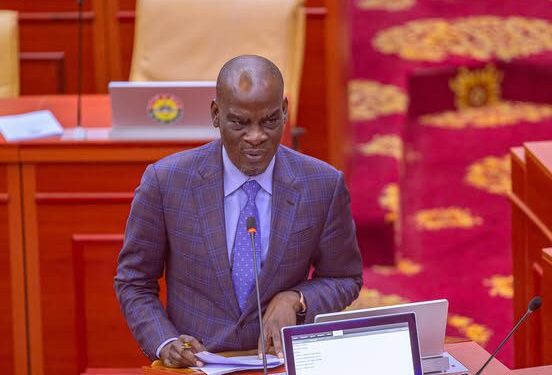
The Minister for Education, Hon. Haruna Iddrisu, in collaboration with the Ministry of Education, has announced a major intervention to strengthen education funding, unveiling new financial commitments aimed at improving support for persons with disabilities (PWDs) and enhancing the school feeding programme Scheme.
The announcement, made as part of the government’s broader agenda to promote inclusive education and enhance student welfare, introduces two significant funding measures.
The twin interventions are expected to benefit thousands of students across the country while reinforcing government’s commitment to ensuring that education remains accessible, equitable, and supportive for all, particularly vulnerable groups.
Government Commits GHS100 Million to Support Persons with Disabilities
One of the most notable highlights of the announcement is the allocation of GHS100 million specifically for persons with disabilities.

The funding represents one of the most significant financial commitments made towards addressing the needs of persons with disabilities within the education sector and beyond. According to the Ministry of Education, the allocation forms part of government’s broader efforts to eliminate barriers that continue to prevent many Ghanaians with disabilities from fully participating in education and national development.
For years, disability advocacy groups have called for increased investment in accessible learning environments, assistive technologies, specialized educational materials, and improved infrastructure to accommodate students with various forms of disabilities.
Limited resources have often meant that many schools have struggled to provide the facilities and services necessary to support inclusive learning.
With the newly announced GHS100 million allocation, government aims to address some of these longstanding challenges by providing targeted interventions designed to improve accessibility and create equal opportunities for persons with disabilities.
The investment is expected to contribute to Ghana’s ongoing efforts to promote inclusive education in line with international commitments that emphasize equal access to quality education for all regardless of physical or cognitive ability.
Feeding Grant Increased from GHS8 to GHS15 Per Student
In addition to the disability support package, the Education Minister announced a substantial increase in the daily feeding grant provided under the school feeding programme.
“We have increased the daily feeding grant per student from GH¢8.00 to GH¢15.00 to better reflect current economic realities and improve the quality of meals provided in our schools.”
Minister for Education, Hon. Haruna Iddrisu
The decision comes at a time when schools and caterers participating in government feeding programmes have consistently raised concerns about rising food prices and increasing operational costs that have made it difficult to provide nutritious meals within existing budget allocations.
The revised feeding grant is therefore expected to ease some of these financial pressures while improving the nutritional value of meals provided to learners across participating schools.
Education experts have long maintained that school feeding programmes play an important role in improving school attendance, reducing absenteeism, and enhancing students’ ability to concentrate during lessons.
Nutritious meals contribute directly to children’s health and cognitive development, making feeding programmes an essential component of educational success, particularly in vulnerable communities.
By increasing the feeding grant, government hopes to ensure that students continue to receive consistent, healthy meals despite rising food costs.

Commitment to Inclusive Education and Social Protection
The Ministry of Education has described the two funding measures as part of government’s wider strategy to strengthen social protection within the education sector.
“These initiatives demonstrate government’s determination to ensure that no learner is left behind because of disability, poverty, or limited access to basic educational support.”
Minister for Education, Hon. Haruna Iddrisu
While the GHS100 million allocation focuses on removing structural and accessibility barriers faced by persons with disabilities, the increase in the feeding grant seeks to improve the welfare of the broader student population by guaranteeing access to nutritious meals that support effective learning.
The Ministry believes that investments in both areas are critical to creating a more inclusive education system capable of meeting the diverse needs of Ghanaian learners.
Expected Benefits for Schools and Students
The increased feeding allocation is expected to provide immediate relief to schools participating in the feeding programme, many of which have struggled to maintain meal quality amid escalating food prices.
School caterers are likely to benefit from the higher allocation, enabling them to purchase better quality ingredients and prepare more balanced meals for students without absorbing significant financial losses.
Parents are also expected to welcome the development, particularly those whose children rely heavily on school meals as an important source of daily nutrition.
Improved nutrition has consistently been linked to better academic performance, increased classroom participation, improved concentration, and reduced dropout rates, making the feeding programme an important educational support initiative.
Meanwhile, the GHS100 million disability allocation has the potential to transform educational opportunities for thousands of persons with disabilities across Ghana.
If effectively implemented, the funding could facilitate improved access to classrooms, enhanced learning materials, expanded support services, and more inclusive educational environments that enable students with disabilities to participate fully in school activities.
Beyond education, the investment could also contribute to broader efforts aimed at promoting social inclusion, reducing discrimination, and empowering persons with disabilities to achieve their full potential.
Focus Shifts to Implementation
While the announcements have been widely welcomed as significant policy interventions, attention is now turning to implementation.
Stakeholders are expected to closely monitor how the GHS100 million disability fund will be administered, including the criteria for beneficiary selection, priority intervention areas, and mechanisms that will ensure transparency and accountability in the use of public funds.
Similarly, schools participating in the feeding programme will be looking forward to the timely implementation of the revised GHS15 daily feeding grant to enable caterers to begin operating under the new allocation.

The Ministry of Education has not yet announced a detailed implementation timeline or provided a comprehensive breakdown of how either funding initiative will be rolled out nationwide. Further guidelines are expected in the coming weeks as government finalizes operational arrangements.
Strengthening Ghana’s Education Sector
The latest funding commitments add to government’s broader efforts to improve Ghana’s education sector through policies aimed at expanding access, improving learning outcomes, and promoting social inclusion.
If successfully executed, the GHS100 million allocation for persons with disabilities and the increased GHS15 feeding grant could represent significant milestones in Ghana’s ongoing efforts to build a more inclusive, equitable, and supportive education system for every learner.
READ MORE: Supreme Court Delivers Second Blow in a Week against Torkornoo