

Uncontrolled urban development, widespread encroachment on wetlands, and the shrinking of major waterways are accelerating flood risks across Greater Accra, according to the Coordinator of the Greater Accra Resilient and Integrated Development (GARID) Project and member of the Post Flood Mitigation Committee, Dr. Kwadwo Ohene Sarfoh.
Presenting findings from an extensive assessment of water bodies across the Greater Accra Region, Dr. Sarfoh said satellite imagery and field analysis reveal dramatic changes in wetlands, streams, storm drains, and catchment areas over the past two decades.
He argued that human activity, rather than rainfall alone, has become a major driver of the destructive flooding affecting communities across the capital.
Speaking during a presentation on the committee’s findings, Dr. Sarfoh said the assessment sought to explain both the current state of the region’s waterways and the historical changes that have contributed to the present flooding crisis.
Hillside Development Alters Natural Water Flow
Dr. Sarfoh explained that many of Greater Accra’s rivers and streams originate from the Akuapem Range, making the condition of the surrounding hillsides critical to the region’s drainage system.

According to him, satellite images comparing conditions in 2023 and 2026 show a sharp increase in residential and commercial developments on the hillsides.
He said the rapid densification has significantly altered natural landscapes within just three years, increasing surface runoff and placing additional pressure on downstream waterways and drainage systems.
The changes, he noted, demonstrate how expanding settlements continue to transform areas that once absorbed rainfall and slowed the movement of water into lower lying communities.
Wetlands Continue to Disappear
The study also documented substantial losses across several major wetland systems that historically served as natural flood retention areas. Dr. Sarfoh highlighted the Tetegu wetlands within the Densu Weija Basin as one of the most striking examples.
Images from 2010 showed very limited development within the wetlands. By 2026, however, nearly half of the area had been occupied by new construction. He warned that as wetlands disappear, cities lose the natural spaces needed to store excess runoff during heavy rains.
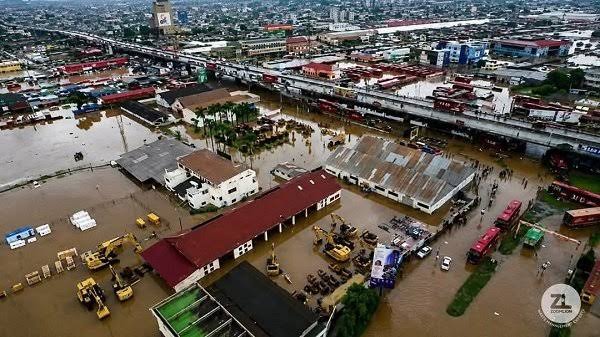
“The city does not have enough space for water to pond to allow for the runoffs not to disturb settlements,” he said. He explained that a common pattern has emerged in many flood prone areas.
During the dry season, developers transport large quantities of filling materials into wetlands. Construction usually begins after the next dry season, gradually converting natural water storage areas into built up communities.
The process, he said, steadily removes the landscape’s capacity to absorb rainfall while forcing floodwaters into surrounding neighbourhoods.
Waterways Forced From Their Natural Channels
Beyond wetland encroachment, the assessment found that many developments have physically altered the courses of rivers and streams. According to Dr. Sarfoh, structures built close to waterways are forcing rivers away from their original channels.
Instead of flowing along their natural routes, some streams now meander around buildings and reclaimed land, reducing their efficiency in conveying storm water during periods of heavy rainfall.

The report identified similar patterns within the Lafa Basin, particularly around the Malam area. Satellite imagery comparing 2010 and 2026 showed that more than half of the wetlands near the Malam Market have now been overtaken by development.
At the nearby Pambros salt pans, investigators found that wetlands had been filled with solid waste before being covered with laterite to prepare the land for construction. According to Dr. Sarfoh, this practice has become increasingly common across several parts of Greater Accra.
Wetland Loss Accelerates Across Key Basins
The committee’s findings point to similar trends in several other flood sensitive areas. Within sections of the Pambros wetlands, comparisons between 2012 and 2026 indicate that approximately half of the original wetland area has disappeared.
The Sakamono Basin has experienced comparable levels of encroachment. Using satellite images, the committee compared conditions in 2011 with those recorded in 2026.
The results showed that more than half of the Sakamono catchment has been lost to development. Dr. Sarfoh said portions of the Ramsar site have gradually been reclaimed through land filling, extending almost to the point where the waterway enters the sea.
He warned that these activities continue to reduce the natural flood buffering capacity of one of Greater Accra’s most environmentally important ecosystems.
Kordjor River Shrinks Dramatically
Among the most alarming findings presented was the dramatic reduction in the width of the Kordjor River, which feeds into the Kpeshie Lagoon. Dr. Sarfoh used historical measurements to illustrate the scale of change.
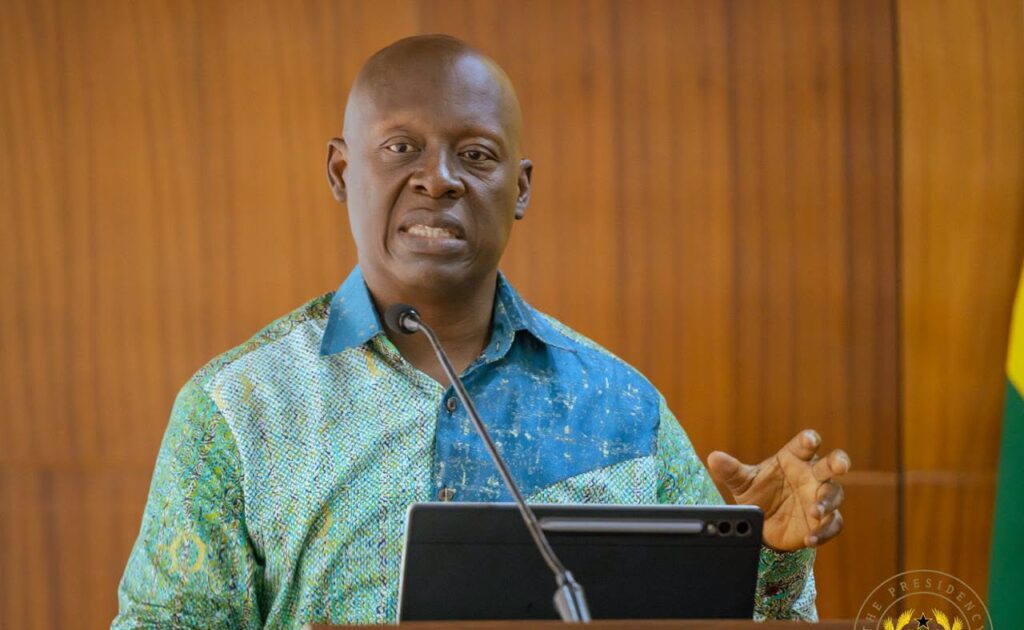
According to the study, the river measured 261 metres wide in 2002. By 2013, its width had reduced to 211 metres. The decline accelerated over the following years. By 2022, the river had narrowed to just 19 metres. In 2026, measurements showed that the channel had shrunk further to only 10.6 metres.
“In a space of less than 25 years, we have reduced almost to 100 percent the size of the flow. So when it rains and people are complaining this is flooding, this is the kind of human behaviour that is leading to the situation that we are facing”.
Coordinator of the Greater Accra Resilient and Integrated Development (GARID) Project and member of the Post Flood Mitigation Committee, Dr. Kwadwo Ohene Sarfoh
Other Catchments Under Pressure
The committee also examined the Tesa Dam located along the East Lagoon Boundary Road. Comparisons between 2008 and 2026 showed that more than half of the catchment area has disappeared because of expanding development.
Similar losses were recorded across other major drainage systems, reinforcing concerns that natural flood control infrastructure is steadily being replaced by buildings and reclaimed land.
According to the committee, these cumulative changes are reducing the capacity of rivers, wetlands, and flood plains to safely manage increasing storm water volumes.
Structures Continue to Encroach on Drainage Buffers
Beyond satellite imagery, the committee conducted a detailed analysis of development within legally protected drainage buffer zones across 16 metropolitan and municipal assemblies.
The assessment counted thousands of structures located within 25 metre buffer zones that are legally required to remain free from development. While some districts recorded little or no additional construction because available land had already been exhausted, many others experienced substantial growth.

Ablekuma West recorded an increase from 904 structures to 1,293 during the study period. Ga North rose from 1,049 to 1,261 structures, while Ga South increased from 746 to 871.
Okaikwei North recorded growth from 596 to 729 structures, and Ledzokuku increased from 544 to 638. Other assemblies including Ga Central, Ga West, Weija Gbawe, Korle Klottey, La Dade Kotopon, Ayawaso East, Ayawaso Central, Ayawaso West, Ga East, and Pokuase also recorded varying levels of encroachment.
Across the sampled sections alone, investigators counted 10,497 structures. Dr. Sarfoh said the analysis showed that approximately 16 percent of legally protected drainage buffer land has already been lost to development.
He warned that continued encroachment within these corridors is steadily undermining the effectiveness of Greater Accra’s drainage system and increasing flood vulnerability.
Committee Uses Visual Evidence to Strengthen Findings
To reinforce the assessment, the committee announced that it would present video evidence documenting how wetlands have been filled, waterways diverted, and flood retention areas converted into developed land.
According to Dr. Sarfoh, the visual material complements satellite imagery and field observations by demonstrating the scale and pace of environmental change occurring across the region.
He maintained that unless wetland protection laws and drainage buffer regulations are effectively enforced, flooding will remain an increasingly severe challenge despite investments in drainage infrastructure.
The findings present a stark picture of how decades of unchecked development have altered Greater Accra’s natural water systems, placing growing numbers of communities at risk whenever heavy rains occur.
READ ALSO: Ghana to Showcase Energy Investment Pipeline at AEW 2026