For years, Ghana has treated waste management and energy security as two separate policy challenges. Yet growing urbanisation, rising electricity demand and pressure to reduce environmental pollution are increasingly pushing governments to view both issues through a single lens: waste-to-energy.
That shift gained fresh momentum this week after the government reaffirmed its commitment to implementing a recently signed Memorandum of Understanding (MoU) with a Canadian company; Portage Energy Group, aimed at converting solid waste into energy.
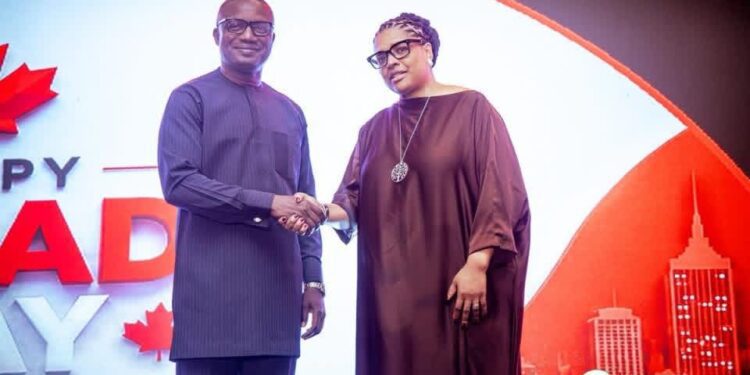
Speaking during Canada’s National Day reception in Accra, Minister for Energy and Green Transition, Dr. John Abdulai Jinapor, said government intends to work closely with its Canadian partners to move the agreement beyond signatures and into implementation.
I want to promise you that I will work in partnership with you to achieve and attain that objective. To be able to convert that waste into useful energy in a sustainable manner, I think that that is commendable.
Minister for Energy and Green Transition, Dr. John Abdulai Jinapor
Rather than viewing waste merely as an environmental burden, the proposed partnership reflects growing recognition that municipal waste can also become an energy resource when supported by appropriate technology and investment.
Waste management meets energy security
Ghana’s major cities continue to generate thousands of tonnes of municipal waste each day, placing increasing pressure on landfills and local authorities responsible for collection and disposal.
At the same time, the country continues to pursue a more diversified energy mix as part of its broader energy transition agenda, with greater emphasis on renewable energy, natural gas and improved energy efficiency.
Waste-to-energy occupies a unique position within that agenda because it has the potential to address two policy objectives simultaneously: reducing the volume of waste sent to landfill while generating electricity or other useful forms of energy.

Dr. Jinapor acknowledged the scale of the challenge, noting that managing solid waste remains one of Ghana’s persistent environmental concerns.
In Ghana, one of our major problems is how to deal with the waste that we generate. It is my hope that we will move to the next level so that we can process a lot of our waste.
Minister for Energy and Green Transition, Dr. John Abdulai Jinapor
While the agreement is still at the implementation stage, it signals growing interest in expanding technologies capable of recovering value from waste that would otherwise require disposal.
Building on existing experience
Although large-scale waste-to-energy remains relatively limited in Ghana, the concept is not entirely new.
Projects such as Safisana Ghana, which converts organic waste into biogas, electricity and organic fertiliser, have demonstrated that waste can support productive economic activity when integrated into a circular economy model.

Safisana’s operations differ from large municipal waste-to-energy plants because they focus primarily on organic waste streams rather than mixed municipal solid waste. Nevertheless, they provide practical evidence that waste can become an economic resource instead of remaining an environmental liability.
The new Canada-backed initiative could therefore add another dimension to Ghana’s evolving waste management landscape if successfully implemented.
Whether it ultimately complements existing initiatives or expands waste-to-energy at a larger national scale will depend on financing, technology deployment, feedstock availability and long-term operational sustainability.
Beyond electricity generation
The significance of waste-to-energy extends beyond producing electricity.
Effective waste recovery systems can reduce pressure on landfill sites, lower methane emissions from decomposing waste, improve sanitation outcomes and create employment across waste collection, sorting, processing and plant operations.

For rapidly growing cities, these benefits increasingly intersect with broader public health and urban planning objectives.
As Ghana pursues cleaner energy while responding to rapid urbanisation, integrating waste management with energy production may become an increasingly important component of national infrastructure planning.
Partnership reflects wider Ghana-Canada cooperation
The Minister also used the occasion to acknowledge nearly seven decades of diplomatic relations between Ghana and Canada, highlighting cooperation across education, agriculture, mining, governance, clean energy and institutional development.
He commended Canada’s High Commissioner for supporting the waste-to-energy agreement and expressed confidence that cooperation between the two countries would continue to deepen.

Although the Memorandum of Understanding represents only the first step, its successful implementation could demonstrate how international partnerships can help address domestic infrastructure challenges through technology transfer and investment.
For Ghana, the broader opportunity lies not simply in generating additional electricity, but in creating an integrated approach where waste management, environmental protection and energy security reinforce one another.
As the country continues pursuing its green transition agenda, the real measure of success will be whether projects such as this move beyond policy announcements to become functioning infrastructure capable of delivering cleaner cities, more reliable energy and long-term economic value.
READ ALSO: Wetland Encroachment, Rapid Urban Growth Intensify Accra Flood Risks, GARID Coordinator Warns