Deputy Minister says Ghana will continue expanding renewables while relying on natural gas to support economic growth, energy access and long-term energy security.
As international discussions on climate action increasingly focus on moving away from fossil fuels, Ghana has reiterated that its energy transition will remain guided by the country’s development priorities rather than a one-size-fits-all global approach.
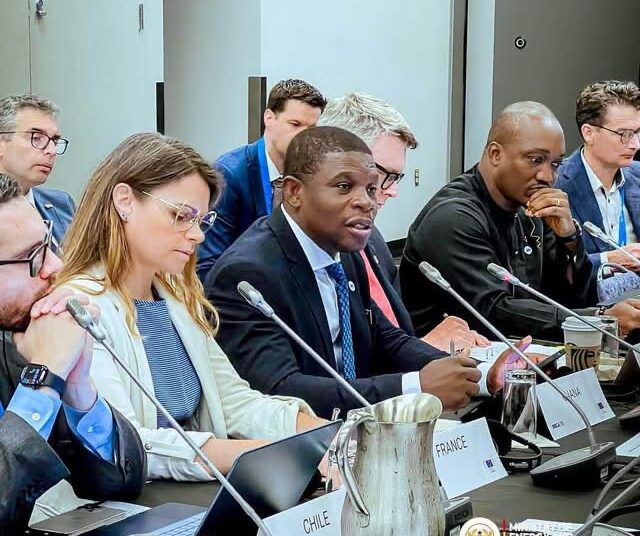
Representing the Minister for Energy and Green Transition, Dr. John Abdulai Jinapor, at the Beyond Oil and Gas Alliance (BOGA)–European Commission Ministerial Dialogue, Deputy Minister Richard Gyan-Mensah said Ghana’s transition strategy must continue to balance environmental objectives with the country’s need for reliable electricity, industrial development and universal energy access.
The high-level dialogue brought together ministers and policymakers to discuss pathways towards cleaner energy systems while safeguarding economic and energy security.
For Ghana, however, the conversation extends beyond reducing emissions. It is equally about ensuring that the transition creates jobs, expands electricity access and supports long-term economic transformation.
The transition to a cleaner energy future must strengthen economies, create opportunities, and improve lives. Ghana remains committed to working with international partners to deliver an energy transition that advances sustainability while ensuring that no one is left behind.
Richard Gyan-Mensah, Deputy Minister for Energy and Green Transition
A Transition Built Around Ghana’s Realities
Speaking at the ministerial dialogue, Mr. Gyan-Mensah reaffirmed Ghana’s position that the global energy transition must be just, equitable and responsive to the realities of developing economies, particularly across Africa where millions of people still lack reliable electricity.

He explained that Ghana’s approach combines the continued use of natural gas as a transition fuel with increased investment in renewable energy, improved electricity access, stronger energy security and the gradual adoption of cleaner technologies.
Rather than viewing natural gas and renewable energy as competing priorities, government sees them as complementary components of a broader strategy aimed at maintaining reliable electricity supplies while reducing the country’s carbon footprint over time.
A Consistent Message on the International Stage
The latest position reinforces a policy direction that Ghana has articulated at several international energy forums.
Earlier this year, Energy Minister Dr. John Abdulai Jinapor told delegates at the Africa Energy Forum that Africa’s energy future should be shaped by the continent’s own development needs, arguing that countries must retain the flexibility to utilise available energy resources while expanding investment in cleaner alternatives.

The Deputy Minister’s remarks at the BOGA dialogue echo that position, signalling that Ghana intends to pursue an energy transition that supports economic growth instead of undermining it.
That consistency is becoming increasingly significant as international financing and investment decisions are influenced by countries’ energy transition strategies.
Why the Debate Matters to Ghanaians
For many households and businesses, the energy transition is often viewed through the lens of climate policy.
In practice, however, the choices governments make about future energy systems have direct implications for electricity reliability, affordability, employment and industrial development.

A transition that moves too quickly away from conventional fuels without sufficient replacement capacity could expose countries to electricity shortages or higher energy costs.
Conversely, delaying investment in cleaner technologies could leave economies vulnerable as global energy markets increasingly favour low-carbon investment.
Government officials therefore argue that Ghana’s strategy seeks to strike a balance by maintaining reliable power supplies today while preparing the country for a lower-carbon energy future.
Energy Security Remains Central
The emphasis on a balanced transition also reflects Ghana’s broader objective of strengthening energy security.
Recent reforms across the energy sector, including efforts to improve power generation, modernise infrastructure, revitalise the Tema Oil Refinery and expand renewable energy, are increasingly being framed as complementary elements of the same long-term strategy.

Officials have repeatedly maintained that energy security and sustainability should reinforce rather than compete with one another.
That approach is particularly relevant as Ghana continues working to attract investment into both conventional and renewable energy projects while ensuring that consumers have access to reliable and affordable electricity.
Balancing Global Commitments with National Priorities
As international momentum builds around the shift towards cleaner energy, Ghana’s latest intervention suggests the country will continue advocating for transition pathways that recognise differing levels of economic development.

For policymakers, the challenge is not simply reducing emissions but doing so in a way that strengthens economic resilience, expands energy access and supports industrialisation.
The message delivered at the ministerial dialogue therefore reflects a broader principle increasingly shaping Ghana’s energy policy: that the transition to cleaner energy should improve livelihoods and economic opportunities while safeguarding the country’s energy security.