

Hon. John Abdulai Jinapor, the Minister for Energy and Green Transition, has strongly asserted that Africa’s shift toward clean power must be executed entirely on its own developmental timeline and indigenous terms.
Speaking at a high-level panel discussion exploring “What Does a Just Energy Transition Mean for Africa?” during the prestigious Africa Energy Forum, the sector minister underscored that the continent’s climate strategy can no longer be decoupled from its immediate economic survival.
He emphasized that any globally imposed green mandates must yield to a framework that prioritizes the expansion of reliable power systems, supports heavy industrialization, and guarantees that no African nation is marginalized in the global race toward sustainability.
“Africa must pursue a just energy transition on its own terms, one that expands access to reliable energy, supports industrial growth, and promotes clean cooking solutions. This approach will successfully address energy poverty and deliver a sustainable future without leaving anyone behind. We must ensure that climate action goes hand in hand with economic growth, job creation, and poverty reduction.”
Hon. John Abdulai Jinapor
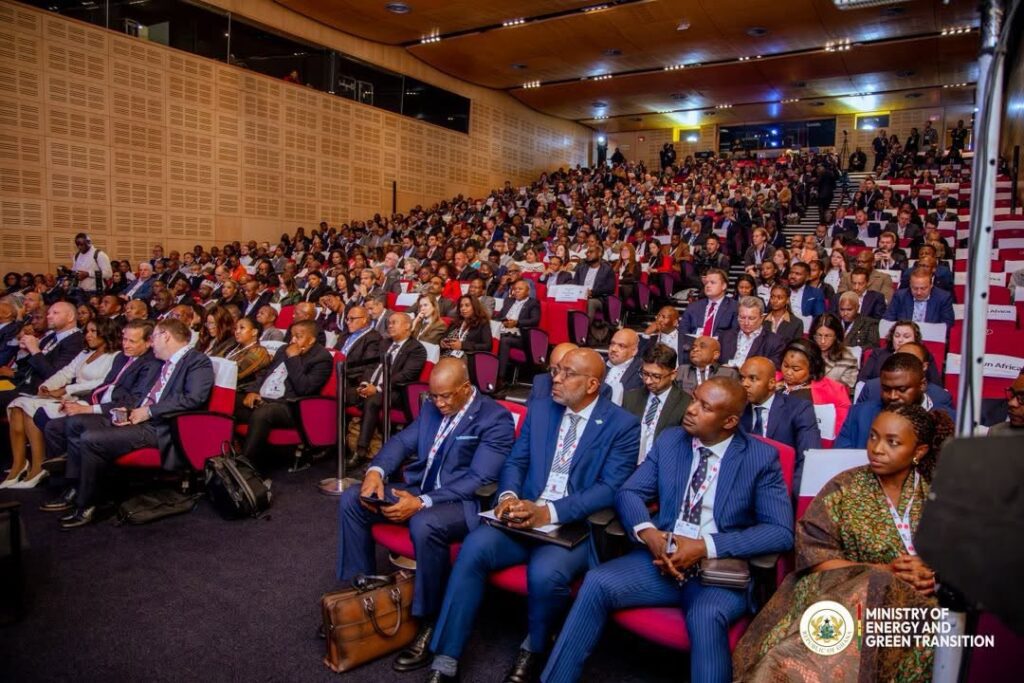
Hon. Jinapor detailed that a truly fair transition for the continent must directly translate into tangible domestic benefits, notably widespread job creation, poverty reduction, and the comprehensive rollout of clean cooking solutions.
He noted that while international climate pressures continue to mount, African states must carefully anchor their roadmaps within their unique socioeconomic realities.
According to the energy minister, the foundation for achieving this equilibrium lies in building robust policy credibility to court critical global investments, positioning natural gas strategically as an indispensable medium-term transition fuel, and simultaneously scaling up home-based green technologies to tackle pervasive energy poverty across rural and urban landscapes.
Establishing Policy Credibility and the Strategic Role of Gas
A foundational cornerstone of the continent’s autonomous transition plan involves creating predictable, transparent legal frameworks that insulate long-term infrastructure projects from political volatility.
Hon. John Abdulai Jinapor argued that international capital will only flow into regional energy markets if host governments demonstrate unyielding policy credibility.
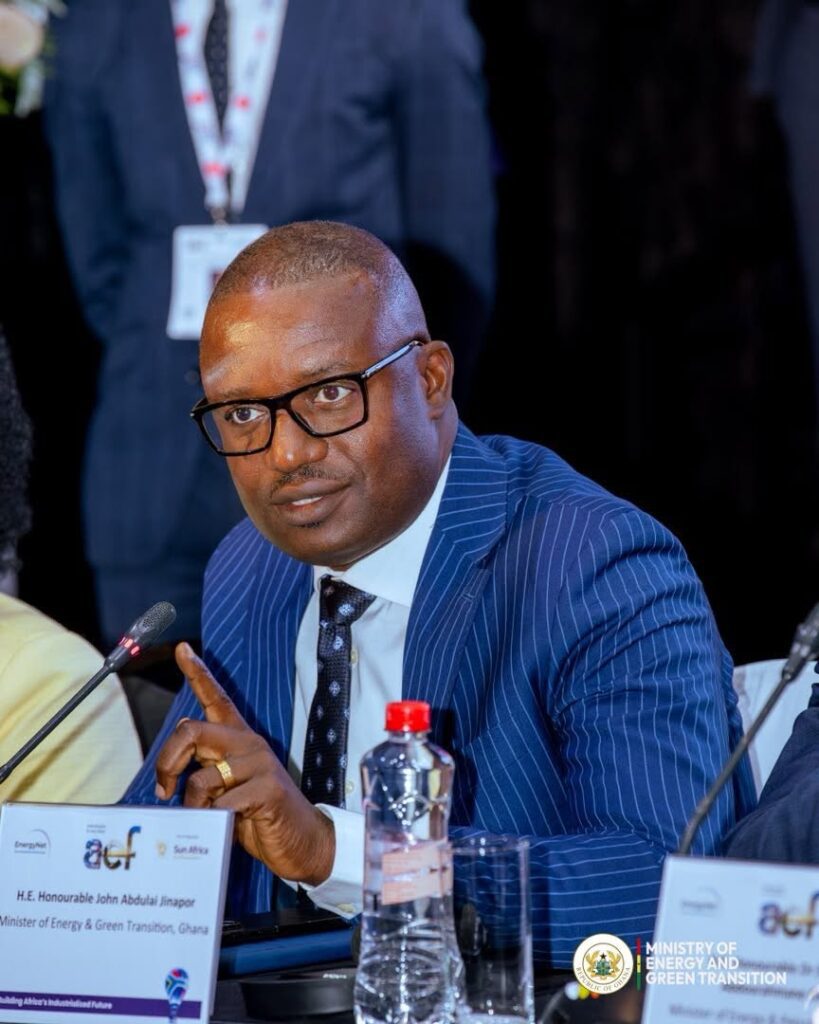
“Building an energy future that balances access, industrialization, and sustainability requires substantial external financing,” he remarked during the forum, adding that transparent regulatory regimes serve as the ultimate de-risking mechanism for institutional investors.
Rather than executing an abrupt, wholesale abandonment of fossil resources, Ghana’s blueprint highlights the utilization of natural gas as a vital, cleaner-burning bridge toward total decarbonization.
By utilizing domestic gas reserves to anchor grid stability, African states can power heavy manufacturing, minimize ambient pollution from cruder industrial fuels, and create the baseline thermal energy required to support volatile, weather-dependent renewable integrations.
Scaling Renewable Infrastructure and Decentralized Power Access
To materialize these sovereign green objectives, Ghana is actively advancing a diversified, multi-tiered infrastructure model that merges grid-scale generation with localized distribution networks.
The Minister for Energy and Green Transition detailed that the nation’s contemporary commitment to renewable energy is being aggressively driven through the deployment of large-scale solar farms and advanced utility-scale energy storage solutions designed to mitigate intermittent supply drops.
These central projects are being strategically paired with decentralized home solar systems to rapidly bridge the rural electrification gap and alleviate persistent energy poverty.
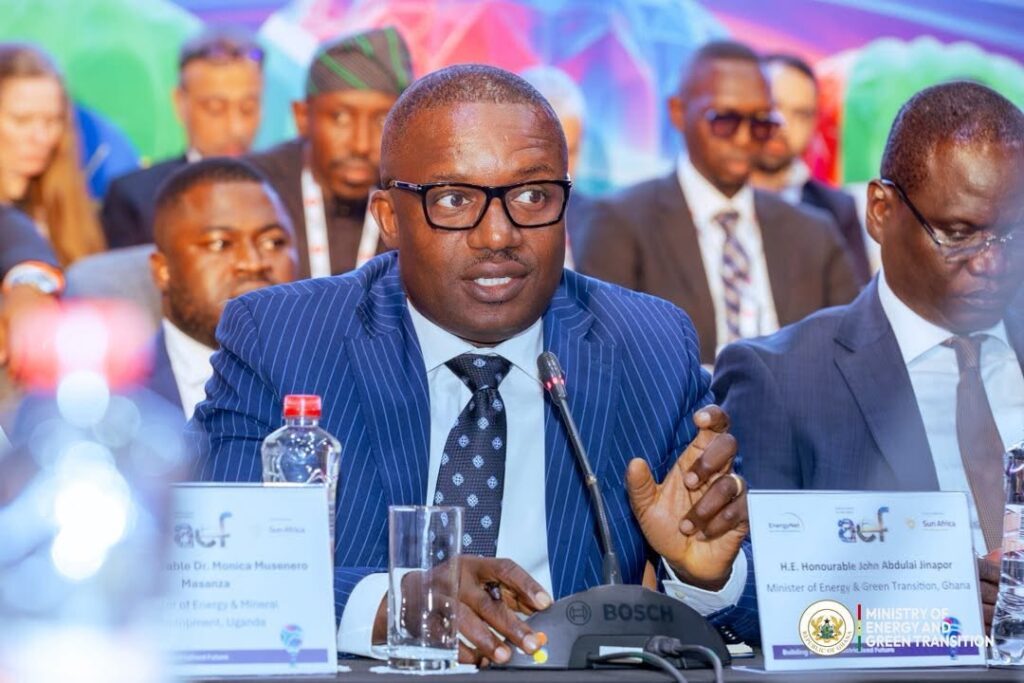
Simultaneously, the state is preparing its metropolitan grid networks for the future of transport by systematically laying down electric vehicle (EV) charging infrastructure.
This dual focus on localized, off-grid consumer solutions and robust, modernized national assets reflects an overarching regional strategy: using renewable technology not merely as an environmental checkbox, but as a direct vehicle for expanding universal electricity access to underserved demographics.
Driving Industrialization and Socioeconomic Transformation Across Africa
Ultimately, the ultimate metric of success for Africa’s self-determined energy journey is its ability to fuel robust industrialization while triggering widespread economic growth.
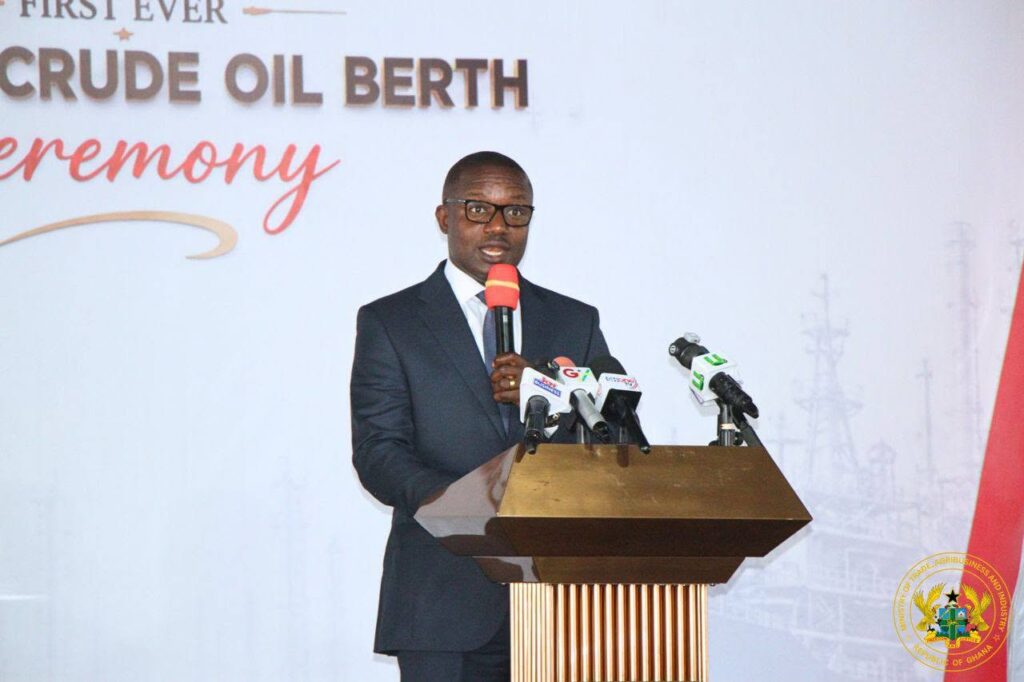
Hon. Jinapor maintained that standard climate architectures designed by industrialized western economies often overlook the continent’s unique baseline, where primary goals still center around manufacturing expansion and job creation for a rapidly growing youth populace.
A transition that fails to stimulate factory floors or reduce operational overheads for local enterprises remains fundamentally unjust.
By controlling the pace of the green shift, African nations can protect their manufacturing sectors from premature asset stranding while systematically building local supply chains for clean technologies.
Integrating local labor into the installation of solar arrays, the maintenance of regional energy storage facilities, and the distribution of clean cooking systems ensures that the green transition serves as a structural catalyst for poverty eradication, effectively guaranteeing long-term continent-wide prosperity.