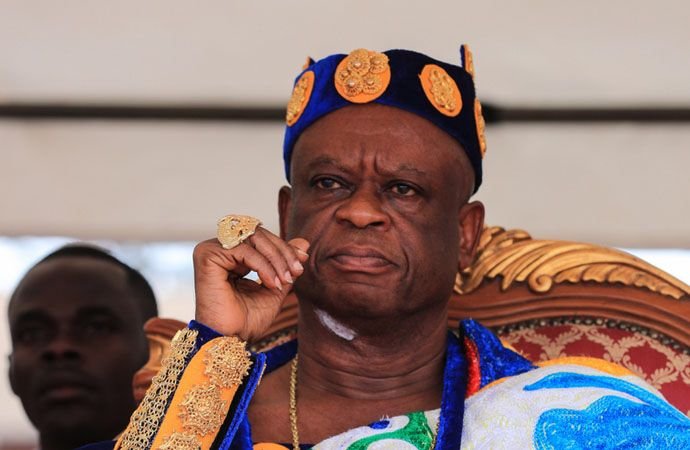
The President of the National House of Chiefs, Ogyeahoho Yaw Gyebi II, has endorsed the landmark proposal by the Ghana Chamber of Mines demanding that 30% of mineral royalties be channeled directly back into host communities.
This crucial endorsement marks a major shift in the country’s extractive resource discourse, aiming to rectify decades of uneven developmental distribution.
For a long time, traditional authorities and mining advocates have expressed worry over how central government absorbs the largest portion of resource revenues, leaving frontline communities to experience the environmental and social impacts of extraction with minimal economic cushioning.
By throwing the weight of the traditional leadership behind this fiscal adjustment, the move establishes a unified front to challenge the existing mineral revenue distribution framework and secure a fairer share of the nation’s natural wealth.
“The people who host mining activities must see tangible improvements in their lives. Returning a greater share of mineral royalties to these communities will help accelerate local development and reinforce the social licence for responsible mining.”
President of the National House of Chiefs, Ogyeahoho Yaw Gyebi II

The proposed framework is designed to empower local municipal authorities and traditional leaders by giving them direct access to capital for critical public infrastructure.
Under the current system, the host territories where gold, manganese, and bauxite are extracted continue to face severe deficits in basic amenities like asphalted roads, clean drinking water, and fully equipped health facilities.
The Chamber’s long-standing advocacy, now bolstered by the National House of Chiefs, argues that dedicating nearly a third of total royalties to these areas will create an immediate financial pipeline to bridge these developmental gaps.
This arrangement will also alter the structural relationship between mining conglomerates, state institutions, and host populations, ensuring that local communities no longer view mining operations as exploitative, but rather as collaborative vehicles for sustainable regional transformation.
Enhancing Local Infrastructure and Value Retention
The implementation of this 30% royalty retention model provides a profound structural remedy to the economic imbalances that plague resource-rich regions.
Currently, the centralized nature of mineral revenue allocation means that host areas suffer severe infrastructure deficits while the wealth they produce funds distant national projects.

With 30% of these substantial funds remaining at the grassroots level, municipal assemblies can independently finance long-term development initiatives without waiting for bureaucratic approvals from the central government.
Beyond building roads and clinics, this retained capital acts as a economic catalyst, allowing communities to build backward and forward economic linkages.
Instead of serving as mere extraction points for raw mineral exports, host regions can utilize these sustained revenues to invest in local supply chains, manufacturing support systems, and light industrial processing, which actively retains the financial value of the minerals within the local economy.
Human Capital and Vocational Skills Optimization
A major turning point in this advocacy framework is the deliberate focus on long-term human capital development through specialized educational ecosystems.
During the recent Mining for Development Forum, stakeholders, including government officials and academic experts, emphasized that infrastructure alone cannot sustain a community without a highly skilled workforce.

Securing a steady, decentralized flow of mineral royalties radically redefines the corporate-community dynamic by solidifying the “social licence” required for trouble-free corporate operations.
When host populations witness measurable improvements in their living standards, the historic friction between mining multinationals and local residents dissolve into a shared commitment to protect these investments.
This financial restructuring does not relieve mining firms of their corporate social responsibilities; rather, it complements their strategic community investments.
Armed with guaranteed royalty allocations, local authorities can co-invest alongside mining corporations in enterprise development and local procurement systems.
This collaborative approach turns host communities into true economic partners, fostering a peaceful, legally compliant environment where sustainable resource extraction directly fuels generations of shared national and regional prosperity.
READ ALSO: UN Kicks Off Global AI Governance Dialogue