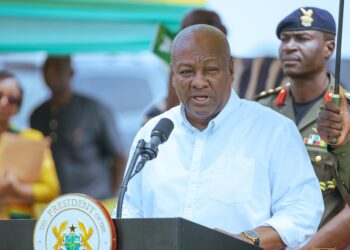

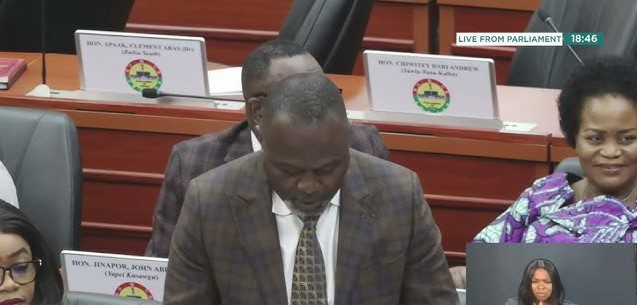
The Attorney General and Minister for Justice, Dr. Dominic Ayine, has formally laid the Tribunal Bill, 2026 before Parliament, marking a major step toward reintroducing public tribunals into Ghana’s justice delivery system under a new constitutional framework.
The bill, which received Cabinet approval before its introduction, passed its first reading in Parliament on July 6, 2026. It now begins the legislative process aimed at establishing specialized tribunals designed to complement the country’s traditional courts, reduce growing case backlogs, and accelerate the prosecution of specific categories of criminal offences.
The proposed legislation also fulfils a key commitment made by the National Democratic Congress and President John Dramani Mahama during the 2024 general election campaign to strengthen the fight against corruption and improve the efficiency of the justice system.
New Tribunal Structure Within the Judiciary
Unlike the public tribunals established during the Provisional National Defence Council era, the proposed tribunals will operate entirely within Ghana’s formal Judicial Service.

The bill creates a two tier tribunal structure consisting of Regional Tribunals and District Tribunals, each assigned clearly defined responsibilities while operating alongside existing courts.
Regional Tribunals will exercise concurrent jurisdiction with the High Court over specialized criminal matters. These include money laundering, economic crimes, narcotics offences, tax fraud, customs violations, and cases involving the loss of state funds.
District Tribunals will operate alongside Circuit Courts and handle less serious criminal offences, allowing local cases to be heard more quickly while easing pressure on the conventional court system.
Government believes the additional judicial structure will improve the speed of criminal justice without replacing the country’s existing courts.
Fast Track Focus on Illegal Mining
A major objective of the legislation is to strengthen Ghana’s response to illegal mining, commonly known as galamsey.
The proposed tribunals are expected to provide fast track mechanisms for prosecuting illegal mining related offences, an area that has become a major national concern because of its impact on forests, rivers, and public health.
By creating specialized forums capable of handling such prosecutions more efficiently, the government hopes to improve enforcement while protecting the country’s natural resources.
The legislation also targets financial and economic crimes that often require specialized judicial attention because of their complexity and national importance.
Constitutional Limits Clearly Defined
While expanding judicial capacity, the bill also places clear limits on the powers of the proposed tribunals. Under the draft legislation, tribunals will not have jurisdiction over constitutional interpretation or matters involving alleged violations of fundamental human rights.
These cases will remain exclusively within the jurisdiction of Ghana’s established superior courts. The exclusions are intended to preserve constitutional safeguards while ensuring that tribunals focus on the specialized criminal matters for which they are being established.
New Safeguards Replace Past Practices
The Tribunal Bill introduces several governance measures designed to distinguish the proposed tribunals from those that operated during the 1980s.
Public tribunals established under the PNDC government attracted criticism from some analysts over human rights concerns and their operation outside the mainstream judicial system.
The new legislation seeks to address those historical concerns by placing tribunals firmly under judicial oversight. According to the bill, the Chief Justice will exercise overall supervision of tribunal operations, while the Judicial Council will oversee their administration alongside a newly proposed Tribunal Oversight Committee.

These institutional safeguards are intended to strengthen transparency, accountability, and public confidence in the tribunal system.
Citizens Included in Justice Delivery
Another significant feature of the bill is the inclusion of ordinary citizens in tribunal proceedings. Each tribunal will be chaired by a legally qualified chairman who will sit with citizen panel members appointed to participate in the adjudication process.
The arrangement is intended to make the justice system more accessible while encouraging greater public participation in judicial proceedings. The government believes involving ordinary citizens will help demystify legal processes and strengthen public confidence in the administration of justice.
The proposed legislation also places strong emphasis on protecting constitutional rights. Every accused person appearing before a tribunal will retain the full right to legal representation throughout proceedings.
In addition, decisions delivered by tribunals will remain subject to appeal before the appropriate higher courts within Ghana’s judicial system. These safeguards are intended to ensure that faster case disposal does not come at the expense of fairness, judicial independence, or constitutional protections.
Bill Moves to Parliamentary Committee
Following its first reading, Parliament has referred the Tribunal Bill, 2026 to a joint committee made up of the Constitutional, Legal and Parliamentary Affairs Committee and the Judiciary Committee.
The committees are expected to undertake detailed scrutiny of the proposed legislation before it returns to the House for its second and third readings.
As part of the review process, key stakeholders including the Ghana Bar Association, legal academics, and civil society organisations will be invited to submit memoranda and provide expert opinions on the bill.
The consultation process is expected to shape parliamentary debate and may influence amendments before the legislation is considered for final approval.
Part of Broader Justice Reform Agenda
The introduction of the Tribunal Bill forms part of the Mahama administration’s wider agenda to strengthen governance, improve accountability, and enhance the effectiveness of Ghana’s justice system.
Government argues that expanding judicial capacity through specialized tribunals will help address delays that have affected the prosecution of financial crimes, environmental offences, and other complex criminal cases.
If enacted, the legislation will formally reintegrate public tribunals into Ghana’s judicial framework while introducing constitutional safeguards intended to ensure transparency, judicial independence, and respect for due process.
With Cabinet approval already secured and parliamentary consideration now underway, the Tribunal Bill represents one of the administration’s most significant justice sector reform initiatives since assuming office, with its progress likely to attract close attention from legal practitioners, civil society, and the wider public.
READ ALSO: Weak Banking Systems Hamper African Regional Trade