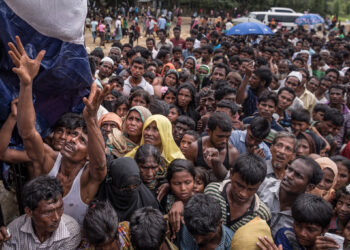
United Nations has voiced grave concern over reports that two boats carrying more than 500 people, most of them Rohingya refugees fleeing conflict and hardship, may have capsized off the coast of Myanmar, raising fears of one of the deadliest maritime tragedies in the region this year.
The International Organization for Migration (IOM) and the UN Refugee Agency (UNHCR) said preliminary information indicates that the two vessels departed Myanmar’s conflict-ravaged Rakhine State in late June, transporting hundreds of Rohingya men, women and children seeking safety.
Some passengers are also believed to have travelled from refugee camps in Cox’s Bazar in neighbouring Bangladesh before boarding the boats.
According to the UN agencies, one vessel carrying an estimated 250 people lost contact shortly after leaving shore, while a second boat, reportedly transporting around 280 passengers, is believed to have sunk off Myanmar’s Ayeyarwady coast on 8 July.
Although authorities have not yet officially confirmed the incidents or the number of casualties, both UN agencies warned that the reports point to the possibility of a devastating humanitarian disaster on one of the world’s most dangerous migration routes.
“The International Organization for Migration (IOM) and UNHCR, the UN Refugee Agency, are deeply concerned by reports that two boats carrying more than 500 people may have capsized off the coast of Myanmar in recent days.”
IOM and UNHCR
The reported disappearances occurred outside the region’s normal sailing season, when rough seas, monsoon rains and powerful currents make maritime travel significantly more dangerous.
Recent torrential rainfall and widespread flooding across parts of South and Southeast Asia have further increased the risks facing those attempting perilous sea crossings.
If the incidents are confirmed, the tragedy would dramatically add to an already rising death toll in the Andaman Sea and Bay of Bengal, where nearly 300 people have already been reported missing or dead this year while attempting similar journeys.
The latest reports once again highlight the desperate choices confronting Rohingya families after years of displacement, armed conflict and limited opportunities for rebuilding their lives.
The Rohingya, a predominantly Muslim ethnic minority from Myanmar’s Rakhine State, have faced decades of persecution, discrimination and statelessness. Hundreds of thousands fled military operations in 2017, with Bangladesh hosting nearly one million refugees in overcrowded camps around Cox’s Bazar.
Despite years of humanitarian assistance, prospects for voluntary repatriation or long-term resettlement remain limited, leaving many families with few options beyond dangerous irregular migration.
According to UNHCR and IOM, the worsening humanitarian situation inside Myanmar, coupled with escalating conflict and shrinking opportunities in refugee camps across the border, continues to push increasing numbers of Rohingya toward risky sea voyages organised by smuggling and trafficking networks.
The UN agencies warned that vulnerable migrants frequently embark on these treks, believing they are their only chance of reaching safety, education, job, or family connections elsewhere in the region.
However, overcrowded vessels, uncertain weather, and exploitation by criminal groups sometimes make those travels life-threatening.
UN Calls for Stronger Regional Action to Protect Refugees

United Nations
Beyond the immediate search for survivors, the United Nations is urging governments across South and Southeast Asia to strengthen cooperation aimed at preventing further tragedies in the Andaman Sea and Bay of Bengal.
The agencies stressed that improving search and rescue operations must remain an urgent priority, alongside ensuring access to asylum procedures and strengthening protections for refugees and migrants travelling along regional migration routes.
The reported disappearances also underscore the continuing influence of human smuggling and trafficking networks, which exploit the desperation of displaced people seeking safety and better opportunities.
According to UNHCR and IOM, “these reports underscore the devastating impact of protracted conflict and displacement, as well as the continued lack of sustainable solutions for Rohingya communities.“
“Escalating conflict and a worsening humanitarian situation in Myanmar, along with limited assistance and opportunities in refugee camps in Bangladesh, contribute to increasing numbers of people attempting perilous sea journeys in search of safety and protection.”
IOM and UNHCR
The organisations also highlighted Bangladesh’s longstanding role in sheltering Rohingya refugees, acknowledging the country’s continued commitment despite the enormous humanitarian burden created by one of the world’s largest refugee populations.
“While recognizing Bangladesh’s remarkable generosity in hosting Rohingya refugees for many years, UNHCR and IOM call for sustained international support for Rohingya refugees and the communities hosting them, alongside greater efforts to address the underlying drivers of forced displacement.”
IOM and UNHCR
This appeal comes as humanitarian agencies continue to advocate for increased international responsibility-sharing to assist nations hosting significant refugee populations, while also working on long-term political solutions within Myanmar.
UNHCR and IOM stated they are collaborating with countries in South and Southeast Asia on a “route-based approach,” coordinating protection measures for refugees, migrants, and stateless individuals crossing regional migration corridors.
READ ALSO: Argentina Fightback Against England, Reach Third World Cup Final in Last Four Editions