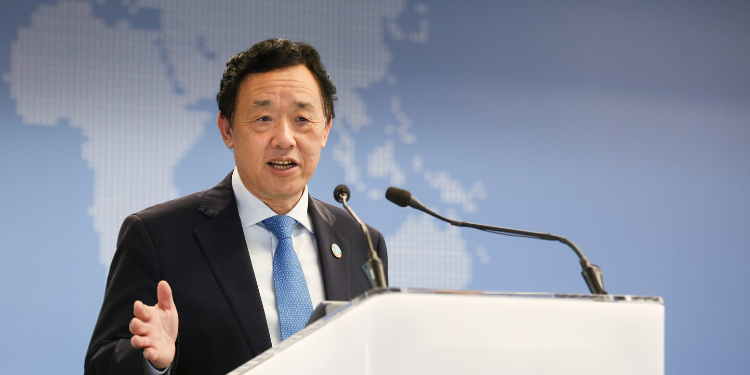
Food and Agriculture Organization (FAO) Director-General QU Dongyu has called for a fundamental shift in the way agricultural success is measured, urging countries to move beyond producing sufficient quantities of food to ensuring that people have access to diverse, nutritious and affordable foods needed for healthy diets.
QU Dongyu made the call while addressing the International Horticultural Congress 2026 in Kyoto, Japan, where he highlighted the growing contribution of fruits, vegetables and other horticultural crops to nutrition, livelihoods, biodiversity and the resilience of agrifood systems.
The FAO chief noted that the global agricultural sector could no longer assess its performance solely by the volume of food produced, arguing that food production must also respond to changing nutritional needs and ensure that healthy foods are accessible to populations across income levels.
“Success can no longer be measured simply by how much food we produce. It must also be measured by whether agriculture provides the foods that healthy societies require, and whether those foods are available, accessible and affordable for everyone.”
QU Dongyu
Horticulture is increasingly important in addressing those challenges because fruits and vegetables provide essential vitamins, minerals and other nutrients while also supporting millions of farmers and workers across global food systems.
According to FAO data presented at the congress, fruit and vegetable production expanded faster than cereal production between 2010 and 2024. Horticulture now accounts for almost a quarter of the value of global agricultural production, estimated at about $1.4 trillion.
International trade in horticultural products has also expanded considerably. Exports grew by approximately 2.6% annually during the period, reaching 175 million tonnes with a value of about $240 billion in 2024.
Yet the economic expansion has not automatically translated into healthier diets, according to the FAO chief.
The organisation has identified productivity, availability and affordability as three interconnected challenges that must be addressed if horticulture is to fulfil its potential to improve nutrition globally.
Horticultural production remains a major challenge. Yields have grown by below 1% every year, lagging the rate seen with cereals. The FAO blames the difference to a lack of investment in agricultural research, superior genetics, and infrastructure.
Another significant barrier is availability. According to the FAO’s most recent research, in 2023, only about half of nations produced enough fruits and vegetables to fulfil the FAO/WHO standard of 400 grams per person per day.
Globally, average consumption remains far lower than that guideline, with each individual eating around 80 grams of fruit and 190 grams of vegetables per day.
The affordability of nutritious food is also under growing pressure. Producer prices increased between 2016 and 2025 in 89% of countries for fruits and 93% for vegetables, with median annual increases of approximately 4.2% for fruits and 4.7% for vegetables.
Those trends could have particularly serious consequences for developing regions where households already devote a large proportion of their incomes to food.
Projections indicate that by 2050, fewer than one-third of countries in sub-Saharan Africa could have sufficient supplies of fruits and vegetables to meet the joint FAO/WHO recommendation.
The warning carries significant implications for African countries, where agriculture remains central to employment, rural livelihoods and food security. Limited access to irrigation, improved planting materials, storage infrastructure, financing and markets continues to constrain agricultural productivity in many parts of the continent.
Climate change is adding further pressure. Rising temperatures, water scarcity, extreme weather events, pests and plant diseases are increasingly threatening agricultural production and placing additional demands on already limited natural resources.
Against this backdrop, QU Dongyu has called for greater investment across the horticultural value chain, including improved seeds and planting materials, healthier soils, efficient irrigation, mechanisation, digital technologies, agricultural extension services, post-harvest systems and stronger connections between farmers and markets.
FAO Urges Innovation to Reach Small-Scale Farmers
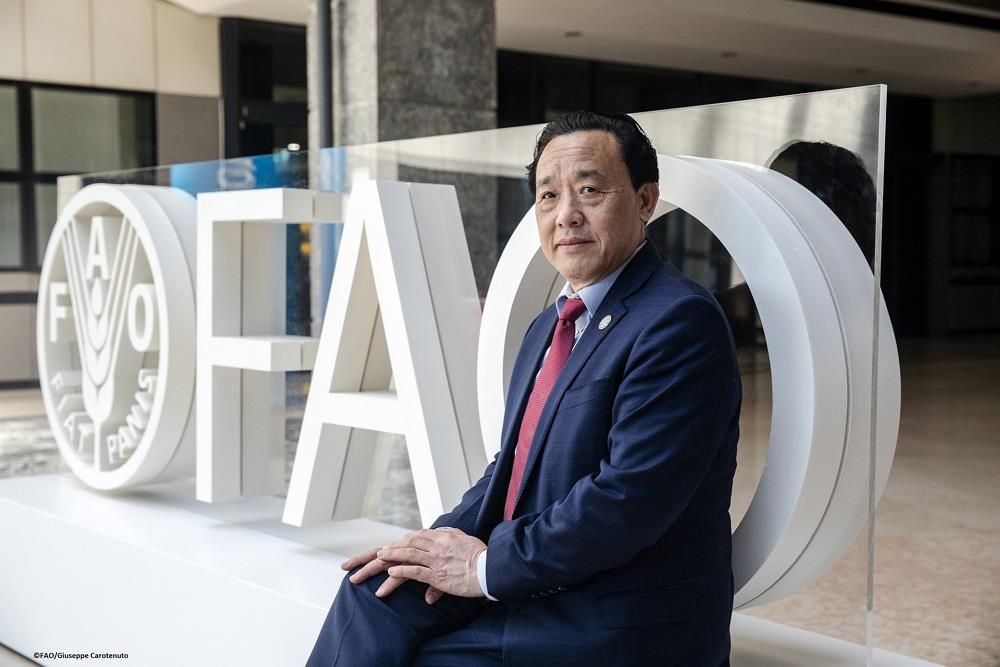
Moreover, the FAO Director-General stressed that transforming horticulture would require more than simply increasing production. Farmers, particularly small-scale producers, must remain at the centre of innovation and policy decisions.
“No innovation, no policy and no investment will succeed without their knowledge, their confidence and their participation. Scientists and researchers’ works must be recognized by farmers.”
QU Dongyu
Technological advances are already changing agricultural production, with artificial intelligence, genome editing and digital tools increasingly being used to accelerate crop breeding, improve productivity and reduce post-harvest losses.
QU Dongyu pointed to the work of the Joint FAO/IAEA Centre of Nuclear Techniques in Food and Agriculture, particularly its contribution to mutation breeding. The initiative has contributed to more than 3,450 officially released crop varieties across more than 70 plant species, including fruits and vegetables.
However, the FAO chief cautioned that technological innovation would have limited impact if it remained beyond the reach of the farmers who need it most.
He has also called for technologies to be made accessible, affordable and practical, particularly for small-scale producers who account for a substantial share of global horticultural production.
Farms measuring 20 hectares or less produce more than half of the world’s fruits and vegetables. Their contribution is even greater in Asia and sub-Saharan Africa, where farms of that size account for more than 80 percent of fruit and vegetable output.
Governments, he said, therefore have an important role to play in strengthening research systems, seed supply chains, infrastructure and market access while developing trade policies that reward quality and nutritional value.
At the same time, QU Dongyu argues that the future of agriculture should not be built solely around modern technology. Traditional knowledge and agricultural practices developed over generations remain valuable resources for building resilient food systems.