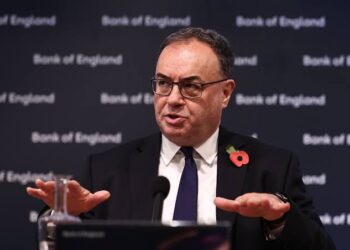
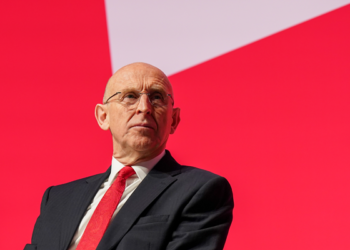
British Prime Minister Andy Burnham is set to unveil his first package of government measures aimed at easing the country’s cost-of-living crisis, marking the opening phase of an administration that has promised to restore public confidence in politics and deliver tangible improvements to living standards after years of economic pressure and political upheaval.
The announcement comes less than 24 hours after Burnham officially entered Downing Street, where he claimed to serve as a “circuit breaker” for British politics after a decade in which seven prime ministers held the country’s highest position.
Determined to set his government apart from previous administrations, Burnham has stated that his first days in office will be spent giving immediate financial assistance to people while laying the groundwork for larger economic and public sector improvements.
Speaking after his appointment, Andy Burnham acknowledged that millions of families continue to struggle with rising living costs and insisted that his government would move rapidly to demonstrate that political leadership can produce meaningful change.
“I can do something to give people some breathing space now, some help with the cost of living. And I will set out some of those measures including how we pay for them.”
Andy Burnham
Although Burnham acknowledged that the measures alone would not solve Britain’s economic difficulties, he argued they would signal a clear shift in the government’s priorities by placing ordinary citizens at the centre of policymaking.
Burnham’s rise to power has been unusually swift. Having returned to Westminster only weeks ago after winning a parliamentary by-election, he secured overwhelming support in Labour’s leadership contest before replacing Sir Keir Starmer as party leader and prime minister.
His arrival in Downing Street has been widely interpreted as an attempt by Labour to reconnect with voters after disappointing electoral performances and growing concerns about the government’s political direction.
Known widely as the “King of the North” for his advocacy on behalf of Greater Manchester during his tenure as mayor, Burnham has repeatedly argued that government should focus more directly on improving everyday life, particularly outside London. His administration is expected to pursue policies that strengthen regional economies, expand devolved powers and reduce inequalities between different parts of the United Kingdom.
His first speech as Prime Minister reflected those priorities, identifying the elimination of rough sleeping as one of his government’s earliest ambitions while promising that families would begin to experience practical benefits from Labour’s new approach.
Burnham Reshapes Cabinet in Bold Break With Starmer
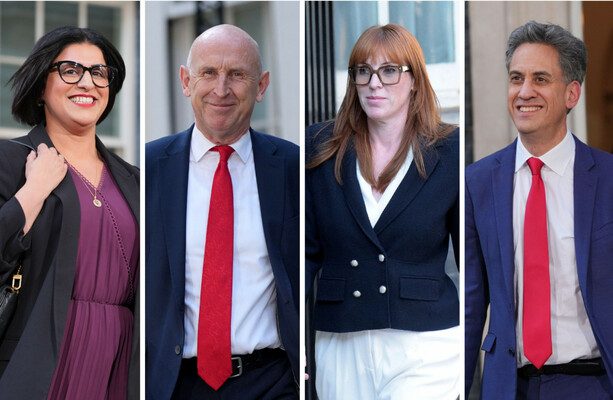
Alongside preparations for his first policy announcements, Burnham has undertaken one of the most significant Cabinet reshuffles in recent British political history, replacing numerous senior figures associated with former Prime Minister, Keir Starmer in a move designed to establish his own authority over government.
The changes amounted to a decisive restructuring of Labour’s leadership team, with more than nine ministers closely aligned with Starmer leaving government. High-profile departures included David Lammy, Rachel Reeves, Darren Jones and Peter Kyle, while several other ministers were either reassigned or promoted to key positions.
Among the most notable appointments is former Defence Secretary John Healey, who becomes Chancellor of the Exchequer and will oversee the government’s economic strategy during a period of continued financial pressure.
Former Energy Secretary Ed Miliband takes over as Foreign Secretary, while Louise Haigh assumes the influential roles of First Secretary of State, Chancellor of the Duchy of Lancaster and Minister for the Cabinet Office.
Shabana Mahmood remains Home Secretary, Yvette Cooper takes charge of the Health and Social Care, and Pat McFadden assumes responsibility for Work and Pensions.
In addition, Angela Rayner remains responsible for Communities, Housing and Local Government, while Jonathan Reynolds becomes Secretary of State for Business, Innovation, Science and Trade. Lucy Powell has been appointed Education Secretary, and Anneliese Midgley takes on the role of Chief Whip.
Several experienced ministers have retained their previous positions, including Heidi Alexander as Transport Secretary, Douglas Alexander as Secretary of State for Scotland, Lisa Nandy as Secretary of State for Digital, Culture, Media and Sport, Bridget Phillipson as Minister for Women and Equalities, and Sir Alan Campbell as Leader of the House of Commons.
Burnham has also established new ministerial roles that reflect growing policy concerns. Kanishka Narayan has been designated Minister for Artificial Intelligence, emphasising the government’s commitment to putting technical innovation at the heart of economic development, while Hamish Falconer will supervise intergovernmental and European ties.
The Cabinet composition clearly demonstrates Burnham’s desire to blend senior ministers with emerging political leaders while marking a significant shift from the previous administration.
Burnham’s initial policies, together with the performance of his newly constituted Cabinet, are expected to provide the first indication of whether his promise to deliver a “new approach to politics” can translate into long-term advantages for households across the United Kingdom.
READ ALSO: Power Lithium Battery Recycling Market Growth Accelerates Toward 2035