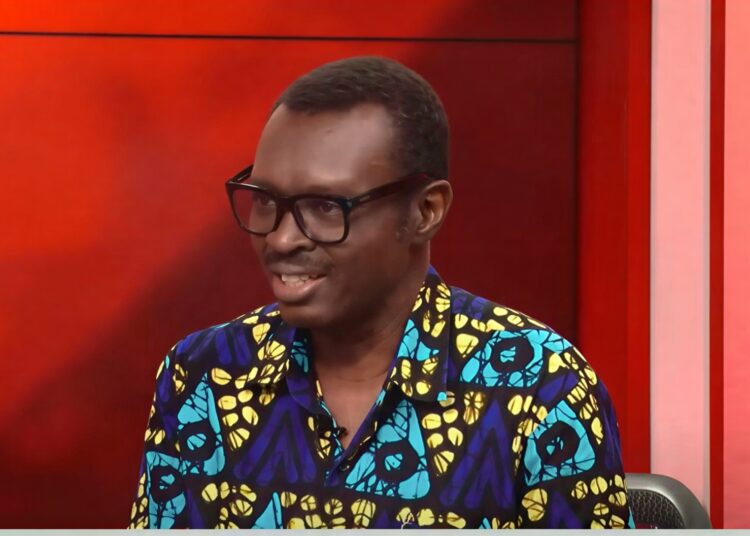
Anti-corruption campaigner Edem Senanu has challenged the Minority to stop characterising every legal prosecution involving political figures as political witch hunting without presenting evidence to support the claim. Mr Senanu argued that the proper response to allegations of wrongdoing is to confront the evidence and allow the courts to determine the issues through due process.
“What’s the witch hunting about? Give us some facts. If they have contrary facts, let them put them out there. Provide something substantive.”
Edem Senanu

The campaigner’s response follows comments by the Minority Leader and Member of Parliament for Effutu, Honourable Alexander Kwamena Afenyo Markin, who accused the government of using prosecution as a tool against political opponents during the Mid-Year Review. According to Mr Senanu, such claims require specific facts about the allegations, the persons involved and the evidence being challenged.
“I think this is just partisan politics, and they are not throwing any dust in our eyes. Any citizen who is following the facts knows that there is a case to be answered. So let him answer the case.”
Edem Senanu
Changing his focus to the wider political debate, the anti-corruption campaigner challenged political leaders to provide substantive responses to allegations involving public funds. He argued that disputing the figures or evidence would offer the public a basis for assessing the matter instead of relying on general claims of persecution.
Mr Senanu also warned that the credibility of Ghana’s political class could suffer when serious allegations are reduced to partisan arguments. The Campaigner argued that citizens expect political leaders to focus on national development and the aspirations of younger Ghanaians.
The debate, he suggested, has moved beyond the interests of individual political parties and now involves the public’s confidence in democratic governance. In his view, politicians have a responsibility to demonstrate that the country’s two party system could produce meaningful development and accountability.
Against this backdrop, Mr Senanu appealed to politicians to present facts whenever they dispute allegations made against them. He argued that the public deserves detailed explanations on disputed financial figures and other claims instead of broad political labels.
Campaigner Demands Evidence Behind Claims Of Threatened Prosecutions
Anti-corruption campaigner Edem Senanu challenged the Minority to provide specific details about claims that some of its Members of Parliament have been threatened with prosecution for criticising the government. He argued that the allegation require the names of the affected MPs, the circumstances of the alleged threats and the conduct that allegedly triggered the legal action.
Responding to the claim, Mr Senanu questioned why the affected lawmakers have not publicly identified the persons involved and explained the circumstances surrounding the alleged threats. From his perspective, a person facing an unjustified threat should immediately pursue the appropriate legal and investigative channels. The Campaigner argued that remaining silent while presenting the matter as a political complaint creates unanswered questions about the substance of the allegation.
He therefore challenged the Minority to provide the details required for civil society and the wider public to assess the matter. Mr Senanu argued that democratic accountability require facts that could be examined instead of general claims that left the public unable to determine what had actually occurred.
“If I were threatened on something I’ve not done, and I think that somebody is trying to scheme or set me up, my first recourse would be to go and report that person.”
Edem Senanu

The anti-corruption campaigner also cautioned against turning every dispute involving the NDC and NPP into a partisan contest. According to him, the country’s political class has a duty to focus on long term national progress instead of repeatedly engaging in arguments over political persecution without providing supporting evidence.
He further argued that civil society organisations would have a responsibility to speak up if government agencies unfairly target individuals without a legitimate basis. Mr Senanu pointed to previous instances where civil societies raised issues over the treatment of public officials and argued that the same principle should apply whenever credible evidence of intimidation emerges.
The discussion also brought the Office of the Special Prosecutor into the debate, with Mr Senanu recalling how some members of civil society previously appealed for consideration of a former Finance Minister, Ken Ofori Atta’s health condition during legal proceedings. He used the example to argue that public accountability and respect for individual rights could exist together within the justice system.
Nonetheless, the campaigner insisted that claims of intimidation should be supported by clear information. He argued that the Minority has the opportunity to identify the affected MPs, outline the alleged threats and explain the conduct that has triggered the reported legal action.
READ ALSO: GH¢58m Spent on Ghana’s World Cup Campaign, Finance Minister Reveals