

Ghana’s fuel market may be heading into another round of price increases before the current pricing window ends, with the Chamber of Petroleum Consumers (COPEC) warning that rising international crude and refined petroleum product prices are continuing to push domestic pump prices higher.
The warning comes as motorists, businesses and transport operators face renewed pressure from steadily increasing fuel costs.
Petrol is already selling at around GH¢14.50 per litre at some stations, while diesel is edging towards GH¢18.00, levels that could trigger broader inflationary effects across the economy if the upward trend persists.
According to COPEC Executive Director Duncan Amoah, the recent increases by oil marketing companies reflect developments on international petroleum markets rather than arbitrary domestic pricing decisions.
The prices are fair based on the numbers we have in-house.
Mr. Amoah said in an interview with Joy fm, explaining that the adjustments are being driven by movements in Platts benchmarks used for trading petrol, diesel and aviation fuel on global markets
Global markets are driving local pain
The latest surge is tied to a reversal in earlier declines in international petroleum prices.
Refined product prices have risen across major markets, including the United States, while crude oil has also strengthened.
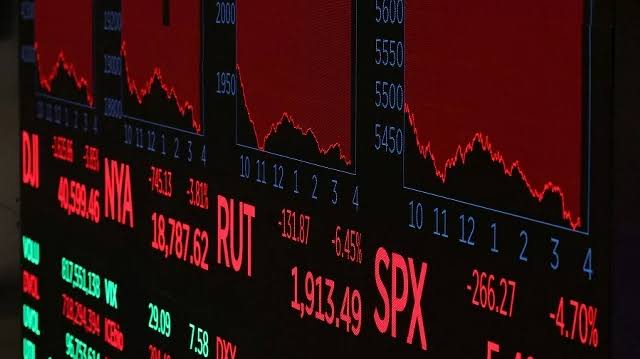
Because Ghana imports substantial volumes of refined petroleum products and prices are ultimately linked to international benchmarks, these movements feed directly into domestic pump costs.
In Ghana’s deregulated pricing system, oil marketing companies can adjust prices in response to changes in international product prices, the cedi-dollar exchange rate, taxes, levies and distribution margins.
That means pump prices can rise even before a new pricing window begins if replacement costs increase significantly.
For consumers, however, the distinction between global market dynamics and domestic pricing mechanisms offers little immediate relief.
Transport fares could become the next inflation trigger
The fuel warning has intensified concerns about public transport costs.
Transport operators are reportedly threatening to increase fares by 30 per cent unless government intervenes to cushion the impact of higher fuel prices.
A fare increase of that magnitude would extend the effects of the fuel surge far beyond private motorists.

Commuting costs for workers, transportation expenses for traders and logistics costs for businesses would all rise, creating additional pressure on food prices and other consumer goods.
Fuel is a major cost component for commercial transport, haulage, manufacturing and distribution businesses.
When diesel prices rise sharply, the impact often spreads through the economy faster than many other price changes.
Persistent increases in petrol and diesel costs can quickly move through transport, logistics and production chains, with broader consequences for consumer prices and household budgets.
Can TOR really protect consumers?
One of the most important questions raised by the latest developments is whether the resumption of crude oil refining at the Tema Oil Refinery (TOR) can meaningfully shield consumers from international price shocks.
COPEC says discussions with the refinery suggest that crude oil is being purchased on commercial terms at prevailing global prices, rather than under a preferential arrangement linked to Ghana’s domestic production.
If accurate, that has significant implications.
Domestic refining can improve supply security and reduce some costs associated with importing finished products, but it does not automatically guarantee lower pump prices when crude itself is bought at full international market value and paid for in US dollars.
Mr. Amoah indicated that COPEC had sought clarity on whether government was supplying crude to TOR under a discounted formula linked to international benchmarks such as Brent or West Texas Intermediate.
The available information, he said, points to a purely commercial arrangement.
The bigger policy question: should Ghana use its own crude differently?
The debate has reopened a long-standing policy question.
Ghana is an oil-producing country, yet it still imports large quantities of refined petroleum products because domestic refining capacity has historically been limited or underutilised.
COPEC is urging the Ghana National Petroleum Corporation (GNPC) and the Ministry of Energy and Green Transition to examine whether locally produced crude could be used more strategically to reduce the country’s exposure to repeated international price shocks.
This is where the conversation becomes more complex than a simple call for cheaper fuel.
Supplying domestic crude to local refineries at a discounted price could provide consumer relief, but it would also have consequences for government revenue, upstream contracts and the commercial interests of producers.
In effect, someone in the value chain would have to absorb the difference.
A useful debate, but not an easy solution
The instinct to use Ghana’s own crude to lower domestic fuel prices is politically attractive, but the economics are far from straightforward.
Crude oil is a tradable international commodity. Selling it below market value to a domestic refinery would amount to an implicit subsidy, and subsidies ultimately have to be financed either by the state, the producer or another participant in the petroleum chain.

Ghana’s recent experience with energy sector debt should make policymakers cautious about introducing new subsidy obligations without a clear funding mechanism.
A more realistic discussion may be about targeted relief mechanisms, improved refinery efficiency, reduced distribution bottlenecks and greater transparency in the fuel price build-up, rather than expecting domestic refining alone to disconnect Ghana from global oil markets.
Why this matters for inflation and growth
The immediate concern is not only the price at the pump.
If diesel approaches or exceeds GH¢18.00 and transport fares rise substantially, the effect could be felt across food supply chains, manufacturing costs and household expenditure.
Workers who rely on commercial transport would face higher daily expenses, while businesses could respond by passing additional logistics costs on to consumers.

The overall inflationary impact will depend on three factors: whether international petroleum prices continue rising, whether the cedi weakens further against the dollar, whether transport fares and other administered prices are adjusted.
At the moment, the combination of rising refined-product prices and commercially priced crude leaves limited room for immediate downward adjustments.
Energy security is improving, but price security is not
The resumption of refining at TOR is an important development for Ghana’s energy security.
It can strengthen supply reliability, reduce dependence on imported finished products and support the broader downstream sector.
But it should not be confused with price insulation.

As long as crude is acquired at international prices and fuel pricing remains linked to global market conditions, Ghanaian consumers will continue to feel the effects of geopolitical tensions, shipping disruptions and movements in international petroleum markets.
COPEC’s warning therefore highlights a difficult reality: Ghana may be improving its supply security, but it has not yet secured price security.
Unless global prices retreat, the cedi strengthens significantly or government revisits aspects of the tax and crude supply framework, motorists and businesses could face another round of increases before the end of the current pricing window.
READ MORE: Ghana’s Economy Must Go Beyond Stability to Real Job Creation – Hon. Haruna Iddrisu