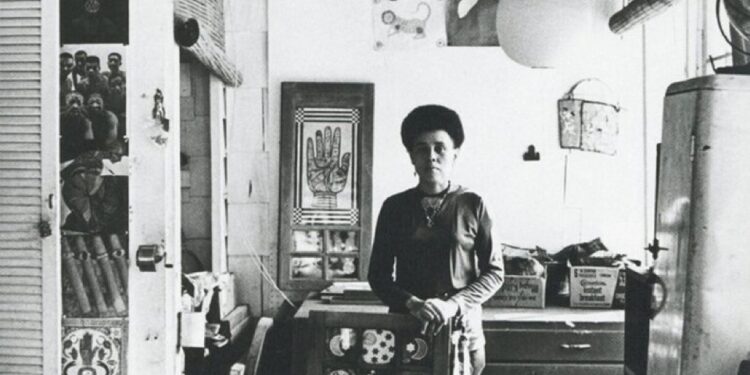
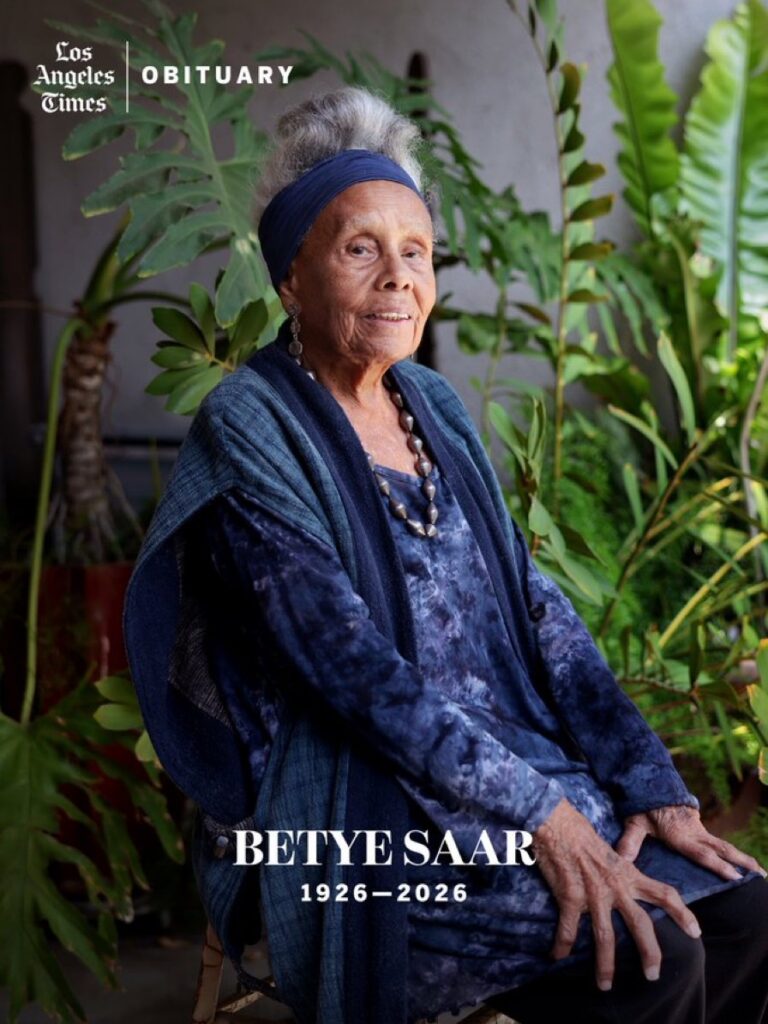
Acclaimed visual artist Betye Saar, a towering figure in the Black Arts Movement whose assemblage works transformed racist stereotypes into symbols of resistance and empowerment, died Sunday morning at her home in Los Angeles. She was 99.
Her death was confirmed Monday by relatives. Saar would have celebrated her 100th birthday on July 30.
Saar’s career spanned more than seven decades. She began in design and printmaking before pioneering assemblage -sculptures built from found objects like washboards, dolls, clocks, family photographs, fabric scraps, and Jim Crow-era memorabilia. Her symbolically rich pieces wove together themes of Black identity, culture, spirituality, history, and political defiance, earning her a place among the most influential American artists of the 20th and 21st centuries.
Born Betye Irene Brown on July 30, 1926, in Los Angeles, Saar was the oldest of three children. Her father died when she was six, and the family moved in with her paternal grandmother in the Watts neighborhood. There, she watched Italian immigrant Simon Rodia construct the iconic Watts Towers from discarded materials-rebar, shells, tiles, bottles, and cement.
This early exposure profoundly shaped her belief that everyday objects carried energy and stories waiting to be transformed.
She studied design at the University of California, Los Angeles, earning a B.A. in 1949, and later pursued printmaking and education at California State University, Long Beach, and other institutions. In 1956, she married Richard Saar, a ceramicist, with whom she had three daughters: Lezley and Alison, both artists, and Tracye, a writer. The marriage later ended in divorce.
Saar’s artistic turning point came in the late 1960s after viewing a Joseph Cornell exhibition. Inspired by his shadow boxes, she created her breakthrough work, “Black Girl’s Window” (1969). The mixed-media piece features a young Black girl peering through a window, her hands pressed against the glass adorned with cosmological symbols, blending personal narrative with broader themes of identity and mysticism.
Though groundbreaking, it received limited recognition at the time and was not acquired by the Museum of Modern Art until 2019.
Her most iconic piece, “The Liberation of Aunt Jemima” (1972), directly responded to the 1968 assassination of Dr. Martin Luther King Jr. Saar took the stereotypical “mammy” figure ,long used in branding to demean Black women and armed her with a broom in one hand and a rifle and hand grenade in the other.
The work subverted degrading imagery, turning a symbol of subservience into one of militant empowerment and Black liberation.
It became a cornerstone of both the Black Arts Movement and feminist art.
“ I wanted to empower her. I wanted to make her a warrior,” Saar explained of the piece.
Throughout her practice, Saar collected objects from flea markets, sidewalks, and travels to places like Morocco, Mexico, Nigeria, Haiti, and Brazil. Each item, she believed, retained traces of its previous life. “Each item I collect has a certain energy from its previous function that carries over into its new use,” she once said.
About Her Work
Her installations often explored mysticism, ritual, and the African diaspora alongside critiques of racism, technology, and environmental issues.
Saar was a central figure in Los Angeles’ vibrant Black arts community in Altadena and Pasadena. She taught and mentored generations of artists, including painter Kerry James Marshall. Despite early solo exhibitions, such as at the Whitney Museum in 1975-the museum’s first by a Black woman major institutional recognition came later in life. In 2019, concurrent solo shows at the Los Angeles County Museum of Art and MoMA celebrated her enduring impact.
In spring 2026, she was inducted into the American Academy of Arts and Letters. A 2023 documentary, “Betye Saar: Ready to Be A Warrior,” directed by Angela Robinson Witherspoon and featuring interviews with figures like John Legend and Tina Knowles, highlighted her boundless energy and commitment to challenging a white male-dominated art world.
Even into her 90s, Saar continued creating. Recent exhibitions, including “Let’s Get It On: The Wearable Art of Betye Saar” at Roberts Projects, showcased her costume designs and ongoing vitality. In 2025, she established the Betye Saar Legacy Group to preserve her archive and influence.
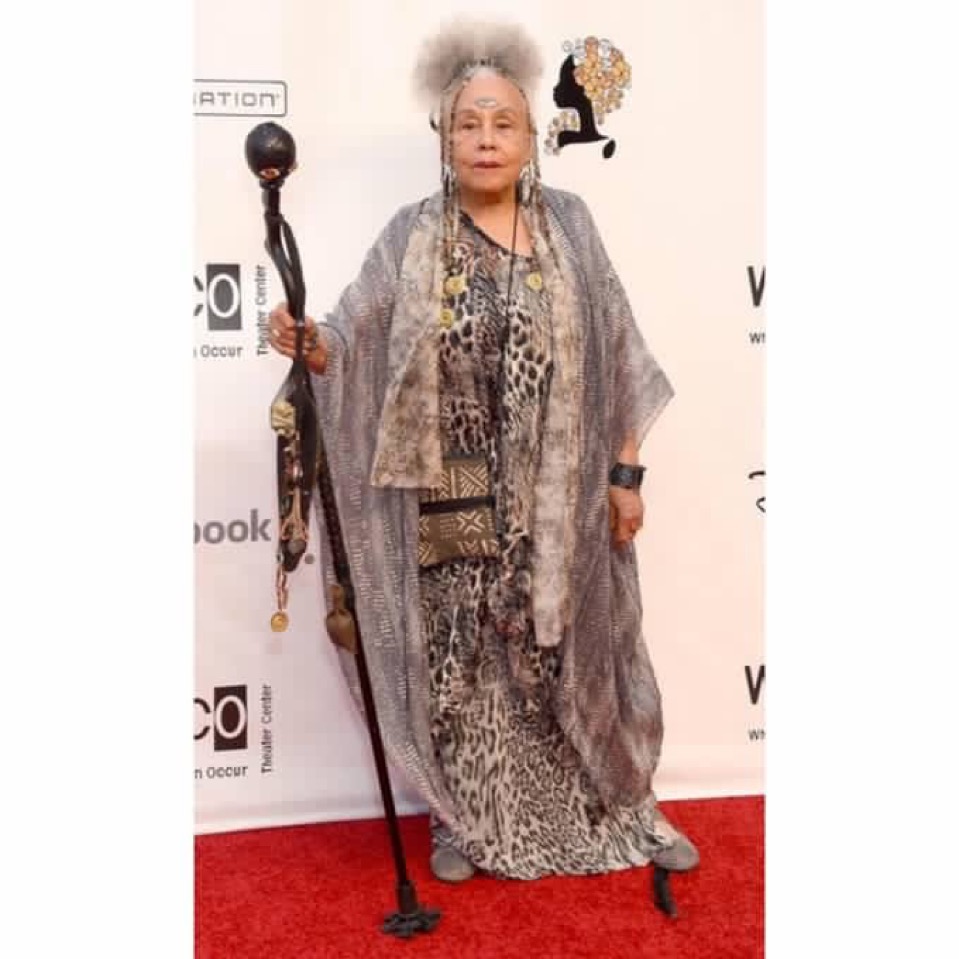
Saar’s work resides in over 60 museum collections worldwide, including the Studio Museum in Harlem, the Walker Art Center, and the Crocker Art Museum. Her legacy lies not only in her objects but in how she expanded the possibilities for Black artists, particularly women, and redefined assemblage as a vehicle for storytelling, resistance, and healing.
Tributes poured in following news of her passing. Colleagues and admirers described her as uncompromising, visionary, and tireless—a warrior whose art continues to challenge, inspire, and liberate. As one gallery statement noted, among the older generation of Black American artists, “Saar is without reproach.”
Her family, daughters, and the broader arts community are expected to announce memorial plans in the coming days. Though she is gone just days before her centennial, Betye Saar’s powerful assemblages ensure her voice and the reclaimed objects that spoke through her will resonate for generations.
READ ALSO:Poll Projects Ato Forson, Asiedu Nketia Defeating Bawumia in 2028