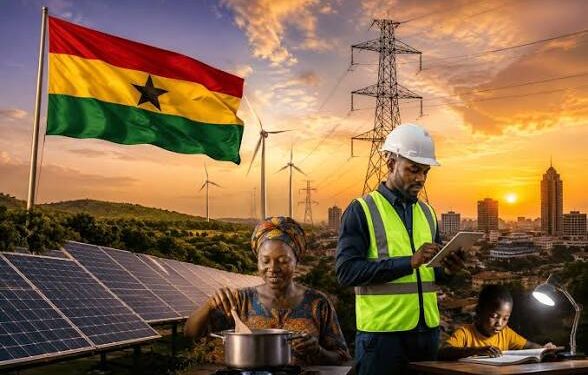
Ghana has pledged to share its experience in electricity access, power transmission and energy sector reforms with other African countries as the continent seeks to expand reliable and affordable electricity supply.
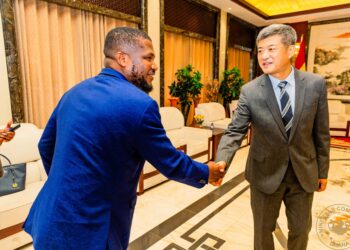
The commitment was announced by Deputy Minister for Energy and Green Transition, Richard Gyan-Mensah, during the 60th Annual General Meeting of the Association of Power Utilities of Africa (APUA) being held at the Mövenpick Ambassador Hotel in Accra.
Delivering a keynote address on behalf of the Minister for Energy and Green Transition, Dr John Abdulai Jinapor, the Deputy Minister said Ghana has made significant progress in expanding electricity access and strengthening power sector infrastructure, positioning the country to contribute to broader African energy development efforts.
According to him, Ghana’s electricity access rate has reached 89 per cent, while installed generation capacity now exceeds 5,300 megawatts (MW) against a peak demand of about 4,700 MW.
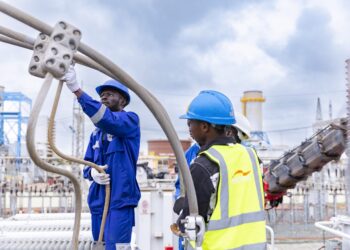
He also stated that the country’s power transmission network currently records an availability rate of about 99.5 per cent.
Energy progress linked to economic development
Mr Gyan-Mensah said the figures reflect more than technical achievements, arguing that improvements in the power sector have direct implications for businesses, healthcare, industry and household welfare.

These are not mere statistics. They represent businesses powered, hospitals running, industries expanding and lives transformed. Financial reforms have been the foundation.
Deputy Minister for Energy and Green Transition, Richard Gyan Mensah
The Deputy Minister noted that government has also taken steps to address financial challenges within the power sector, including the payment of GH¢1.4 billion toward part of the legacy debt owed to independent power producers (IPPs).
The debt issue has been one of the longstanding challenges affecting Ghana’s electricity sector, with concerns that delayed payments can undermine investor confidence and the financial sustainability of power generation.
Ghana positions itself as a regional partner
Mr Gyan-Mensah said Ghana is prepared to share its experience and expertise with other African countries seeking to improve electricity access, strengthen utility performance and implement energy sector reforms.

Ghana is ready to share its experience and expertise with other African countries to support the continent’s energy development.
Deputy Minister for Energy and Green Transition, Richard Gyan Mensah
He emphasised that sustainable power utilities require more than generation capacity alone, pointing to the importance of sound governance, strong financial management, reliable infrastructure and long-term investment planning.
The Deputy Minister urged African power utilities to place greater emphasis on financial sustainability, arguing that stronger utility finances are essential for maintaining infrastructure, attracting investment and supporting economic growth.
APUA meeting focuses on Africa’s power challenges
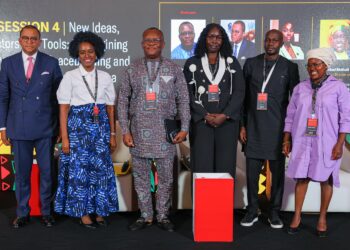
The APUA annual meeting has brought together power utilities, policymakers, regulators and energy sector stakeholders from across the continent to discuss electricity access, infrastructure development, financing and regional cooperation.
Africa continues to face significant electricity challenges, with millions of people still lacking reliable access to power despite substantial investments in generation and transmission.

Energy experts have increasingly argued that improving utility governance and financial performance is critical to closing the continent’s electricity gap.
For Ghana, hosting the APUA meeting provides an opportunity to showcase recent reforms while participating in discussions on regional energy integration, investment mobilisation and the transition to more resilient power systems.
Financial sustainability takes centre stage
Mr Gyan-Mensah stressed that technical progress must be supported by financial reforms if utilities are to remain viable over the long term.
He warned that weak utility finances can limit maintenance, delay new investments and reduce the ability of power companies to provide reliable service.

The Deputy Minister therefore called for closer collaboration among African utilities and governments to strengthen operational efficiency, improve revenue collection and create conditions that support sustainable electricity expansion.
His remarks come at a time when many African countries are seeking to balance growing electricity demand with the need for investment in transmission networks, renewable energy and grid modernisation.
Ghana’s broader energy ambitions
The government has recently highlighted investments in transmission upgrades, renewable energy, battery storage and other measures aimed at improving the resilience of the electricity system.
Officials have also linked reliable power supply to industrialisation, digital transformation and broader economic development goals.
By offering to share its experience with other African countries, Ghana is seeking to position itself not only as a beneficiary of regional cooperation but also as a contributor to the continent’s efforts to build stronger and more sustainable power systems.
The APUA meeting is expected to continue discussions on financing, governance and infrastructure development as African utilities explore ways to accelerate electricity access and improve service reliability across the continent
READ MORE: PwC Flags Lending Rates as Recovery’s Biggest Test