Japanese Prime Minister, Sanae Takaichi has visited Kumamoto Prefecture for the first time since a powerful magnitude 7.1 earthquake struck the region on the southern main island of Kyushu, as recovery efforts continue and local officials warn that extreme heat is worsening conditions for displaced residents.
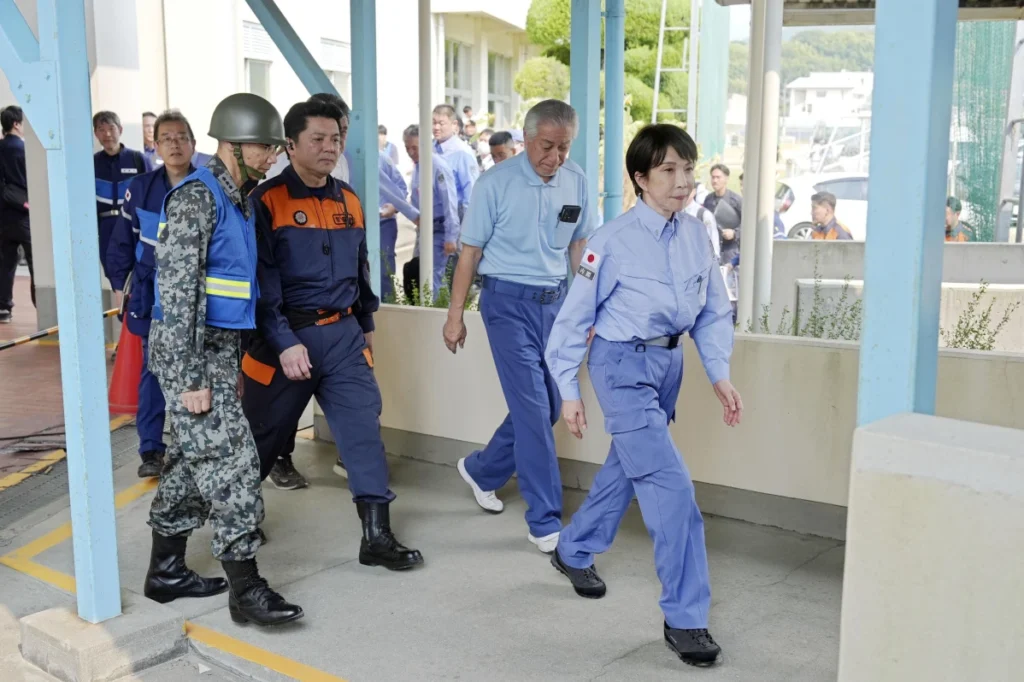
Takaichi travelled to the affected region to assess the damage and meet with local authorities overseeing relief operations. During the visit, she surveyed quake-hit communities before touring one of the area’s emergency shelters.
Prefectural officials disclosed today that thirty-eight people died during the quake, including one who died of apparent heat stroke while taking shelter in a car in hot weather and one other whose cause of death is still being investigated.
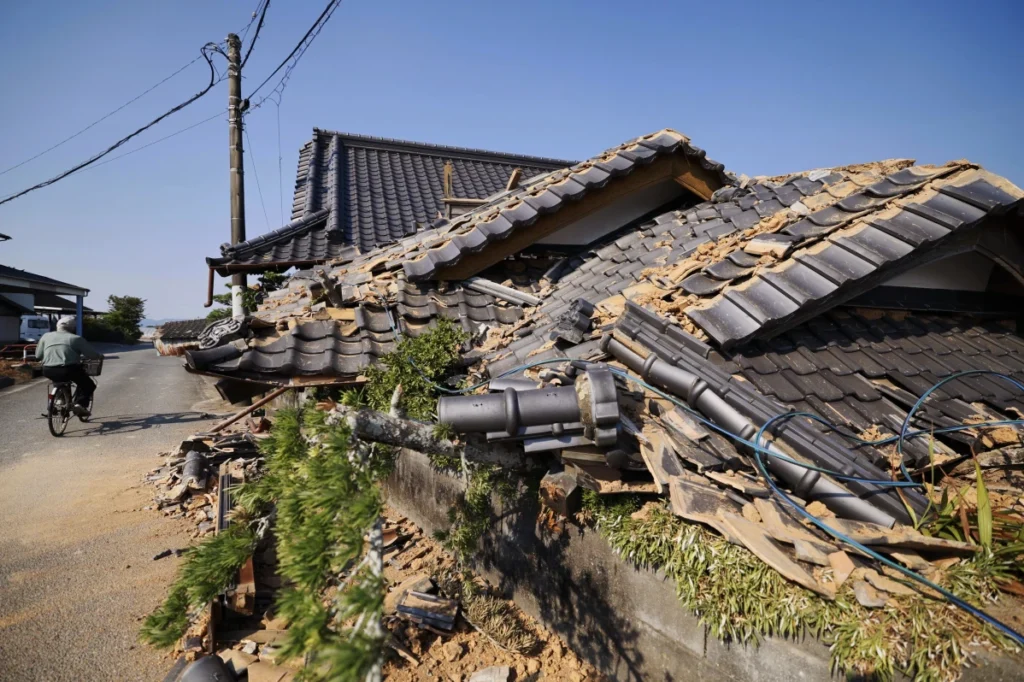
According to Kumamoto prefecture, the earthquake has left 114 people injured across Kumamoto, authorities said.Some 700 homes were destroyed, and more than 11,300 buildings were damaged.
More than 46,000 households remained without water and many also faced fuel shortages as the region suffers sweltering heat, stoking fears of heat-related illness. Japan Meteorological Agency predicted that temperatures would rise close to 40 C (104 F) today.
More than 8,500 people remain at crowded emergency shelters, such as converted community centers, school gyms and classrooms, many of which lack air-conditioning. Others are sleeping in cars at town hall parking lots and parks, or outside of their homes.
Takaichi flew over the affected areas from an army helicopter and visited one of the area’s best-equipped shelters, with cardboard beds, partitions and air-conditioning, triggering criticisms on social media that her visit distorted reality. Some social media users argued that the shelter presented to the Prime Minister did not accurately reflect the conditions experienced by many evacuees. Critics claimed the visit risked creating an overly positive impression of the government’s emergency response, suggesting that many shelters and temporary accommodation centres lacked similar facilities.
Kumamoto Governor Takashi Kimura, in his meeting with Takaichi, stressed the “abnormal heat” has been pounding on the already difficult lives of the residents.
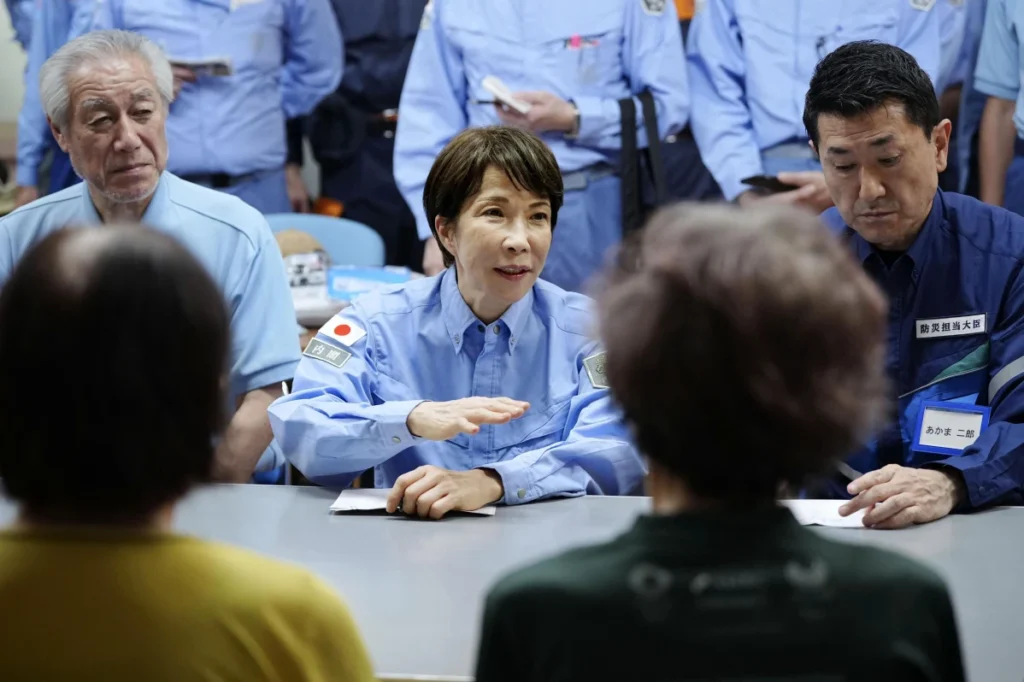
The Governor emphasised that many residents remain displaced from their homes and continue to face difficult living conditions while recovery operations progress
He sought further government support to improve the living conditions at evacuation centers, saying many of them lack clean water and medical care.
“While taking into consideration the governor’s requests, we will quickly examine what the government can do for the disaster-hit region and affected people and move proactively.”
Sanae Takaichi
Experts have long warned that inadequate shelter provision leads to crowded conditions and a lack of sanitation and privacy for people forced to leave their homes following disasters.
The combination of earthquake damage and extreme summer temperatures has created additional health concerns for displaced residents. Medical experts have warned that prolonged exposure to high temperatures increases the risk of heat-related illnesses, particularly among older adults, young children and people with underlying medical conditions.
Meanwhile, residents in Japan’s quake-hit southwestern prefecture of Kumamoto put out heaps of debris for collection as the region baked under intense heat.
Residents put out heaps of debris, broken furniture and damaged appliances for collection, while in the towns of Uki and Hikawa, construction of temporary housing began. Some hotels and inns are offering their rooms for evacuees.
The heat and a lack of water supplies have added to the challenges in the severely damaged areas where Prime Minister Sanae Takaichi briefly visited for the first time since a magnitude 7.1 quake hit Kumamoto Prefecture on Japan’s southern main island of Kyushu on Tuesday.
Japan is one of the world’s most earthquake-prone countries because it sits along the Pacific Ring of Fire, where several tectonic plates meet. The country has invested heavily in earthquake-resistant infrastructure, disaster preparedness and emergency response systems, but powerful earthquakes continue to pose significant risks to communities.
Takaichi’s visit underscores the government’s efforts to demonstrate its commitment to disaster recovery, even as public scrutiny grows over the adequacy of relief measures. The criticism surrounding the shelter visit highlights the challenges governments often face in balancing official inspections with public expectations during major disasters.
For many residents, however, the immediate priority remains returning to normal life. As repair work continues and emergency assistance is delivered, local officials say sustained national support will be essential to helping communities recover from both the earthquake and the difficult weather conditions affecting the region.
READ ALSO: Ministry of Education Clarifies Ghanaian Languages to Lead Basic School Instruction