
Ghana’s Governance Series Wave 3 report, covering July to December 2025, revealed that nearly 70 percent of household heads who dealt with a public official during the period said they were directly asked to pay a bribe, up sharply from about 50 percent just six months earlier.
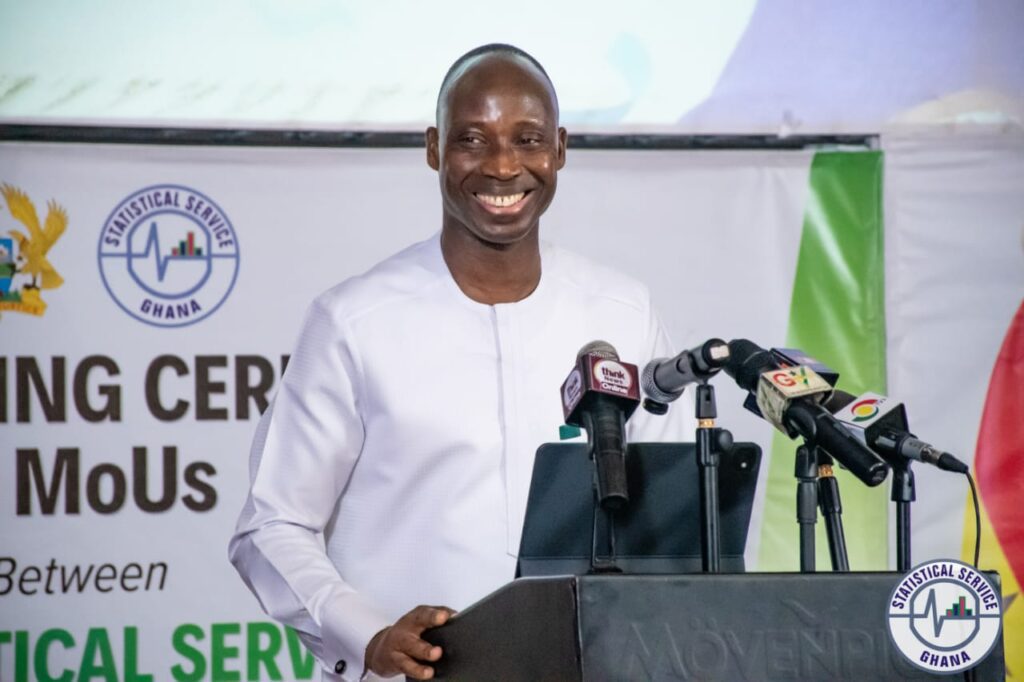
Government Statistician Dr Alhassan Iddrisu presented the findings, highlighting this shift as evidence that responsibility for bribery increasingly lies with officials rather than citizens.
Dr Iddrisu opened his presentation by highlighting a striking shift in how Ghanaians engaged with public institutions across the year, alongside a corresponding decline in overall bribery.
“In 2025, far more Ghanaian household heads dealt with public institutions through their officials than the year before. The number of household heads reporting contact with public officials rose from about 5 million in 2024 to more than 6.6 million in 2025.
“And yet, fewer of them paid a bribe. That is, 16.8% in 2025, down from 18.4% in 2024. More contact, less bribery”.
Government Statistician Dr Alhassan Iddrisu
How the Survey Works
Dr Iddrisu explained that the survey tracks the same household heads twice a year across all 16 regions, asking whether they had to pay something extra to access services they were already entitled to when dealing with the state.

“When you dealt with the state in the previous six months, at the clinic, the checkpoint, the passport counter, did you have to pay something extra to get what was already your right?” he said, describing the core question posed to respondents.
He noted that the survey also measures inclusiveness and responsiveness, both tracked under Sustainable Development Goal 16, and that returning to the same respondents each round ensures the changes reflect real shifts rather than a different sample.
The Demand Now Comes From the Counter
Dr Iddrisu was direct in presenting the report’s most striking finding, showing that bribery demands rose sharply within the second half of 2025 itself, with officials increasingly initiating the request rather than citizens offering payment.
“In the second half of 2025, about 18% of household heads paid a bribe to access public services, up from 14.3% in the first half of the year. And nearly 70% of those who dealt with an official told us they were directly asked to pay a bribe, up from about 50% just six months earlier”.
Government Statistician Dr Alhassan Iddrisu
He emphasised what this shift reveals about where accountability now belongs. “Read that again. The demand is now coming from the counter. The pressure for action is on the official who acts, not the citizen who offers,” he said.
Repeat Bribery Declines Sharply
Despite the rise in officials initiating bribery demands, Dr Iddrisu highlighted a significant decline in how often affected citizens ended up paying repeatedly.
“Paying bribe again and again has declined drastically. The share who paid five or more times fell from 24% in the first six months of 2025 to under 4% in the last six months. What was once a routine cost of getting served is becoming a real shock. Most citizens refused outright”.
Government Statistician Dr Alhassan Iddrisu
Comparing full-year figures for 2024 and 2025, Dr Iddrisu described an unmistakable overall trend toward greater public engagement alongside declining bribery. “Contact with the public officials went up from 55.7% in 2024 to 71.9% in 2025. Bribery went down from 18.4% in 2024 to 16.8% in 2025, and every one of the worst offending institutions improved,” he said.

Police Remain Most Cited Institution
Among the institutions showing improvement, Dr Iddrisu singled out the police, the institution most frequently named by citizens in connection with bribery, noting meaningful progress alongside a note of caution.
“That includes the one citizens named most, the police. Over the full year, giving at the traffic unit fell from 61% to 54%. That is real progress, but it remains a single institution most often named, and in the latest wave, it edged back up. Progress against bribing is never permanent unless it is protected”.
Government Statistician Dr Alhassan Iddrisu
Dr Iddrisu noted that the impact of bribery falls disproportionately on specific segments of the population, with certain demographic groups feeling particularly excluded from meaningful engagement with government.
“The burden is not shared equally. Most bribes are small sums that hurt ordinary families hardest. Among household heads, the young, the old, and the unemployed are the most likely to feel unheard,” he said.
Regional Disparities in Exclusion and Contact
Geographic location also shaped citizens’ experiences significantly, according to the report, with certain regions recording higher rates of exclusion and government contact than others. “Where you live still shapes what you experience. Exclusion is highest in Northeast and Savannah, and contact is heaviest in Volta and Savannah,” he said.
Dr Iddrisu summarised citizens’ core demands as revealed through the survey, framing them as reasonable and achievable priorities rather than unrealistic expectations. “What do citizens ask for? Not the impossible. Roads, water, clinics, jobs. And they say in how they are delivered,” he said.
Based on these findings, particularly the shift toward official-initiated bribery, Dr Iddrisu outlined four specific priorities for addressing the persistent challenges revealed by the survey data.
“That points to four things. First, tighten oversight where contact is heaviest. Second, make it safer to say no. Third, open decisions with citizens. And fourth, reach those still left out,” he said.
Data Publicly Available for Review
Dr Iddrisu confirmed that the full findings from Wave 3 and earlier survey rounds remain publicly accessible for anyone wishing to examine the underlying data in greater detail.
Dr Iddrisu closed his presentation by thanking everyone involved in producing the report, from survey respondents to field officers and Ghana Statistical Service staff, while reaffirming the institution’s commitment to maintaining rigorous and transparent methodology going forward.
The finding that nearly 70 percent of bribe demands now originate from officials rather than citizens represents one of the most consequential shifts identified in the Wave 3 report, reframing Ghana’s bribery challenge as increasingly a matter of official conduct rather than citizen behaviour.
This distinction carries direct implications for policy response, suggesting that interventions focused on strengthening oversight of public officials and protecting citizens who refuse to pay may prove more effective than efforts aimed solely at changing citizen behaviour.
As Ghana continues its twice-yearly tracking of these indicators, this particular data point is likely to shape how policymakers and civil society organisations approach anti-corruption efforts going forward, particularly regarding institutions like the police that continue to feature prominently in citizen reports despite measurable improvement over the full year.
READ ALSO: IMF Details Billion-Dollar Loss Behind Stronger Cedi