The Mayor of Hiroshima has renewed calls for the elimination of nuclear weapons, warning that growing acceptance of nuclear deterrence and the increasing use of force by major powers risk repeating the devastation experienced by the Japanese city 81 years ago.
Speaking during a ceremony marking the 81st anniversary of the U.S. atomic bombing of Hiroshima, Mayor Kazumi Matsui urged world leaders to reject reliance on nuclear weapons and instead pursue dialogue, cooperation and lasting peace.
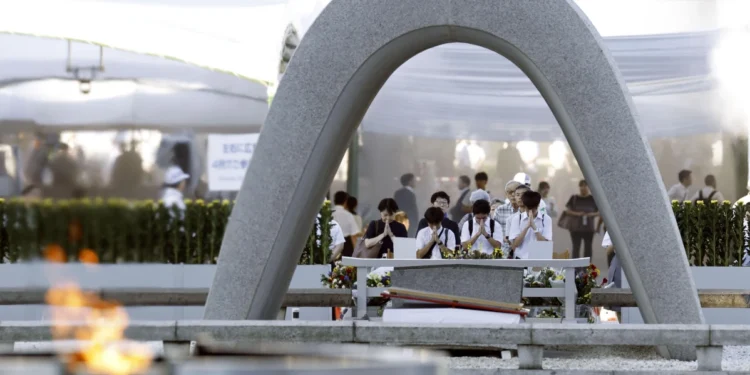
Addressing attendees gathered at Hiroshima Peace Memorial Park, Matsui said the international community was moving in a dangerous direction by justifying the possession of nuclear weapons as a means of deterrence. “Downplaying the inhumanity of nuclear weapons and accepting the use of force to pursue one’s own prosperity risk cycles of violent retaliation that could ultimately result in another Hiroshima or Nagasaki,” Matsui said in his annual Peace Declaration.
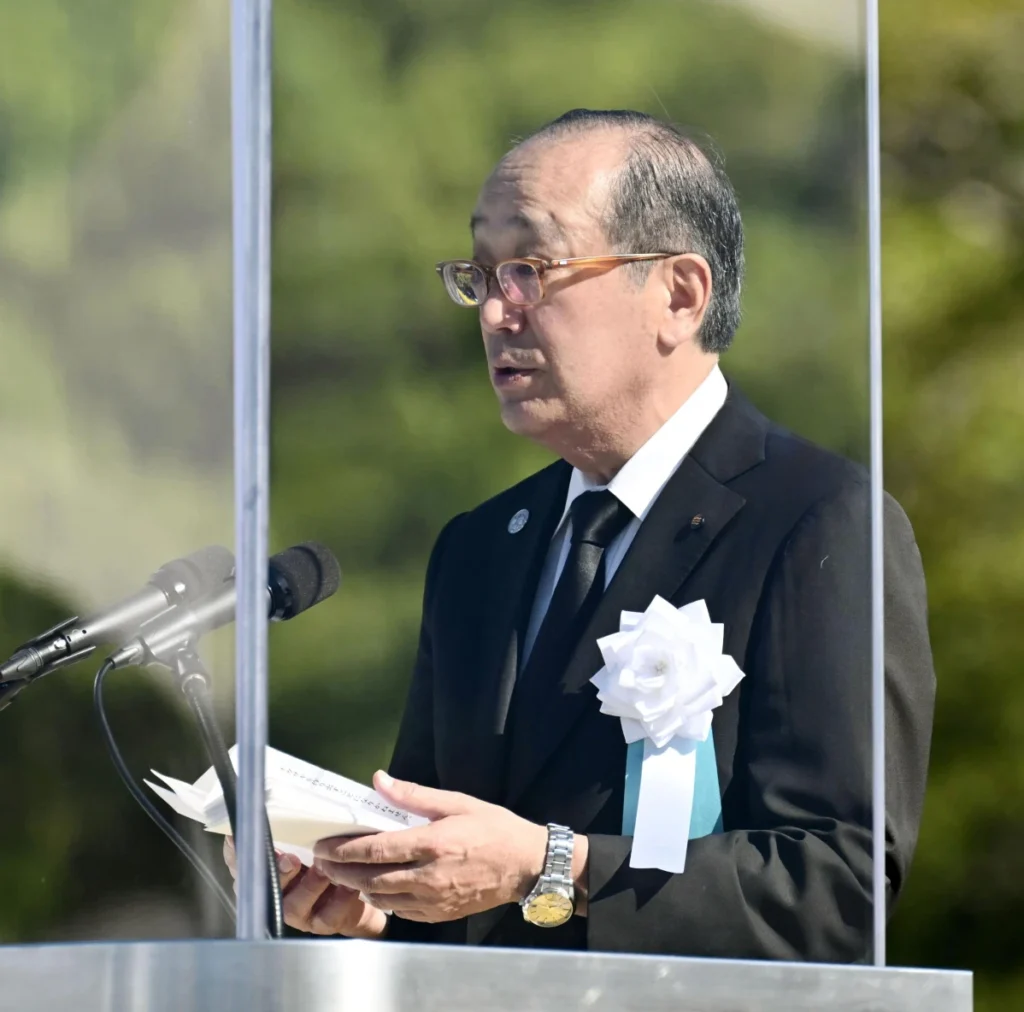
He argued that many political leaders still consider nuclear deterrence a realistic approach and “legitimize violence, which simply pushes a world without nuclear weapons further into the distance.” Matsui also appealed directly to ordinary citizens, urging people around the world to study the lessons of history and play an active role in promoting peace.
The annual memorial ceremony began with a minute of silence at 8:15 a.m., the exact time on August 6, 1945, when a U.S. B-29 bomber dropped the world’s first wartime atomic bomb on Hiroshima. A peace bell rang across the memorial park as survivors, government officials and international representatives reflected on one of the defining moments of the Second World War.
Approximately 50,000 people attended the ceremony, including representatives from around 120 countries and regions, among them the United States and Iran.
The bombing of Hiroshima destroyed much of the city and claimed an estimated 140,000 lives. Three days later, on August 9, a second atomic bomb was dropped on Nagasaki, killing about 70,000 people. Japan announced its surrender on August 15, bringing World War II to an end and concluding nearly five decades of Japanese military expansion across Asia.
As the years pass, the number of survivors, known as hibakusha, continues to decline. According to Japanese authorities, only 91,105 officially recognised survivors remain, roughly one-quarter of the original survivor population. Their average age now exceeds 86.
Many survivors have voiced concern that memories of the bombings are fading as younger generations become further removed from the events of 1945. The youngest surviving hibakusha were infants or very young children during the attacks and often have limited personal memories of the bombings themselves.
This year’s anniversary comes at a time of heightened international security concerns and renewed debate over nuclear weapons. Several conflicts involving nuclear-armed states have intensified global discussions about deterrence, military alliances and arms control.
Survivors have expressed frustration over what they see as increasing international acceptance of nuclear weapons as a security tool, including in Japan. Although Japan remains the only country to have suffered atomic bombings during wartime, its security policy continues to rely on the United States’ nuclear umbrella. Successive Japanese governments have repeatedly sought assurances from Washington regarding its commitment to Japan’s defence, including extended nuclear deterrence.
That policy has also shaped Japan’s position on international disarmament initiatives. The government has declined requests from survivors’ groups to sign the Treaty on the Prohibition of Nuclear Weapons or even participate in meetings of treaty members as an observer.
Japan’s Prime Minister Sanae Takaichi, who attended the memorial for the first time as Prime Minister, said that she will take “a realistic approach” toward achieving a world where nuclear weapons are never used, within the framework of the United Nations’ treaty to prevent the spread of nuclear weapons.
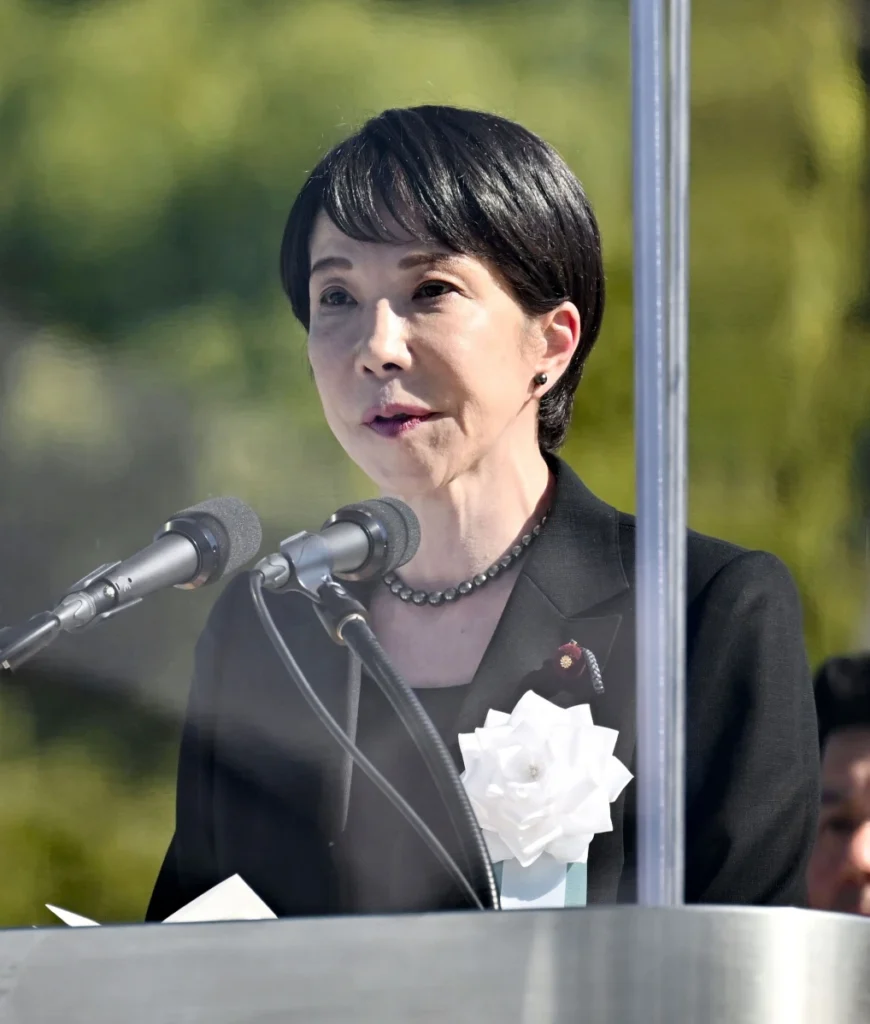
This year’s ceremony comes at a time of looming speculation that Takaichi’s hawkish government, which supports the idea of nuclear deterrence, may ease Japan’s postwar three non-nuclear principles when it compiles new security and defense documents later this year.
Takaichi has advocated a review of the principles for a possibility of dropping the third one, of not permitting nuclear weapons to be brought into the country.
United Nations Urges Cooperation
United Nations Secretary-General António Guterres also marked the anniversary with a written message calling for renewed international efforts to reduce nuclear risks and promote peaceful cooperation.

“The horror of nuclear weapons is just one lesson of Hiroshima. Another is the need to build a world in which the threat or use of these weapons becomes unthinkable.”
Antonio Guterres
He described Hiroshima as a symbol not only of destruction but also of recovery and hope.
“Hiroshima stands as an inspiring example of resilience, renewal and hope. Across generations, its people remind us that, even after the darkest moments, we can choose — and build — a different future.”
Antonio Guterres
The UN Chief urged governments to embrace “dialogue over division, cooperation over confrontation and common security over narrow advantage.”
READ ALSO: GHS Renews Call for Stronger National Support on Breastfeeding