Saudi Arabia, Turkey and Pakistan have signed a trilateral defence agreement that commits the three countries to treat an armed attack against one as an attack against all, marking a significant step in regional security cooperation amid heightened tensions across the Middle East.
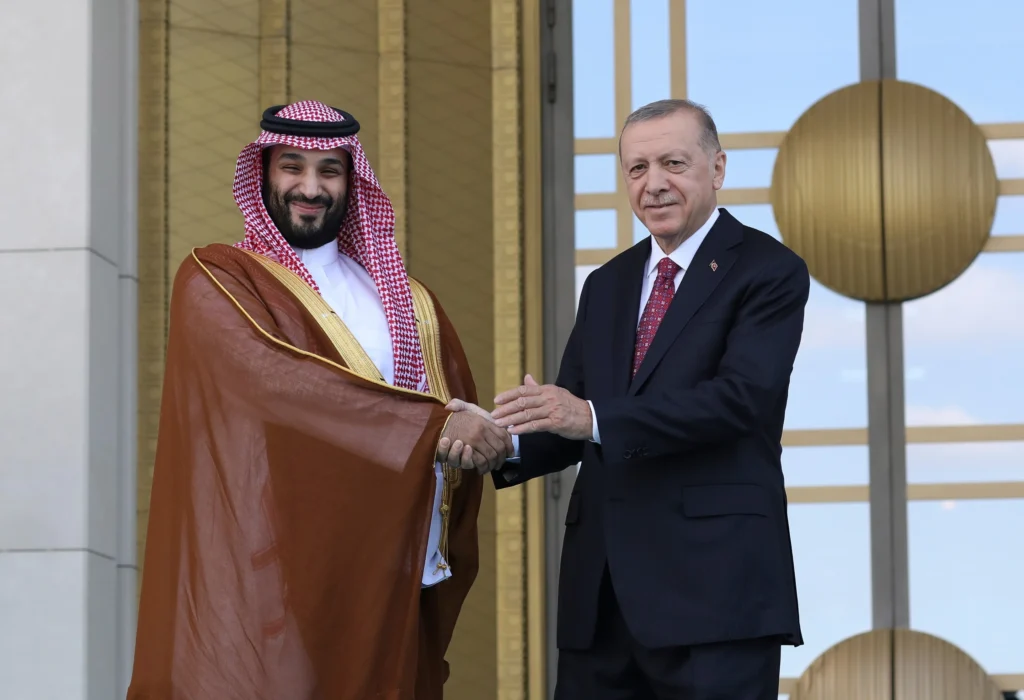
The agreement, known as the Mecca Joint Defense Agreement, was signed in the Saudi holy city of Mecca during a meeting between Saudi Crown Prince Mohammed bin Salman, Turkish President Recep Tayyip Erdogan and Pakistani Prime Minister Shehbaz Sharif.
The pact brings together three influential regional powers—Saudi Arabia, one of the world’s leading oil producers; Pakistan, a nuclear-armed state; and Turkey, a NATO member with the alliance’s second-largest military and a rapidly expanding defence industry.
In identical statements, Pakistan’s Foreign Ministry and Turkey’s Presidential Communications Directorate said the agreement is designed to strengthen collective security among the three nations. “The agreement is intended to strengthen collective deterrence against any act of aggression, and stipulates that any armed attack against any one of the three states shall be regarded as an attack against them all,” the statements said. “It further provides for the enhancement of all aspects of defense cooperation among the three States,” they added.
The agreement comes at a time of growing instability in the Middle East, with regional governments reassessing their security partnerships following recent conflicts, including the war involving Iran as well as continuing tensions in Gaza and Lebanon. Saudi Arabia has also sought to reinforce the protection of its critical infrastructure and energy facilities after attacks linked to regional hostilities heightened concerns over the kingdom’s security.
The new accord expands on an existing mutual defence agreement signed by Saudi Arabia and Pakistan in September 2025, which similarly states that an attack on one country would be treated as an attack on the other. By bringing Turkey into the framework, the three countries have formalised a broader security partnership that could deepen military cooperation, strategic coordination and defence collaboration.
Defence Agreement Solely For Defensive Purposes
Although the agreement establishes a collective defence commitment, Turkish officials stressed that it is intended solely for defensive purposes. A Turkish government official, speaking on condition of anonymity, described the agreement as “purely defensive in nature,” saying the three countries had pledged mutual support only in the event of aggression.
The official also rejected suggestions that the pact was directed at any particular country. “It is not against any specific actor,” the official said, adding that the framework would remain open to participation by other regional countries should they wish to join. According to the official, the agreement does not replace or override existing bilateral or multilateral commitments that Saudi Arabia, Turkey or Pakistan maintain with other countries or international organisations.
The signing reflects increasingly close ties among the three countries as they seek to strengthen cooperation in response to evolving regional security challenges. Turkey has emerged as a major regional defence manufacturer in recent years, expanding exports of military equipment and investing heavily in its domestic defence industry.
Pakistan, meanwhile, continues to play an important role in regional security as one of the few nuclear-armed states in the Islamic world, while Saudi Arabia has been working to diversify its defence partnerships alongside its long-standing security relationships.
Analysts say the agreement could facilitate closer military coordination, expanded defence cooperation and greater collaboration on strategic issues affecting the region. The pact also comes as tensions persist between Turkey and Israel over the conflict in Gaza and follows months of regional uncertainty linked to the war involving Iran.
While officials have emphasised the agreement’s defensive character, its collective defence clause represents one of the most significant security commitments among the three countries to date. The agreement is expected to strengthen coordination on defence matters while reinforcing political cooperation among Ankara, Riyadh and Islamabad at a time when governments across the region continue to navigate an increasingly complex security environment.
Whether the pact leads to expanded joint military planning, defence exercises or additional security initiatives remains to be seen, but today’s signing signals a shared commitment by the three countries to deepen their strategic partnership and respond collectively to future security threats.