Ghana’s mounting electricity-sector liabilities are increasingly being driven by a mismatch between generation contracts and the country’s ability to absorb, deliver and recover revenue from the power it purchases, according to the Africa Centre for Energy Policy (ACEP).
The warning follows the U.S. bribery conviction linked to the AKSA Enerji power project, which ACEP says should become a catalyst for a much wider examination of Ghana’s power-procurement system rather than being treated as an isolated corruption case.
For the think tank, the central issue is not simply whether criminal conduct occurred during the approval of a particular project.
The more important question is whether contracts negotiated in an environment now facing serious corruption concerns produced commercially defensible outcomes for Ghana.
ACEP Executive Director Benjamin Boakye argues that the country has reached a point where the economics of its power agreements can no longer be separated from the integrity of the processes that produced them.
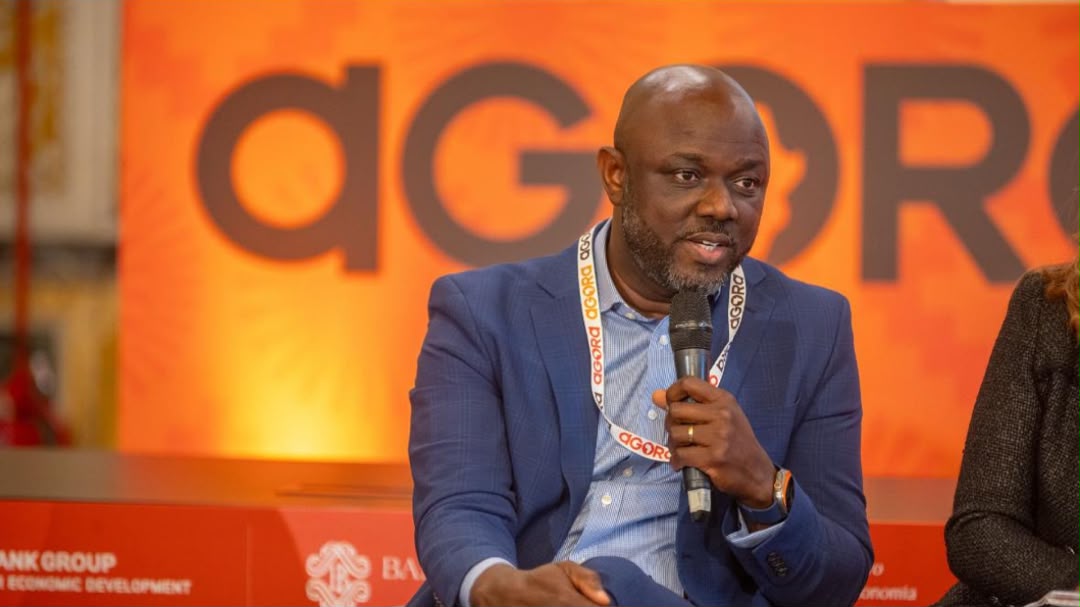
“Any sensible approach requires that you pause and investigate,” Boakye said, insisting that the circumstances surrounding the AKSA case make a deeper commercial review unavoidable.
The comments come at a time when government is already negotiating with some Independent Power Producers (IPPs) to ease financial pressure on the electricity sector.
The debate Ghana has been avoiding
Boakye’s argument goes well beyond a single contract.
He contends that Ghana should use the current moment to examine a broader set of questions: what generation capacity was actually contracted, how the underlying assets were valued, how tariffs were determined, and whether the state received value commensurate with the long-term liabilities it accepted.
This shifts the conversation from criminal accountability to economic accountability.

A corruption conviction may establish that improper payments occurred, but it does not automatically answer whether the country overpaid for capacity, accepted excessive risk, or locked itself into obligations that later became financially unsustainable.
According to ACEP, those questions have remained largely unresolved for years.
Why take-or-pay is not the real issue
One of the most striking parts of Boakye’s analysis is his rejection of the idea that take-or-pay contracts are inherently problematic.
“Take-or-pay for me has never been a problem,” he said, arguing that investors financing capital-intensive power plants require predictable revenue streams.
In other words, the existence of a guaranteed-capacity payment is not, by itself, evidence of a bad contract.
The real problem emerges when the wider electricity system is not capable of using the power that has been contracted.
This is a crucial distinction that changes the entire framing of Ghana’s power debate.
The common political narrative is that the country signed for “too much power.”
Boakye’s argument is more sophisticated: Ghana signed for capacity without ensuring that transmission, distribution, demand growth and revenue collection would evolve in step with that capacity.
The missing link in Ghana’s power chain
ACEP says electricity planning has too often focused on generation while underestimating the rest of the value chain.
A power plant can produce electricity, but that electricity must still be transmitted through the grid, distributed to customers, metered accurately, billed efficiently and ultimately converted into cash that flows back through the system.
If any of those stages fail, the country can have electricity available while being economically unable to use it.
When you have excess power or there’s a problem somewhere that we can’t use the power, and you still have to pay, that becomes a problem.
ACEP Executive Director Benjamin Boakye
This diagnosis is significant because it reframes the crisis as one of system integration rather than generation alone.
From emergency solution to permanent liability
ACEP also questions the legacy of emergency power procurement.
During periods of acute electricity shortage, governments often prioritise speed over optimisation.
That may be understandable politically, but Boakye argues that urgency cannot become a permanent defence against commercial scrutiny.
What begins as a short-term response to a power crisis can evolve into a long-term fiscal obligation that survives multiple governments and economic cycles.
The think tank wants authorities to examine whether some plants were properly valued, how acquisition and financing costs were incorporated into tariffs, and whether the resulting agreements reflected reasonable commercial terms.
A sector already under financial strain
The timing of the warning matters.
Ghana is already attempting to renegotiate aspects of its IPP obligations because the financial burden on the electricity sector has become increasingly difficult to sustain.
ACEP argues that seeking concessions from producers while avoiding a review of the historical decisions that created the obligations addresses the symptoms rather than the underlying disease.
The organization is not calling for the cancellation of all IPP contracts.
Such a move could create serious legal and investor-confidence risks.
Instead, it is advocating an evidence-based reassessment that distinguishes between agreements that remain commercially reasonable and those that may warrant restructuring.
Installed megawatts are not enough
The deeper insight in Boakye’s analysis is that installed capacity is not the same as economically productive electricity.
A megawatt that cannot be transmitted, consumed or paid for does not deliver the same value as a megawatt operating within a financially coherent system.
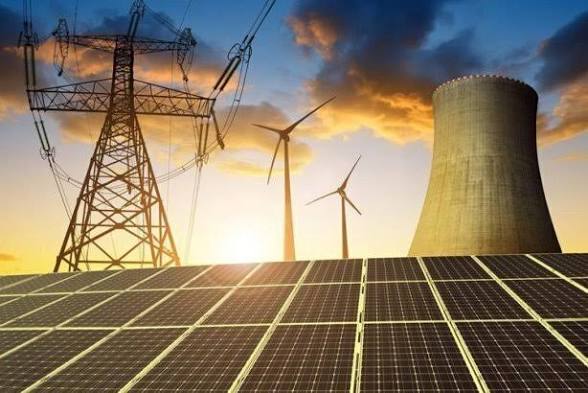
This is particularly relevant for a country that continues to struggle with distribution losses, revenue-collection challenges and payment arrears across parts of the power value chain.
The implication is uncomfortable: Ghana’s electricity problem may be less about the absence of generation than about the inability to convert generation into sustainable revenue.
The larger question for future contracts
The AKSA controversy therefore raises a broader policy challenge.
Before signing for additional capacity, government must know not only how much power the country may need, but also whether the transmission network will be ready, whether demand will materialise, whether distribution losses will be contained, and whether consumers can generate enough revenue to support the new obligations.
Without those answers, power procurement becomes an exercise in accumulating capacity rather than building a functioning electricity market.
The most important question emerging from ACEP’s analysis is not whether Ghana needs private investment in power generation. It almost certainly does.
The question is whether future contracts will be embedded in a fully integrated planning framework that aligns generation, transmission, distribution, demand and revenue recovery.
If that integration remains weak, the financial stress will continue to migrate through the system, from generators to utilities, from utilities to government, and ultimately from government to taxpayers and electricity consumers.
The analysis was reported by Norvan Reports, which published ACEP’s call for a broader review of Ghana’s power-procurement framework and the commercial implications of the AKSA Enerji controversy.
READ ALSO: Ghanaians Deserve Full Disclosure On Power Plant Bribery Scandal — Tamakloe