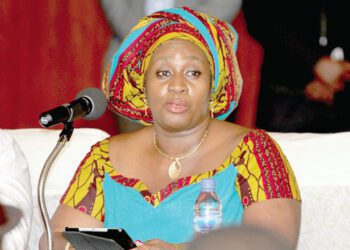

Presidential Aide and Advisor Joyce Bawah Mogtari has questioned the motives behind the Ghana Bar Association’s letter to Chief Justice Paul Baffoe-Bonnie over lawyers being required to appear in court during the legal vacation, describing the intervention as an affront to the administrative authority of the head of the Judiciary.
She set out her position publicly as the dispute between the Bar and the bench widened this week. Mrs Mogtari, who is also a lawyer, argued that vacation judges have sat for as long as anyone can remember, and that they do so to move cases along and cut the backlog clogging the courts.
Her objection targets both the substance of the Bar’s request and the decision to press it in public, which she said carries a tone she found disrespectful. Mrs Mogtari opened by stating plainly that she could not take the Bar’s letter at face value.
“Difficult for me not to read ulterior motives in the GBA’s letter to the Right Honorable Chief Justice,” she wrote. She then placed the letter against the office it addresses. “It sounds almost like an affront to the administrative authority of the Chief Justice,” she wrote.

Why vacation sittings are nothing new
Her core argument rests on practice rather than principle. Courts have long worked through the vacation, she wrote, and the reason has always been the pressure of pending cases. “From the longest time we have almost always had vacation Judges sitting in the course of the legal vacation. To expedite cases and to reduce the case load,” she wrote.
That framing turns the Bar’s position on its head. If vacation sittings are ordinary rather than exceptional, then the burden falls on those objecting to explain what has changed, not on the Chief Justice to justify a practice his predecessors used routinely.
Mrs Mogtari reserved her sharpest criticism for the decision to make the appeal publicly rather than through quieter channels. “Why would the GBA want to needlessly undermine the work of the Chief Justice and to do so in such a public manner also sounds very disrespectfully disturbing,” she wrote.
The complaint concerns forum as much as content. A professional body raising concerns with the Judiciary has channels available that do not put the exchange before the public, and the choice to publish converts a disagreement over listings into an institutional confrontation.
A question of judicial resources
Her post drew support from commenters who took the argument further into constitutional territory. Anass Hamzat Assadullah wrote that the Chief Justice, as head of the Judiciary, holds the constitutional and administrative mandate to determine the deployment of judicial resources, including the sitting of vacation judges where necessary.

He argued that publicly questioning that discretion without compelling legal justification risks creating an unwarranted institutional confrontation, particularly where vacation sittings have long served to expedite cases and reduce backlog.
He allowed that the Bar is entitled to raise concerns, while insisting that the manner, tone and forum matter. Respect for the separation of powers, judicial independence, comity between institutions and the lawful exercise of administrative discretion, he wrote, should not be sacrificed for public posturing.
The Bar Association wrote to the Chief Justice on 10 August 2026 after three law firms reported receiving notices requiring their lawyers to appear before judges designated to continue part-heard criminal cases during the vacation. The firms are Zoe, Akyea & Co, Dame & Partners and Sam Okudzeto & Associates.
The Association argued that counsel who indicate their unavailability should not be compelled to attend, and that parties should not be left to represent themselves. It acknowledged that vacation courts may handle urgent and interlocutory matters, which limits the dispute to part-heard trials.
Where the Chief Justice stands
Justice Baffoe-Bonnie has already answered. Speaking in Sunyani, he said a judge who is sitting and ready to hear a case cannot be stopped because counsel has made other arrangements, and that lawyers may take leave only where their clients permit it. He also described adjournment as a judicial act belonging to the trial judge rather than to his office.

Deputy Attorney-General Dr Justice Srem-Sai has taken a similar view, pointing to Order 79 of CI 47, under which the vacation schedule is expressly subject to the Chief Justice’s power to appoint any day for hearings.
Mrs Mogtari’s intervention adds a voice from the Presidency to what began as a procedural disagreement, leaving the Bar defending its reading of convention against three separate readings of the same rule.
READ ALSO: Lands Minister’s Allegations “unfounded, contrived ,deliberately manufactured” –Adamus