Ghana is moving to transform public buildings from some of the country’s largest energy consumers into a new frontier for clean-energy investment, as the Energy Commission and GIZ intensify efforts to mobilise financing for renewable energy and energy-efficiency projects across government facilities.
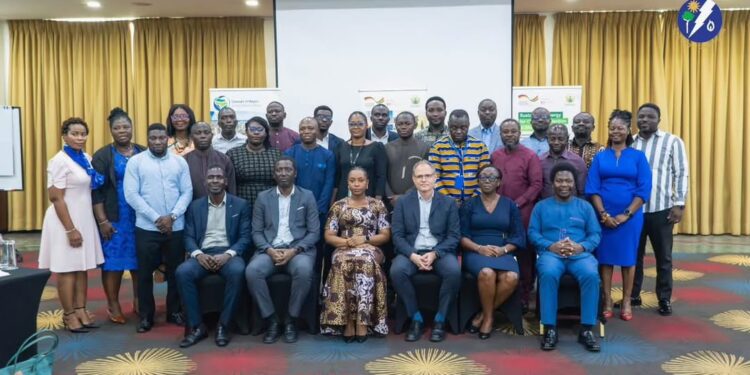
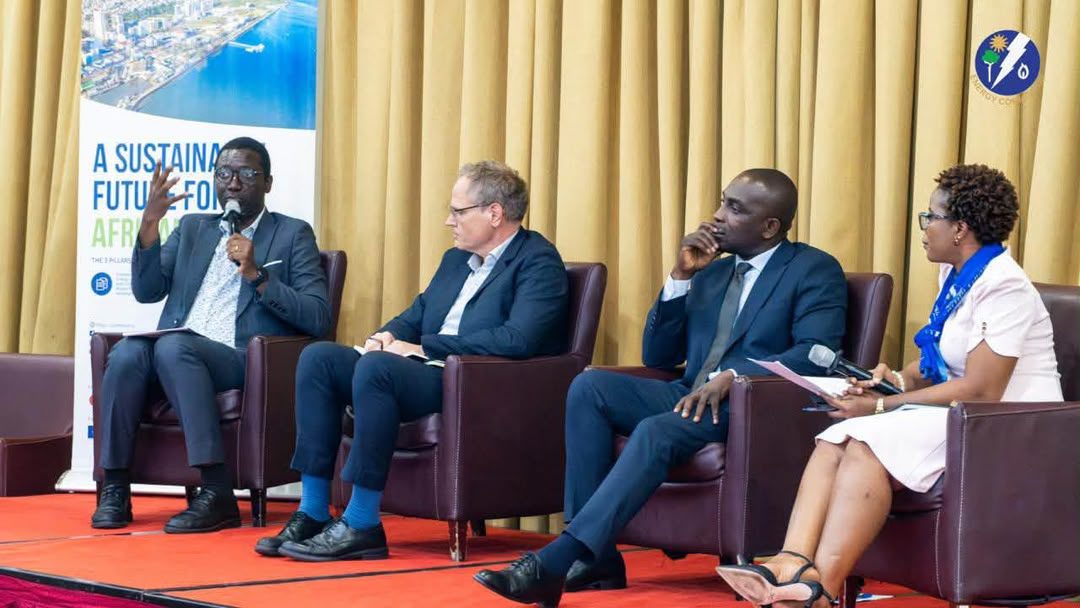
At a high-level roundtable in Accra, officials, development partners, financial institutions and private-sector investors discussed how to unlock capital for projects under the Public Facility Sustainable Energy Action Plan (PFSEAP), a national framework designed to accelerate the energy transition in public institutions.
The meeting marked a noticeable shift in tone from earlier stakeholder engagements, with officials placing stronger emphasis on implementation, bankability and measurable savings rather than additional policy formulation.
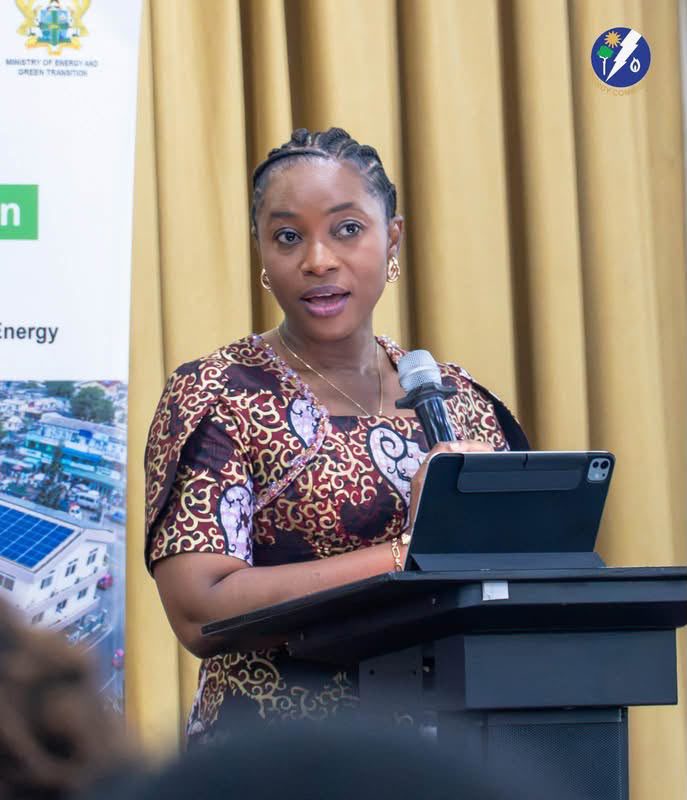
The time has come to move PFSEAP from planning to implementation.
Ms. Adwoa Serwaa Bondzie, Acting Executive Secretary of the Energy Commission.
Why public facilities matter
The focus on public facilities is strategically significant.
Schools, hospitals, water systems and other government installations consume large amounts of electricity and often operate under tight budget constraints.
Reducing energy expenditure in these facilities could create savings that can be redirected toward teaching, healthcare, water delivery and other essential services.
Bondzie argued that the transition is not only an environmental agenda but also a public-finance opportunity.
“Reduced energy costs in schools, hospitals and water systems would free up resources for essential services,” she said, urging stakeholders to move “from meetings and expressions of interest to identifying concrete opportunities.”
This framing is important because it links energy efficiency directly to service delivery rather than treating it as a standalone climate initiative.
The search for investable projects
GIZ officials used the roundtable to make the investment case for public-sector energy projects.
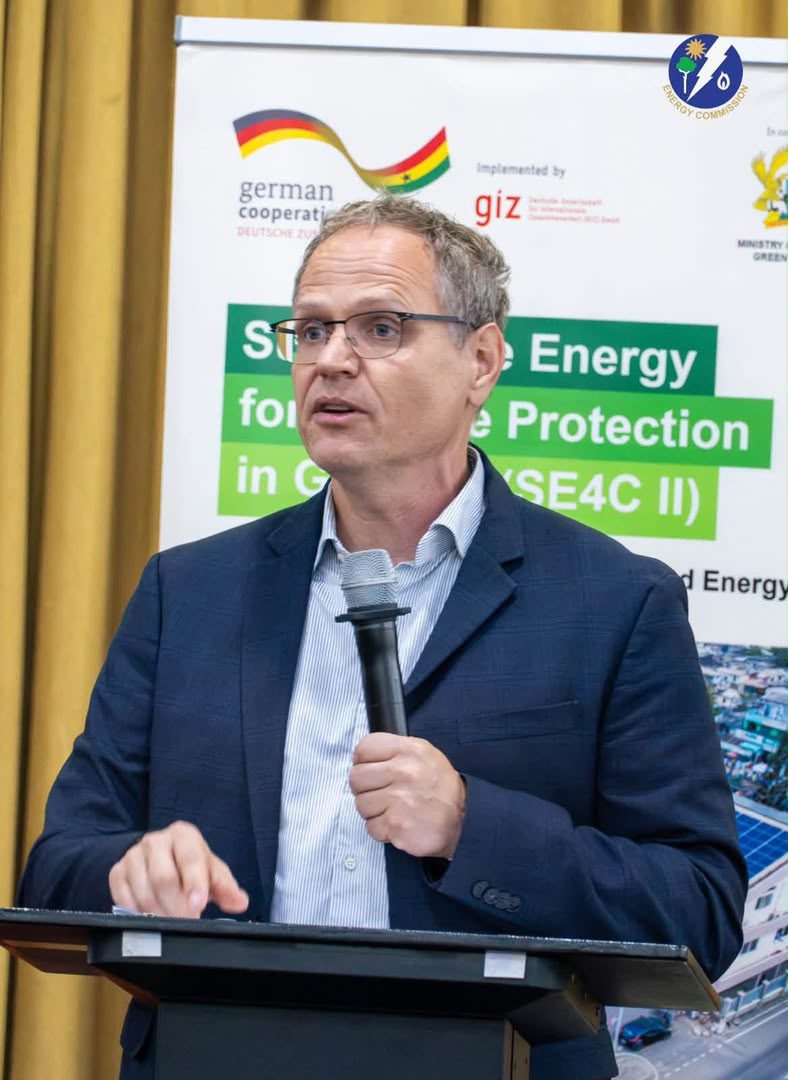
Mr. Gunnar Wegner, Cluster Coordinator for Energy and Climate at GIZ, said the organisation is supporting Ghana through programmes including the Sustainable Energy for Climate Protection Programme, COMSSA and the Urban Smart Energy Programme.
He highlighted what he described as “quick-win” investments, particularly efficient lighting upgrades and replacement of inefficient air-conditioning systems, which could deliver very short payback periods.
Reliable cash flows, monitoring, governance and risk mitigation are essential if investors are to commit capital to public-facility energy projects.
Mr. Gunnar Wegner, Cluster Coordinator for Energy and Climate at GIZ
The emphasis on governance and cash flows reflects a key challenge in Ghana’s energy-transition financing: many technically attractive projects struggle to attract investment because of uncertainty over payment mechanisms, performance verification and long-term operational management.
From donor projects to an investment pipeline
One of the most important signals from the engagement is that Ghana is trying to move beyond isolated donor-funded interventions.
PFSEAP is being positioned as a coordinated investment platform capable of aggregating projects across multiple public institutions and utility facilities.

This matters because investors generally prefer portfolios of projects with predictable performance rather than scattered small interventions.
If properly structured, such a pipeline could support financing models involving energy-service companies, commercial banks, development finance institutions and blended-finance arrangements.
The hidden power-sector benefit
The roundtable also has implications beyond public buildings.
Ghana’s electricity challenge is often discussed in terms of generation capacity, fuel supply and utility finances. Yet reducing demand through efficiency can be one of the cheapest ways to improve system resilience.
Every megawatt saved in inefficient lighting or cooling reduces pressure on generation, transmission and distribution infrastructure.
In a country where public facilities operate nationwide, the cumulative impact could become material over time.
The deeper policy message is that energy efficiency is being treated as an infrastructure resource, not merely a conservation campaign.
Rooftop solar is the next stage
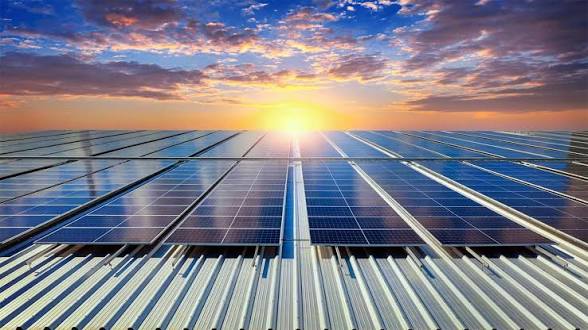
While early measures may focus on lighting and cooling, officials indicated that larger renewable-energy investments are also being considered, including rooftop solar photovoltaic systems for public facilities.
The sequencing is deliberate.
Efficiency improvements can reduce electricity consumption first, making subsequent solar investments smaller, cheaper and easier to finance.
This “efficiency before generation” approach is widely regarded as best practice in public-sector energy transitions because it avoids oversizing renewable installations.
A test of implementation capacity
The real challenge, however, is not identifying opportunities.
Ghana has already produced multiple energy-transition strategies and efficiency policies.
The more difficult task is converting them into contracts, installations, performance monitoring and sustained operation.
That is why Bondzie’s call for concrete opportunities is significant.
The roundtable suggests growing recognition that the transition will be judged by projects delivered, savings verified and emissions reduced, not by the number of stakeholder meetings held.
The bigger picture for Ghana’s green transition
The Energy Commission said it will continue coordinating stakeholders and strengthening regulation to support the programme.
The broader significance of the initiative is that it places public institutions at the centre of Ghana’s green transition.
Rather than waiting for the private sector alone to drive clean-energy deployment, government is attempting to use its own facilities as a catalyst for market development.
If successful, the programme could create demand for energy auditors, solar developers, efficient-equipment suppliers, financiers and performance-monitoring services, helping build a domestic clean-energy ecosystem.
A shift from policy ambition to delivery
The Accra roundtable may ultimately be remembered less for the discussions held than for the signal it sends.
Ghana appears to be entering a new phase of its energy-transition agenda in which the key question is no longer whether public facilities should become more energy efficient, but how quickly those projects can become investable, financed and operational.
For the energy sector, that is a meaningful shift.
Public buildings are no longer being viewed simply as government assets that consume electricity.
They are increasingly being treated as potential clean-energy assets capable of lowering public expenditure, improving energy security and helping drive Ghana’s transition toward a more sustainable and resilient energy system.
READ ALSO: BoG Pushes Digital Revolution in Ghana’s Remittance Market