
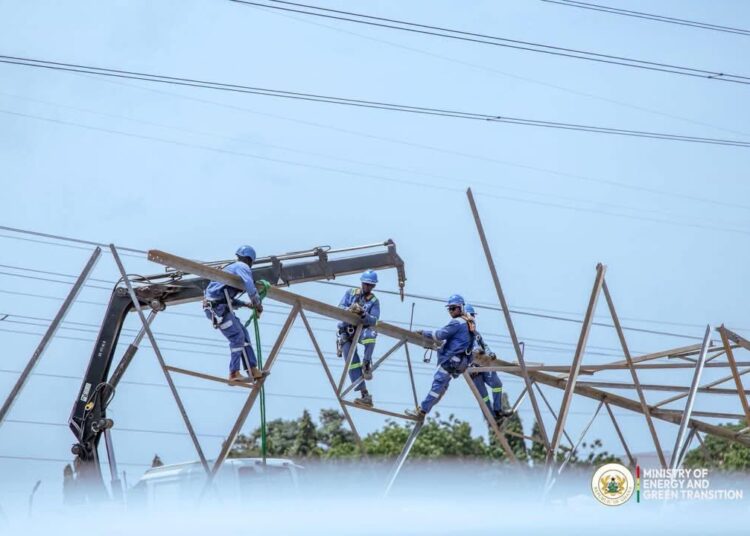
Ghana’s electricity-transmission network has come under renewed safety scrutiny after a fuel tanker exploded beneath the Tema–Achimota 161kV transmission line near Ashaiman, damaging a transmission tower and forcing emergency restoration works on one of the country’s critical power corridors.
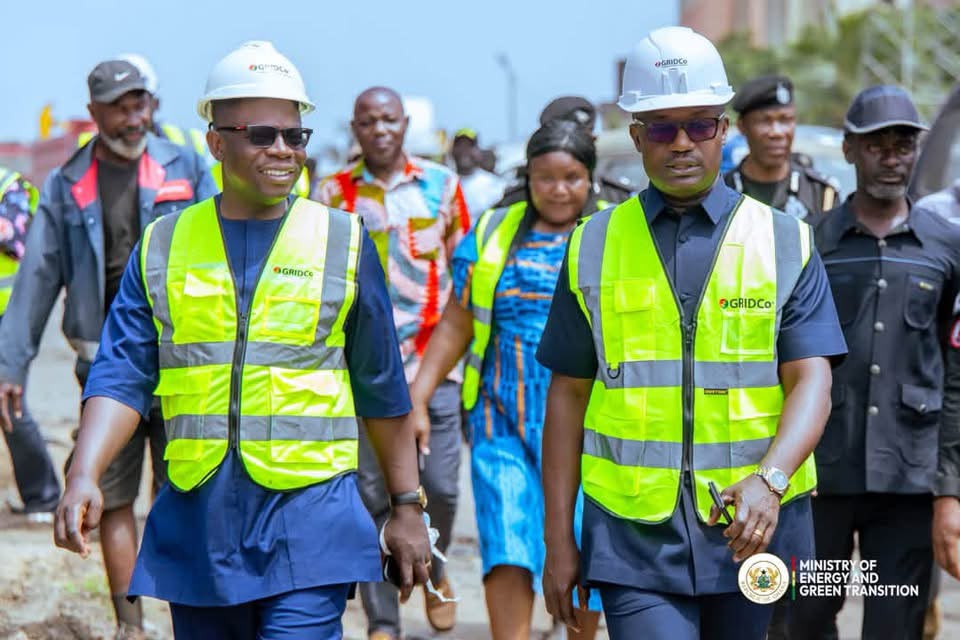
Energy and Green Transition Minister Dr. John Abdulai Jinapor, who inspected the site, said the blast occurred while welding works were being carried out on the tanker beneath the transmission line.
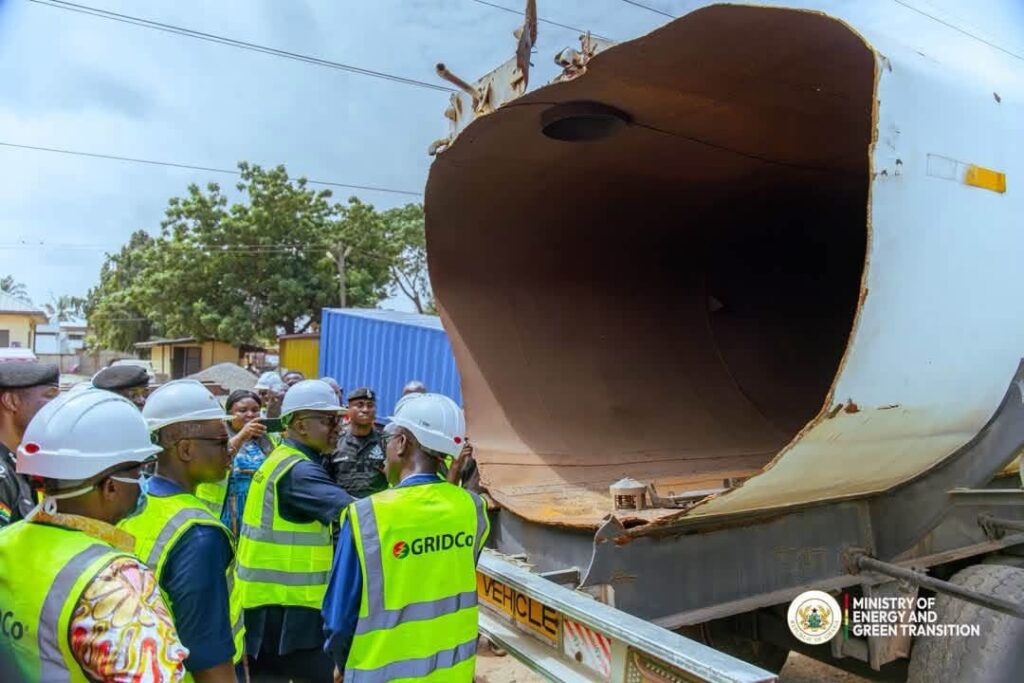
According to the Minister, part of the tanker was thrown more than 300 metres by the explosion and struck one of GRIDCo’s towers, compromising its structural integrity.
This incident underscores the dangers of encroachment and unauthorised activities around transmission infrastructure.
Energy and Green Transition Minister Dr. John Abdulai Jinapor
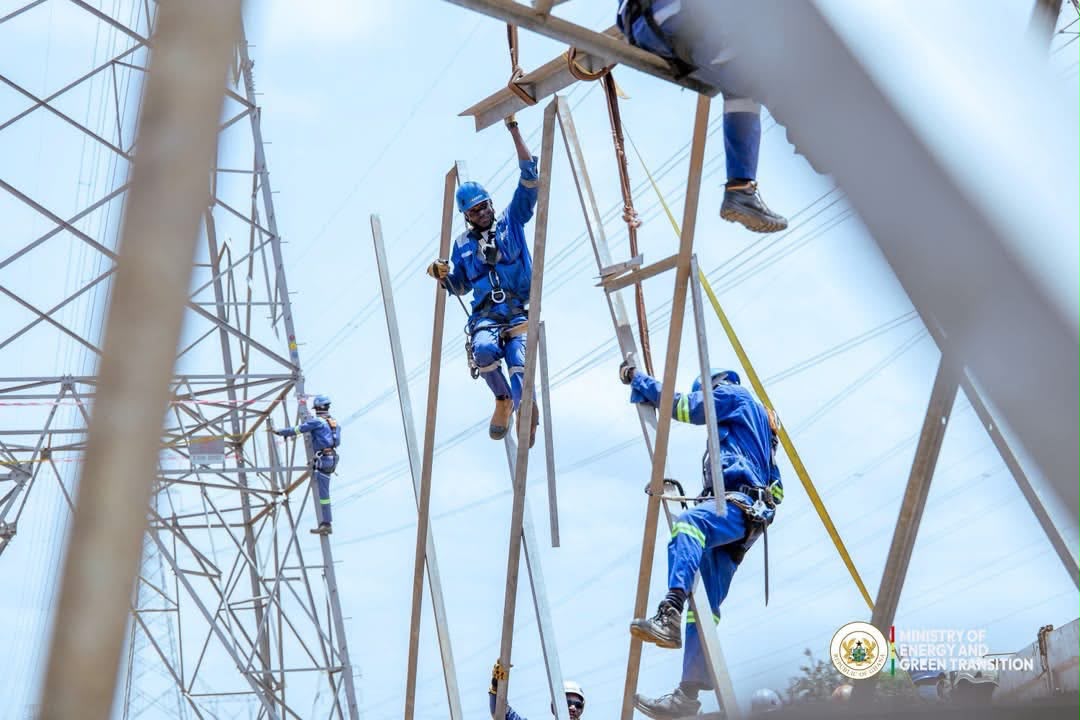
The damage has prompted emergency restoration works and planned maintenance operations that are expected to cause temporary power interruptions in parts of the Greater Accra Region.
More than a local accident
While the immediate focus is on restoring the damaged line, the incident raises a broader issue that has become increasingly important in Ghana’s power sector: the protection of high-voltage transmission corridors.
Transmission lines such as the Tema–Achimota 161kV corridor are not ordinary pieces of infrastructure.
They form part of the backbone that moves electricity from generating plants and bulk substations to major load centres across Greater Accra and beyond.
A failure of a transmission tower can therefore have consequences that extend far beyond the immediate area of the accident, potentially affecting network reliability, power flows and system security.
The incident also highlights a persistent challenge facing GRIDCo: encroachment on transmission rights of way.
Government signals tougher enforcement
Dr. Jinapor issued a strong warning to individuals and institutions occupying or conducting activities within GRIDCo’s protected corridors.
“All persons and institutions encroaching on GRIDCo’s Right of Way must move out immediately,” the Minister said, adding that those who fail to comply will face enforcement action in collaboration with the security services and relevant authorities.
The warning was accompanied by a reminder of the legal restrictions governing transmission corridors.
Under L.I. 542, as amended by L.I. 1737, activities are prohibited within 15 metres on either side of 161kV lines and 20 metres for 330kV lines.
These distances are not arbitrary. They are designed to reduce the risk of electrocution, fire, structural damage and operational interference with high-voltage infrastructure.
A recurring vulnerability in Ghana’s power network
Encroachment on power corridors has long been one of the less visible but most dangerous vulnerabilities in Ghana’s electricity system.
As urban expansion, commercial activity and informal development spread into areas surrounding transmission infrastructure, utilities increasingly face situations where workshops, fuel facilities, residences, storage yards and other activities operate dangerously close to high-voltage lines.
The Ashaiman incident is particularly significant because it involved a fuel tanker and welding activity, combining combustible material with an ignition source directly beneath critical electricity infrastructure.
The event therefore illustrates how power-sector risks can intersect with weaknesses in land-use control, industrial safety and urban management.
Reliability versus convenience
The Minister appealed to residents who may experience temporary outages during the restoration works.
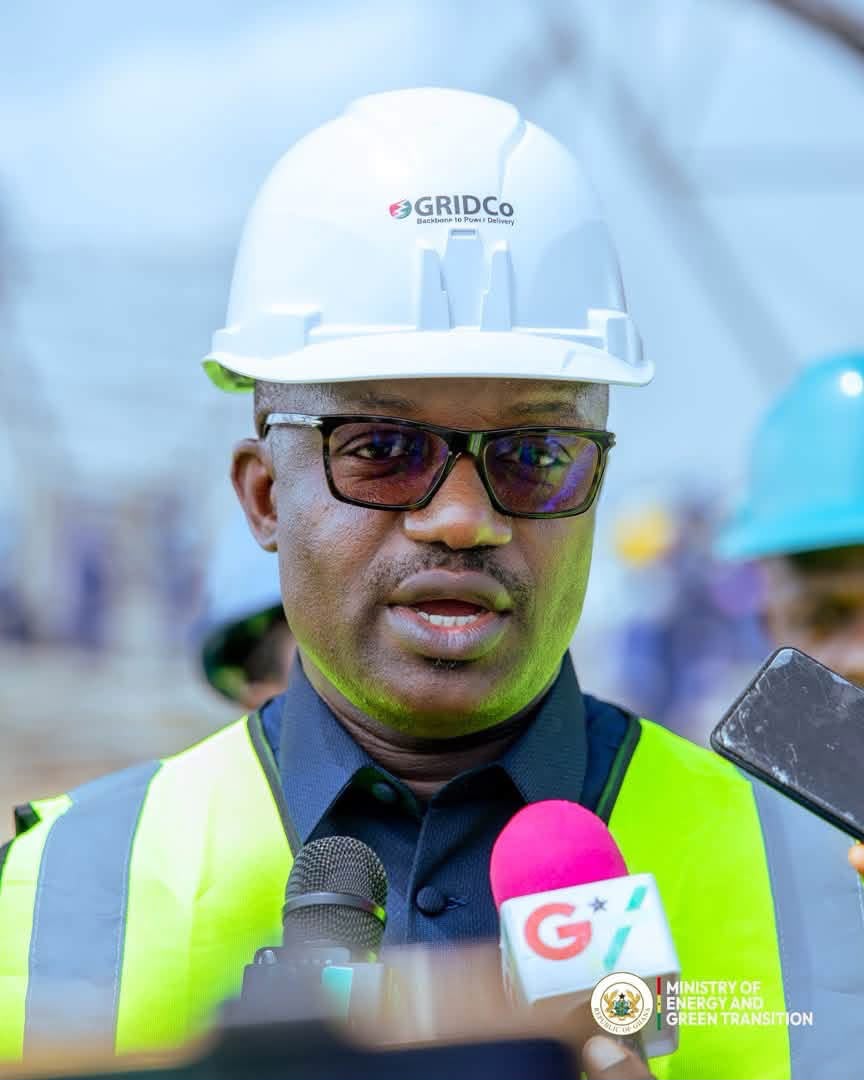
These interruptions will be necessary to facilitate the works and ensure the safety and reliability of the transmission system.
Energy and Green Transition Minister Dr. John Abdulai Jinapor
That statement points to an important operational reality.
In transmission systems, planned outages are often preferable to attempting repairs on energised infrastructure or risking further structural failure.
Short-term inconvenience is therefore being treated as necessary to preserve long-term network stability.
The deeper energy-security lesson
The incident arrives at a time when Ghana is placing increasing emphasis on energy security, grid resilience and infrastructure reliability.
Recent policy discussions have focused heavily on generation capacity, gas supply, renewables and financial sustainability.
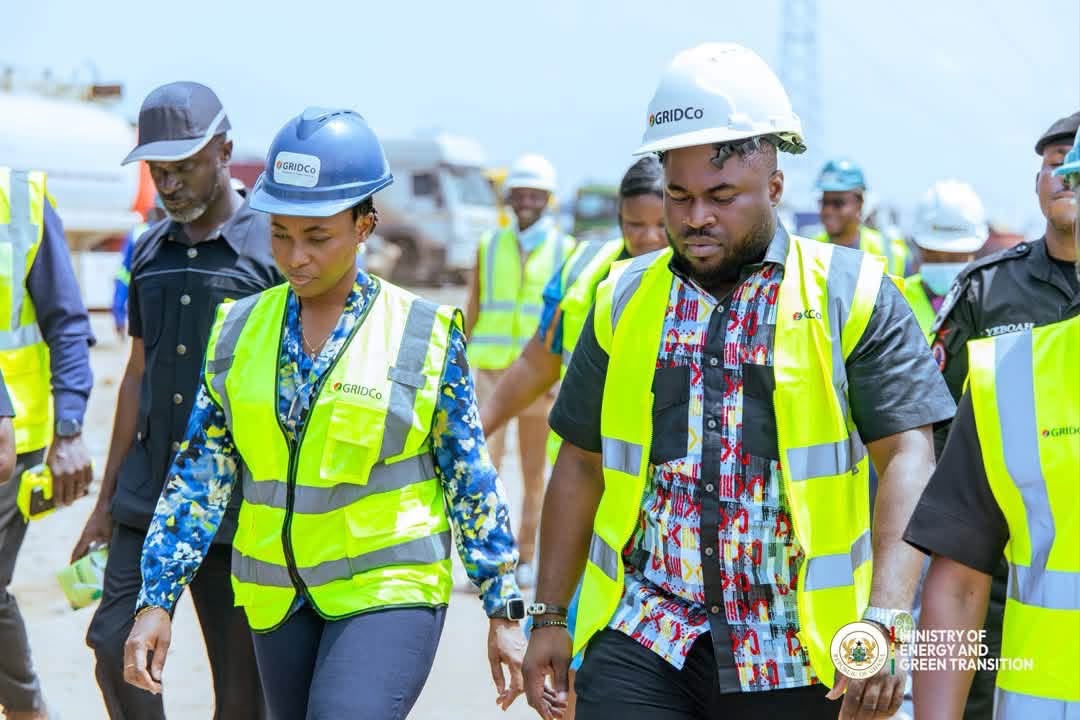
The Ashaiman tower damage is a reminder that energy security also depends on protecting the physical assets that connect the entire electricity system.
A modern power sector can invest billions in generation, but if transmission corridors are not protected, the reliability of that investment can be undermined by a single preventable accident.
The episode also suggests that enforcement of right-of-way regulations may need to become more systematic rather than reactive.
A warning for rapidly urbanising corridors
For rapidly urbanising areas such as Ashaiman, Tema and the wider Accra industrial corridor, the lesson is especially important.
Transmission corridors are often viewed as unused land, but they are in fact safety zones around strategic national infrastructure.
Activities that appear economically convenient in the short term can create significant public-safety and power-system risks.
The Ashaiman explosion therefore carries a message that extends beyond one damaged tower: protecting transmission infrastructure is not only a technical requirement for GRIDCo; it is a matter of public safety, economic continuity and the reliability of Ghana’s electricity network.
The effectiveness of the emergency restoration works will determine how quickly the affected corridor returns to normal operation, but the more enduring question is whether the incident will lead to stronger enforcement of protected transmission corridors before another preventable accident occurs.
READ ALSO: Nigel Farage Claims Victory in Clacton but Refuses to Attend Declaration