
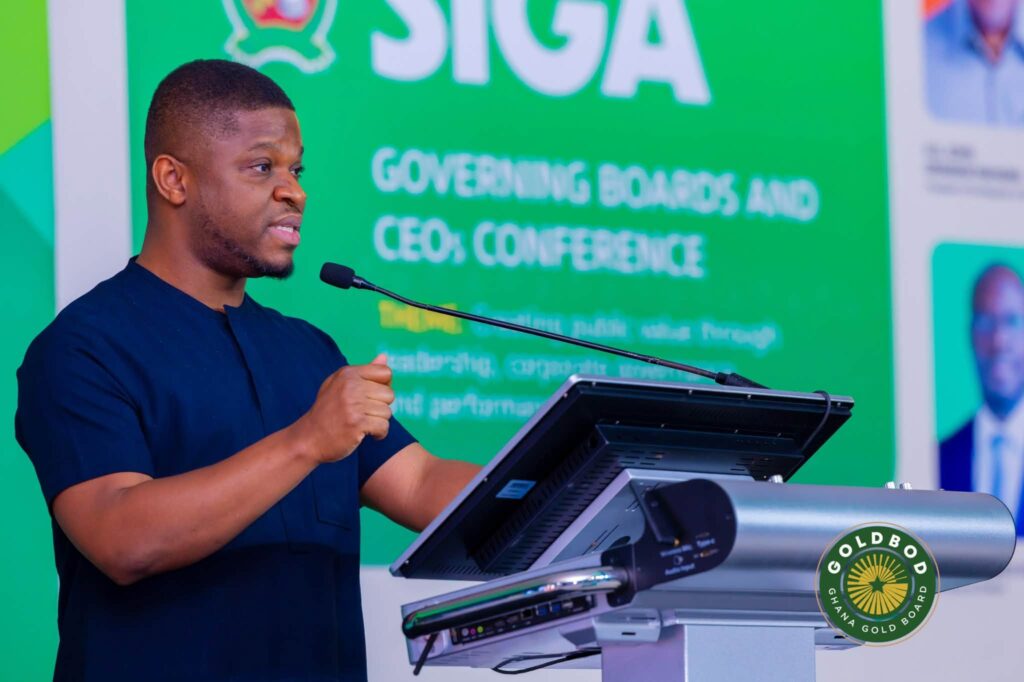
GoldBod Chief Executive Officer, Sammy Gyamfi, has attributed the historic surge in Ghana’s official artisanal and small-scale mining (ASM) gold exports to sweeping structural and policy reforms aimed at recovering volumes previously lost to illicit trade.
Addressing stakeholders on the nation’s transformative extractive agenda, Smmy Gyamfi highlighted that the Ghana Gold Board (GoldBod) achieved a profound “production claw back” by integrating formal regulatory controls rather than relying on untapped resource extraction.
He explained that these strategic institutional interventions successfully redirected gold outputs that once bypassed official state channels back into the sovereign economy.
“Here lies the central lesson of Ghana’s story. The Ghana Gold Board did not create gold that did not exist or was not already being produced; through reforms it achieved what I call a production claw back – recovering into the official economy, gold that was already being produced but was previously lost to smuggling and the illegal gold trade.”
Sammy Gyamfi
Expanding on these operational breakthroughs, Gyamfi disclosed that between January 1, 2026, and October 20, 2026, GoldBod aggregated and exported 85.4 tonnes of ASM gold valued at US$11.6 billion, outpacing total large-scale mining exports of 76 tonnes worth US$11.1 billion over the same timeframe.
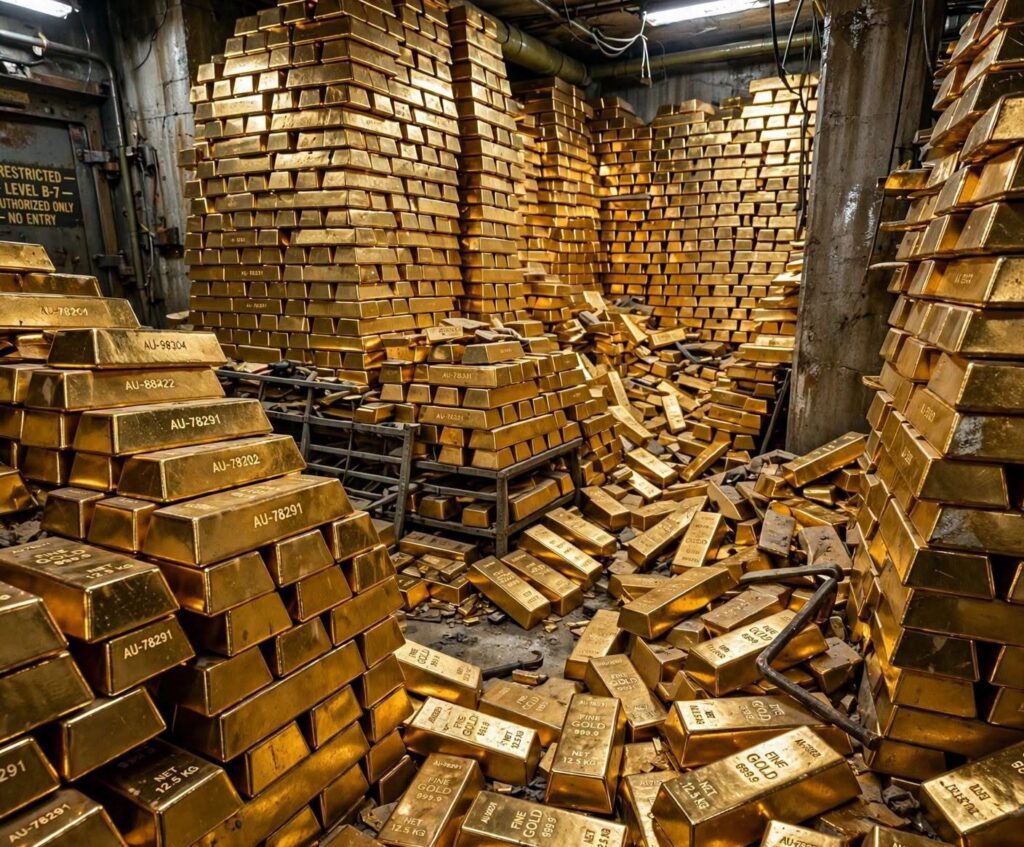
This builds directly upon the stellar performance recorded in 2025, when small-scale gold exports surged from 63 tonnes in 2024 to approximately 104 tonnes, surpassing large-scale production for the first time in Ghana’s history and injecting US$10.8 billion in foreign exchange into the economy.
The massive influx of foreign currency anchored foreign exchange (FX) market stability, fortified national reserves, and contributed significantly to a 41 percent appreciation of the Ghana Cedi against the United States Dollar.
Additionally, GoldBod purchased and delivered 1.8 tonnes of large-scale gold valued at US$224 million to the Bank of Ghana this year to further bolster national bullion reserves.
Structural Leakages and the Need for Intervention
The imperative for GoldBod’s establishment stemmed from years of severe economic hemorrhaging within the small-scale extractive ecosystem.
Prior to 2025, substantial volumes of gold produced in Ghana escaped the formal financial network through rampant smuggling, under-declaration, and unrecorded cross-border trade.
A comprehensive SWISSAID analysis examining UN Comtrade mirror data exposed a staggering 229-tonne discrepancy, valued at approximately US$11.4 billion, between Ghana’s reported gold exports and the corresponding imports registered by trading partner nations between 2019 and 2023.

State records further reflected this alarming trend, with official small-scale exports plummeting from 75.7 tonnes in 2018 to 53.4 tonnes in 2019 and 39.3 tonnes in 2020.
The decline reached a critical low in 2021 when a 3 percent withholding tax imposed on unprocessed small-scale gold caused recorded exports to plummet to a paltry 3.4 tonnes worth just US$185 million.
These losses were rooted in deep structural vulnerabilities, notably a fragmented, informal local trade market lacking centralized oversight, heavy foreign domination, weak regulatory enforcement, and ineffective FX repatriation systems.
Foreign exchange generated through formal channels routinely failed to re-enter the domestic banking system, starving the nation of crucial development revenue and foreign currency reserves needed to stabilize the macroeconomy.
Institutional Policy Directives and Market Formalization
To confront this multi-faceted challenge, President Mahama established GoldBod as the sole buyer, seller, exporter, statutory regulator, and national assayer of gold in Ghana.
GoldBod swiftly implemented a comprehensive overhaul designed to eliminate systemic leakages and reassert national sovereignty over mineral wealth.
Foreign nationals were legally prohibited from directly trading gold in local markets, reserving domestic gold trading strictly for Ghanaian nationals.
To enforce compliance and bring structure to the supply chain, GoldBod introduced a four-tier licensing regime with stringent operational guidelines, alongside an intra-day uniform pricing system to ensure competitive transparency.

Complementing these trading regulations, GoldBod deployed an official receipting and digital stock-booking system to prevent hoarding and under-declaration, while expanding state-funded liquidity for local purchases.
Regulatory enforcement was institutionalized through a dedicated GoldBod Task Force and Inspectorate, which deployed nationwide to conduct surveillance, track illicit operations, and incentivize whistleblowers.
Aggressive public sensitization campaigns were simultaneously conducted to educate miners and traders on their civic responsibilities under the new statutory framework.
Economic Impact and Macroeconomic Stabilization
The structural realignments executed by GoldBod have fundamentally redefined Ghana’s extractive sector from an unmonitored market into a primary driver of macroeconomic strength.
By converting previously smuggled gold into official export receipts, the state has built a sustainable bulwark against foreign exchange volatility and international commodity shocks.
The continuous growth of small-scale sector earnings demonstrates that transparent pricing, strict local participation laws, and aggressive regulatory oversight can effectively reclaim lost state revenues.
As GoldBod maintains its momentum through 2026, the claw back strategy stands as a compelling model for resource-rich developing nations seeking to maximize domestic value retention.
The sustained alignment between small-scale miners, licensed traders, and state apparatuses confirms that policy enforcement can successfully turn informal extraction into formal economic prosperity.
Through centralized regulation and formalization, Ghana has successfully converted legacy leakages into sovereign wealth and long-term currency stability.
READ ALSO: MoE Set to Launch a Direct Reporting System