The Minister for Trade, Agribusiness and Industry, Hon. Elizabeth Ofosu-Adjare, and three manufacturing companies operating in the country have met to discuss ways to strengthen domestic manufacturing, reduce dependence on imported industrial inputs and expand employment.
The Minister met executives of CIMPOR Cement Africa, Huaguang New Energy Battery Ghana and Zema New Energy Limited to discuss measures to promote local production, improve manufacturing standards, support workers’ welfare and increase Ghanaian participation in industrial operations.
The engagements focused on opportunities to use locally available raw materials, encourage investment in renewable energy manufacturing and ensure that industrial expansion generates broader economic benefits.
The discussions also highlighted the importance of cooperation between government and private enterprises in building domestic production capacity.
”The Ghana Standards Authority says the discovery of calcined clay could reduce clinker imports, which account for about 50 per cent of cement production costs.”
Minister for Trade, Hon. Elizabeth Ofosu-Adjare
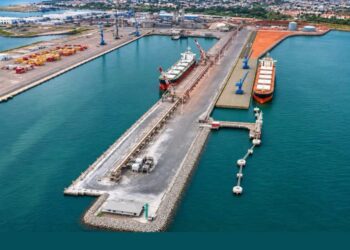
Calcined Clay Targets Cement Import Dependence
During the meeting with CIMPOR Cement Africa Chief Executive Officer, Yasin Tekinarslan, discussions centred on tax relief for the local production and utilisation of calcined clay as an alternative material in cement manufacturing.
The proposal is significant for Ghana’s construction industry, where cement production costs are influenced by the availability and prices of imported inputs, particularly clinker.
Increasing the use of suitable locally sourced materials could help reduce exposure to international supply disruptions while creating opportunities for domestic mineral extraction, processing and manufacturing.

Calcined clay is produced by heating clay at controlled temperatures to activate its cementitious properties. When incorporated into suitable cement formulations, it can partially replace clinker while supporting efforts to lower the carbon intensity of cement production.
”The development would promote the use of local materials in cement production and support sustainable construction practice.”
CIMPOR Cement Africa Chief Executive Officer, Yasin Tekinarslan
The Minister welcomed initiatives that use Ghanaian raw materials to produce more affordable housing materials and help address the country’s housing deficit.
However, translating the potential benefits into lower production costs will depend on the availability of competitively priced raw materials, reliable processing facilities, appropriate product standards and the effectiveness of any tax incentives introduced.
The extent to which savings reach construction companies, property developers and households will also influence the initiative’s wider economic impact.
Battery Manufacturing and Worker Welfare
The Minister’s engagement with Huaguang New Energy Battery Ghana focused on workers’ welfare, quality standards and government support for domestic manufacturing.
The discussions come amid growing attention to industrial investment in battery production and other technologies associated with energy storage and the transition towards cleaner energy systems.
Battery manufacturing can create employment across production, equipment maintenance, quality assurance, logistics, warehousing and technical services. It can also provide opportunities for local suppliers and workers to acquire specialised industrial skills.

Nevertheless, the long-term contribution of such investments depends on more than the establishment of production facilities.
Maintaining consistent product quality, complying with applicable safety requirements and developing a skilled workforce are essential to building competitive manufacturing operations.
The government’s engagement with Huaguang therefore places workers’ welfare and production standards within the broader discussion about industrial development.
Effective implementation would require companies to maintain appropriate workplace protections, invest in employee training and establish systems that support reliable production.
”The company’s engagement with the Minister focused on workers’ welfare and quality standards, reaffirming the Government’s commitment to supporting local manufacturing.”
Huaguang New Energy Battery Ghana
Solar Manufacturing and Ghanaian Participation
At her meeting with Zema New Energy Limited, a manufacturer of solar photovoltaic cells, the Minister urged greater Ghanaian participation in the company’s operations to promote employment and business growth.
The engagement reflects the opportunities presented by renewable energy manufacturing, particularly as demand for solar technologies grows across residential, commercial and utility-scale applications.
Information published by the Ghana Free Zones Authority identifies Zema New Energy Ghana Limited as a manufacturer of solar cells and related products operating in the Shai Osudoku District of the Greater Accra Region.
The company’s activities provide a basis for developing domestic capabilities in photovoltaic manufacturing and associated industrial services.
Solar photovoltaic cells are essential components in converting sunlight into electricity. Manufacturing them locally can create opportunities in production, technical maintenance, testing, packaging, transportation and supply-chain management.
However, the scale of the economic benefits will depend on production volumes, market access, workforce development and the ability of Ghanaian businesses to participate in the supply chain.
Greater local participation could involve recruiting and training Ghanaian technicians, expanding opportunities for domestic service providers and strengthening partnerships with local enterprises.
Such measures would help ensure that industrial investment contributes to skills development and business expansion beyond the factory floor.
”The company specializes in the manufacture of solar cells and related renewable energy products, contributing to Ghana’s renewable energy development, industrial growth and job creation.”
Zema New Energy Limited
The three engagements collectively highlight the government’s interest in connecting industrial investment with local sourcing, employment and stronger domestic production.
Their eventual impact will depend on the implementation of the proposals discussed, the competitiveness of locally manufactured products and the extent to which Ghanaian workers and businesses benefit from the companies’ operations.
READ ALSO:Government Plans Emergency Unit Expansion, Digital Bed Management Rollout