Hon.George Mireku Duker, Former Deputy Minister of Lands and Natural Resources, has voiced strong disapproval over the Constitution Review Committee’s recommendation to cap revenue allocation to host communities at a maximum of three percent.
Speaking in an interview with The Vaultz News, the former deputy minister questioned the rationale behind placing a ceiling on funds intended to compensate areas bearing the primary ecological and social burdens of resource extraction.
He argued that national wealth management cannot be deemed fair or sustainable when frontline extractive communities continue to suffer severe environmental degradation while receiving minimal economic returns.
“A country cannot reasonably claim that its natural resources are being managed for the benefit of its people if communities bear the greatest burden and reap the fewest benefits. The Constitution Review Committee proposed allocating a share of gross revenue from resource extraction, not exceeding 3%, to the communities where the resources are exploited. When I saw this, I said, ‘Wow.'”
Hon.George Mireku Duker
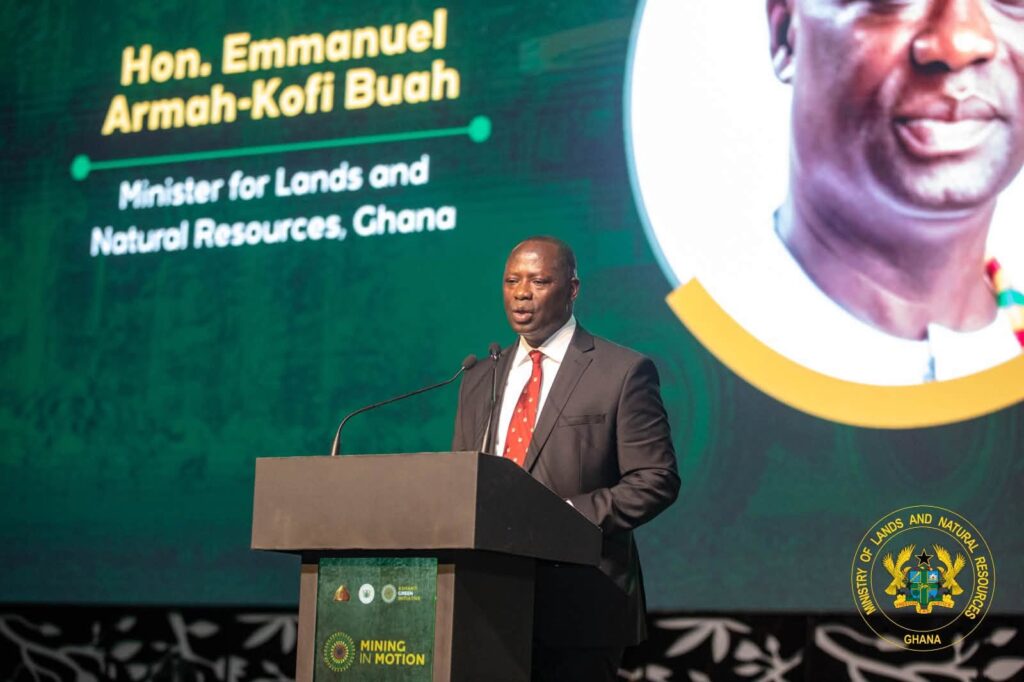
Expanding on his critique, Hon. Duker expressed deep skepticism regarding whether the committee adequately incorporated the realities and pressing needs of host communities when formulating the three percent figure.
He emphasized that instead of framing the percentage as an absolute ceiling, the constitutional proposal should have established a guaranteed floor to allow future statutory escalations as natural resource exploitation expands.
Furthermore, he stressed that a discretionary clause leaves host communities vulnerable, advocating instead for an enforceable legal framework that clearly defines gross revenue, establishes transparent oversight mechanisms, and ensures community revenue sharing remains strictly additive to existing statutory royalties and corporate social obligations.
Flaws in Statutory Capping and Fiscal Ambiguities
The primary challenge with capping resource revenue allocations at a maximum of three percent lies in the restrictive precedent it sets for long-term community development.
In natural resource governance, establishing a statutory ceiling severely limits future bargaining power and prevents host communities from benefiting proportionally during commodity price booms.

Moreover, without a precise statutory definition of whether “gross revenue” refers to the gross market value of minerals extracted or actual realized sales, ambiguous legal phrasing can lead to revenue leakage and protracted legal disputes between mining firms, central governments, and traditional authorities.
Transitioning from discretionary provisions to an enforceable revenue-sharing model requires statutory clarity to avoid elite capture and administrative mismanagement.
As Hon. Duker observed during his interview, discretionary phrases often allow central authorities to withhold funds or redirect them into political patronage networks.
Establishing a fixed, guaranteed minimum percentage embedded directly within the constitution ensures that financial disbursements remain predictable, independent of political transitions, and directly tied to local development goals.
Imperative for Transparent Oversight and Local Equity
To ensure that community development allocations achieve their intended socio-economic impact, an independent legal framework governing fund management is indispensable.
Experience across resource-rich developing nations demonstrates that local development funds frequently fail due to a lack of public reporting, elite capture, and inadequate civic engagement.
A robust regulatory architecture must enforce mandatory public audits, establish open-reporting portals, and mandate community-led prioritization of social infrastructure to guarantee that resource revenues address pressing local needs.

Furthermore, direct community revenue sharing must operate strictly as a supplementary benefit rather than a substitute for mandatory corporate social responsibility, environmental remediation, or state royalties.
Following comparative African precedents, such as South Africa’s statutory Social and Labor Plans (SLPs), resource extraction licenses should be strictly contingent on enforceable commitments toward sustainable livelihoods and environmental rehabilitation.
Binding constitutional guarantees ensure that host enclaves transition from sites of environmental degradation to hubs of sustainable economic growth.
Strategic Priorities for Extractive Enclaves
Resource allocation to mining host communities must be directed toward tangible, long-term interventions that outlast the lifespan of finite mineral reserves.
Priorities must focus on delivering clean drinking water, modern health infrastructure, educational facilities, motorable roads, and vocational training tailored to local labor markets.
“I recommend a legal framework that provides for a clearly defined share of resource revenue for affected communities, independent audits and public reporting, community participation in identifying development priorities, transparent criteria for distributing funds, dedicated provision for environmental restoration and sustainable livelihoods, and accessible procedures for reporting misuse and seeking remedies.”
Hon.George Mireku Duker
In addition, dedicated funding streams must be allocated toward ecological restoration and alternative agricultural livelihoods to mitigate the environmental impact of large-scale and small-scale mining operations.
Ultimately, embedding these provisions within the constitution safeguards host communities against statutory neglect and ensures equitable resource distribution.
Establishing direct, transparent, and legally protected revenue flows empowers local populations to participate meaningfully in the management of their ancestral wealth, fostering socio-economic stability across the country’s extractive regions.
READ ALSO: Armose Attributes NDC’s 2024 Victory To Strategic Coordination