The Africa Sustainable Energy Centre (ASEC) is demanding a comprehensive public account of Ghana’s recent power system disturbances, arguing that restoring electricity after major outages is no longer enough without establishing why failures occur and how future disruptions will be contained.
The energy policy organisation wants the Ghana Grid Company Limited (GRIDCo), together with other relevant power-sector institutions, to publish the findings of the technical investigation into the recent widespread outage and set out a clear programme for preventing similar incidents.
GRIDCo has linked the latest disturbance to a fault on the Akosombo-Volta transmission line.
According to the transmission utility, the fault triggered the automatic tripping of generating units at Akosombo and some thermal plants as part of protection mechanisms designed to safeguard the stability of the National Interconnected Transmission System.
The incident subsequently disrupted electricity supply to parts of the country and triggered renewed concerns about the resilience of Ghana’s transmission network.
For ASEC, however, the central issue is not simply the restoration of power.
The organisation believes the incident should be treated as an opportunity to determine whether weaknesses in transmission infrastructure, protection systems, network redundancy or operational procedures allowed a localised fault to develop into a much wider disruption.
Root Causes Must Be Established
ASEC is calling for the technical investigation to go beyond identifying the immediate fault on the transmission line.
It wants GRIDCo to distinguish between the event that initiated the disturbance, the subsequent generation and transmission trips, any cascading effects and underlying weaknesses that may have increased the scale of the outage.

That distinction matters because a transmission fault does not necessarily have to result in a widespread loss of electricity.
A resilient power system should have sufficient protection, redundancy and operational safeguards to isolate a failure while maintaining service through alternative pathways.
ASEC Executive Director, Ing. Justice Ohene-Akoto, said the public needs a clear account of what happened and what will change as a result.
“Ghana does not only need power restored after an outage. We need a grid that is resilient enough to prevent a disturbance from becoming a crisis in the first place.”
ASEC Executive Director, Ing. Justice Ohene-Akoto
The organisation said the report should therefore examine the performance of the protection systems deployed during the incident, including whether they operated according to design, whether any unexpected or delayed trips occurred and whether protection mechanisms were adequately coordinated.
Grid Protection Needs Greater Scrutiny
The call comes against a broader challenge facing Ghana’s electricity system: maintaining reliability as the network becomes increasingly important to a growing economy and a changing generation mix.
Protection systems are designed to respond rapidly when abnormal conditions occur.
Their purpose is to prevent equipment damage and protect the wider network by disconnecting affected sections.
But when several generating units or other components trip in quick succession, the sequence of events becomes critical.
ASEC argues that Ghana needs to understand that sequence rather than simply recording the final loss of supply.
The proposed post-incident report should identify lessons from the disturbance, including whether alternative operational decisions could have reduced the scale or duration of the outage.
That information would be particularly valuable for future contingency planning.
If the same transmission corridor experiences another failure, GRIDCo and other system operators should already know which alternative supply routes are available, what generation resources can be brought online and which operational actions should be taken first.
Resilience Must Replace Reactive Restoration
ASEC is also urging Ghana to reconsider how it approaches grid maintenance and reliability.
The organisation argues that the power system should progressively move away from a predominantly reactive model, where major interventions follow equipment failure, towards predictive and preventive management.
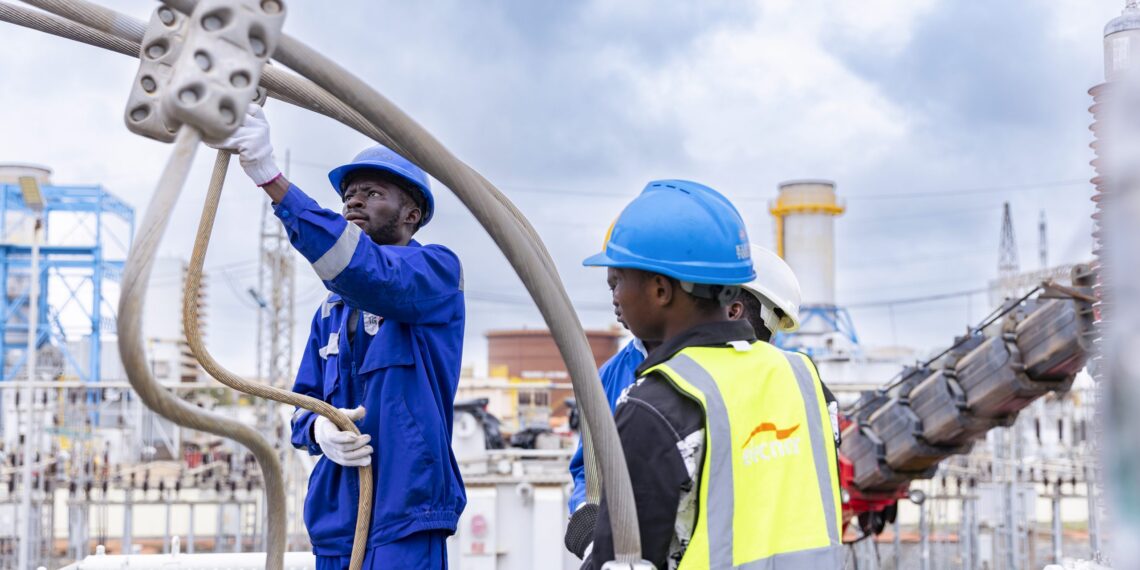
That means identifying vulnerable transmission assets before they fail, using real-time monitoring and advanced analytics to detect abnormal system behaviour, and applying predictive maintenance to infrastructure whose failure could have consequences beyond a single locality.
For a national transmission network, redundancy is equally important.
ASEC wants GRIDCo to demonstrate whether critical transmission corridors have sufficient alternative pathways and whether the network can withstand the failure of a major component without triggering widespread supply interruptions.
The question is increasingly important because Ghana’s electricity system depends on the transmission network to connect generating facilities with distribution utilities, industries and households across the country.
Adequate generation capacity therefore cannot, on its own, guarantee reliable electricity.
Power must also be transmitted through a network capable of absorbing disturbances and maintaining stability.
Recovery Plans Must Be Clearly Defined
ASEC is further calling for a formal recovery and rollback framework that can be activated when a major system disturbance occurs.
The proposed plan should establish the sequence for restoring the network, identify operational decision points and clarify the responsibilities of the different institutions involved.
It should also include a communication protocol for informing the public during major outages.
The organisation believes faster restoration should be accompanied by a clearer understanding of how the system will be stabilised, how affected components will be isolated and how supply will be progressively reintroduced without creating additional risks.
This would make restoration planning part of Ghana’s broader grid-resilience strategy rather than treating each major outage as an isolated emergency.
Transparency Must Follow Technical Investigations
ASEC acknowledged the work of GRIDCo engineers and technical personnel involved in restoring electricity following the latest disturbance.
However, it said the technical complexity of operating an interconnected national grid should not prevent meaningful public accountability.
The organisation wants the eventual investigation to answer four basic questions: what happened, why it happened, what worked or failed during the response, and what will be done differently.
It is also calling for GRIDCo to publish an implementation timeline for corrective measures arising from the investigation so that recommendations do not remain confined to an internal technical report.
For Ghana’s electricity sector, that could be as important as the investigation itself.
A technical report has limited value if its findings do not translate into changes in maintenance practices, infrastructure investment, protection coordination and operational planning.
The Bigger Energy-Sector Test
The latest disturbances highlight a wider issue for Ghana’s energy transition.
As the country seeks to improve electricity reliability while incorporating more renewable generation and strengthening the financial sustainability of the power sector, the transmission network will become even more critical.
Renewable generation can introduce additional operational considerations because some renewable sources are variable and geographically concentrated.
This makes system monitoring, forecasting, flexibility and transmission planning increasingly important.
A stronger grid is therefore not simply an electricity-sector objective. It is an enabling condition for Ghana’s wider energy-transition ambitions.
ASEC’s intervention ultimately shifts the debate from how quickly Ghana can restore electricity after a blackout to whether the country is investing enough in preventing system failures from escalating in the first place.
For GRIDCo, the challenge is now twofold: restore and maintain public confidence in the reliability of the national grid while demonstrating, through evidence and corrective action, that lessons from recent disturbances are being converted into a more resilient power system.
The real measure of grid reliability, ASEC argues, should not only be the speed of restoration after a failure, but the capacity of the system to contain failures before they become nationwide crises.
READ ALSO: Companies Told to Prepare for New ESG Reporting Era