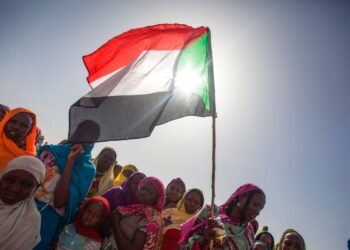
The United Nations has stepped up efforts to keep Sudan’s children connected to education, with a $22 million initiative launched to help 200,000 youngsters return to learning amid a conflict that has pushed millions from their homes and brought much of the country’s education system to a standstill.
The three-year programme, announced by the UN global education fund Education Cannot Wait, will focus on West Darfur, South Kordofan and Gedaref, three states where children and communities have faced severe disruption since war erupted in Sudan more than three years ago.
The initiative seeks to restore “safe, quality and inclusive education” for children who have been denied access to classrooms by fighting, displacement and the destruction of basic services.
For thousands of Sudanese children, the consequences of the conflict extend far beyond missing lessons. Prolonged exclusion from school has disrupted their social development, exposed them to heightened protection risks and deprived them of one of the few stable environments available during a prolonged humanitarian emergency.
According to Education Cannot Wait, at least eight million children remain out of school across Sudan, representing nearly half of the country’s estimated 17 million school-age children. Many have experienced months of interrupted learning, with some children missing almost 500 days of education.
The scale of the disruption reflects the wider devastation caused by the conflict, which began in April 2023 when fighting erupted between Sudan’s rival military forces. Since then, an estimated 14 million people have been forced to flee their homes, while 33.7 million people require humanitarian assistance.
The crisis has created enormous pressure on communities already struggling to access essential services, while displacement has placed additional demands on host communities and humanitarian organisations.
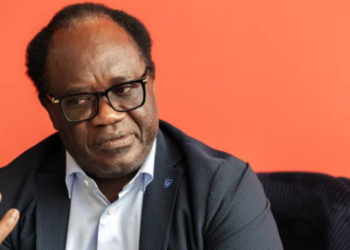
Education Cannot Wait Director Maysa Jalbout indicated that the latest investment was designed not simply to reopen classrooms but to help children regain stability after years of upheaval.
“This investment is about much more than reopening classrooms. It is about supporting children to regain a sense of safety and normalcy while strengthening education systems that can continue serving communities through crisis and into recovery.”
Maysa Jalbout
The programme will prioritise children considered furthest from accessing education, including internally displaced children, refugees and vulnerable members of host communities. At least 60% of the beneficiaries are expected to be girls, while 10 per cent will be children with disabilities.
Under the initiative, partners will work to establish safe learning environments while expanding mental health and psychosocial support for children who have experienced displacement, violence and prolonged uncertainty.
The programme will also strengthen teachers’ capacity, improve access to learning materials and tackle specific barriers preventing girls and children with disabilities from attending school.
The effort comes as humanitarian organisations continue to confront a severely weakened education infrastructure across Sudan.
In its mid-year update on Sudan, the UN Children’s Fund, 81% of schools in Darfur remain closed, while 70% of children in the region are not attending school.
A further 5.8% of schools are reportedly being used as shelters, illustrating how displacement has transformed education facilities into emergency accommodation.
UNICEF also reported that schools have come under direct attack this year, further complicating efforts to restore learning in communities affected by the conflict.
Sudan’s Children Bear Brunt of Deepening Education Crisis
According to the UN report, the new investment will be implemented by Save the Children in partnership with Plan International, LM International and Sudanese organisations Alsalam Organisation for Relief and Development and Sadagaat.
In West Darfur, South Kordofan, and Gedaref, where communities are still dealing with the aftermath of fighting and displacement, the partners will be in charge of converting the funds into useful assistance for children and educational systems.
In addition to offering classrooms and educational resources, humanitarian organisations must also ensure that learning environments are secure, assist educators, and deal with the psychological effects of protracted crises.
The Sudanese education problem is a component of a larger worldwide issue that affects children who are affected by conflicts, displacement, and other humanitarian crises.
Education Cannot Wait estimates that 258 million school-age children and adolescents living in crisis situations worldwide are affected by disrupted learning. Of that number, 93 million are completely out of school.
Moreover, a recent report by the UN global education fund found that nearly 80% of children who are unable to attend school because of crises or conflict live in just 20 countries.
Education Cannot Wait has also launched its global “Hope Starts Here” campaign alongside the Sudan announcement, seeking to mobilise $600 million to reach 10 million children whose education continues to be disrupted by some of the world’s most severe crises.
READ ALSO: GoldBod Refutes GHS1bn Overdraft Allegation