Ghana’s energy sector is showing signs of financial recovery, with government reporting major progress in clearing legacy debts and reducing the cost of thermal power generation, even as recent nationwide power disturbances expose persistent weaknesses in the electricity system.
The government says it has cleared about US$1.47 billion in legacy energy-sector debt, while a shift from liquid fuels to domestic natural gas for power generation has saved approximately US$500 million.
The measures form part of a broader effort to restore financial stability across the electricity value chain and reduce the cost of supplying power to consumers.
The financial gains are significant because Ghana’s power sector has for years been constrained by accumulated obligations among generation companies, fuel suppliers and distribution utilities.
Government has also renegotiated some independent power producer agreements, which it says has generated about US$250 million in additional savings.
Yet the emerging picture is not entirely straightforward.
While the sector’s finances are improving and cheaper natural gas is reducing fuel costs, recent widespread outages have renewed questions about the condition and resilience of the infrastructure responsible for delivering electricity to consumers.
Gas-To-Power Cuts Generation Costs
One of the clearest gains has come from the increased use of natural gas instead of more expensive liquid fuels in thermal power plants.
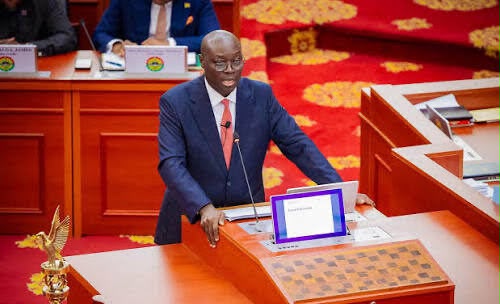
According to figures presented by Finance Minister Dr Cassiel Ato Forson in the 2026 Mid-Year Budget Review, Ghana’s Gas-to-Power Strategy generated GH¢3.08 billion, equivalent to US$268.5 million, in fuel-cost savings during the first half of 2026.
The savings resulted from replacing light crude oil with natural gas in electricity generation, with government estimating that the switch could reduce generation costs substantially.
Gas supply for power generation also increased by an additional 35 million standard cubic feet per day by the end of June, bringing total supply to approximately 490 million standard cubic feet per day.
The development is particularly important for Ghana because thermal generation remains a major component of the electricity system.
When gas is available at competitive prices, thermal plants can operate without the same dependence on imported liquid fuels, reducing exposure to international oil prices and foreign-exchange pressures.
Dr Ato Forson has consequently positioned the gas-to-power strategy as both an electricity-sector reform and a broader macroeconomic intervention.
“The strategy is aimed at replacing expensive light crude oil with cleaner and cheaper natural gas.”
Dr Cassiel Ato Forson, Minister for Finance, presenting the 2026 Mid-Year Budget Review.
The government has also been advancing plans for additional domestic gas-processing capacity.
A proposed 100 million standard cubic feet per day gas-processing facility is expected to strengthen domestic fuel availability, while government has also announced plans for a second gas-processing plant at Atuabo.
For Ghana, the significance is straightforward: more domestic gas processed and delivered to power plants could mean less reliance on imported liquid fuels and lower exposure to foreign-exchange costs.
Financial Recovery Reaches Power Utilities
The financial side of the electricity sector is also undergoing a major reset.
Government says it has introduced reforms to the Cash Waterfall Mechanism that have improved the flow of revenues to independent power producers.
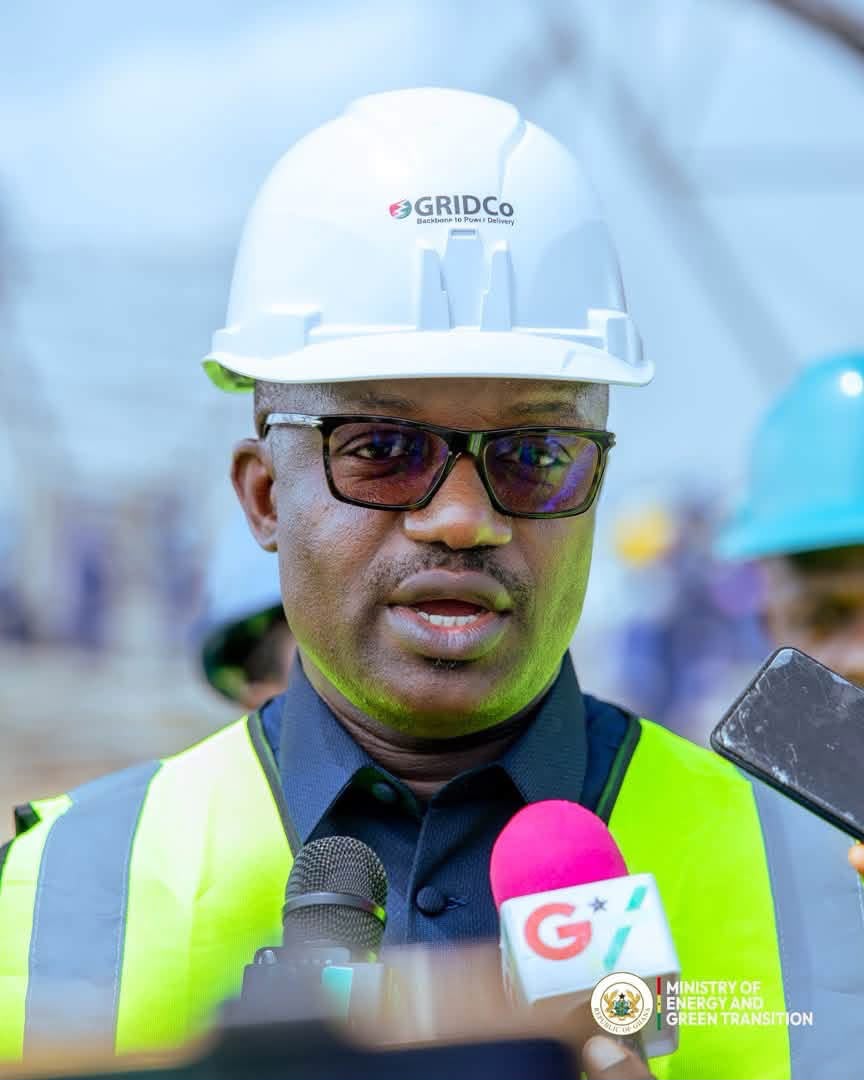
Dr John Abdulai Jinapor, Minister for Energy and Green Transition, said government now declares close to GH¢15 billion each month into the mechanism, with IPPs receiving close to the full value of their invoices.
“Today, we declare close to GH¢15 billion every month into the Cash Waterfall Mechanism, and IPPs receive about 100 per cent of their invoice bills.”
Dr John Abdulai Jinapor
That represents a sharp improvement from the situation government inherited, according to the Minister.
He said only about 16% of funds declared into the mechanism previously reached IPPs, which received approximately 42% of their invoices.
The improvement matters because unpaid obligations across the electricity supply chain can eventually affect fuel procurement and the ability of generators to maintain consistent operations.
A financially healthier power sector should, in principle, make it easier for generators and fuel suppliers to plan, maintain equipment and secure the resources needed to keep plants operating.
But that is only one part of the electricity equation.
Reliability Remains The Missing Link
Ghana’s recent experience demonstrates that improving the finances of the power sector does not automatically produce a more reliable electricity system.
On August 20, GRIDCo reported a major fault on the Akosombo-Volta transmission line that triggered the automatic tripping of Akosombo generating units and some thermal plants as part of the protection mechanisms of the National Interconnected Transmission System.
Power restoration subsequently began, with engineers working alongside other sector agencies.
The incident came after another widespread power disturbance on July 29, putting grid reliability firmly back on the energy-policy agenda.
The distinction is important.
Ghana can have sufficient generation capacity and still experience serious electricity interruptions if transmission or distribution infrastructure is unable to transport that power reliably.
Government has acknowledged the need to strengthen the physical electricity network.
In August, a Technical Advisor to the Energy Minister, Dr Yussif Sulemana, said investments were being made across generation, transmission and distribution to improve reliability and support growing industrial demand.
The government has also announced an emergency investment programme by the Electricity Company of Ghana involving US$278 million for distribution infrastructure, including transformers and replacement of damaged poles.
This suggests that the next phase of Ghana’s energy reform will have to move beyond balancing the books.
More Gas, More Renewables, Stronger Grid
The financial recovery is also unfolding alongside a broader restructuring of Ghana’s energy mix.
Government has committed to achieving at least 10% renewable energy penetration in the national electricity generation mix by 2030, according to the Energy Minister.
Separately, government has outlined a US$3.4 billion Renewable Energy Action and Investment Plan covering utility-scale solar, battery storage and wind projects over the next five years.
That creates a more complicated planning challenge for the electricity system.
Ghana will need gas to provide flexible thermal generation, renewables to diversify the generation mix and storage and transmission infrastructure to accommodate changing patterns of electricity production and demand.
The country is therefore moving towards an energy system in which fuel security, financial sustainability and grid resilience are increasingly interconnected.
Recovery Must Reach The Consumer
The immediate economic gains from the sector’s reforms are difficult to dismiss.
Clearing US$1.47 billion in legacy obligations, reducing liquid-fuel dependence and improving payments to IPPs can help remove some of the structural pressures that have weakened Ghana’s electricity market.
But the ultimate test is whether those improvements are reflected in the experience of consumers.
A financially healthier energy sector that continues to suffer major system disturbances would still leave households and businesses exposed to significant economic costs.
For manufacturers, unreliable power can mean production losses and equipment damage.
For households, interruptions affect refrigeration, water supply, communications and home-based businesses.
The cost is often shifted to consumers through backup generators, fuel purchases and alternative power systems.
Ghana’s energy-sector recovery must therefore be measured on two fronts: whether the sector can pay for the electricity it produces and whether the system can reliably deliver that electricity.
The first is beginning to show measurable progress.
The second remains the harder test.
With domestic gas supply expanding, renewable investment accelerating, legacy debts being addressed and major infrastructure programmes being announced, Ghana now has an opportunity to convert the financial stabilisation of its energy sector into a more resilient electricity system.
The real measure of success will be whether consumers ultimately experience that transformation not merely through healthier utility balance sheets, but through more affordable, predictable and reliable power.
READ ALSO: FAO Chief Calls for Shift Towards Healthier, More Nutritious Diets