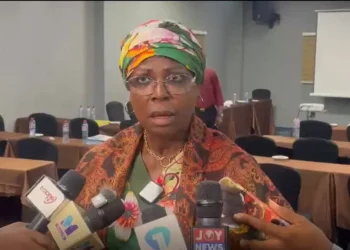
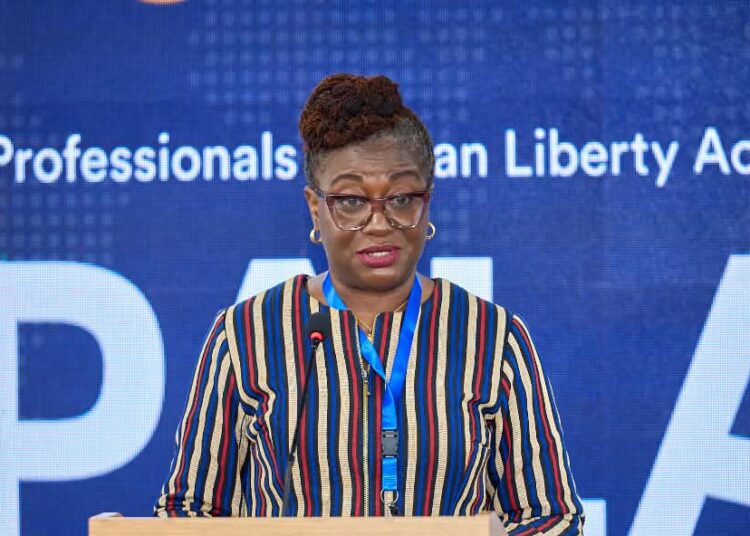
Bridget Dzogbenuku, Founder and Executive Director of Mentoring Women Ghana, has called for 50-50 gender representation across Africa’s political parties, institutions and national decision-making bodies.
She told telling participants at the Students and Young Professionals African Liberty Academy that inclusive governance remains out of reach as long as women stay absent from the rooms where decisions are shaped.
Speaking at SYPALA 2026 in Accra, Ms Dzogbenuku framed women’s participation as a governance and development question rather than a narrow women’s issue, urging women themselves to actively claim space at decision-making tables rather than wait to be invited.
“Of all the speakers that are to facilitate the sessions, I think 2 of us are women. I’m happy to see that at least 50% of the room are women. It wasn’t you. Yeah. So, we often pay less attention to gender parity, but fail to practise it”
Bridget Dzogbenuku, Founder and Executive Director of Mentoring Women Ghana
She said Africa cannot claim inclusive governance while women remain excluded from the tables where policy is shaped, tying that exclusion directly to the continent’s development outcomes rather than treating it as a separate concern.
“This is not only a women’s issue,” she said, addressing the room directly. “If we are empowered, our children will be empowered. Male or female, it’s a governance issue.”

Women’s Economic Contribution at the District Level
Ms Dzogbenuku grounded her argument in economic data from local government, saying women account for the majority of internally generated funds at the district level in Ghana.
“It’s the women who contribute to our district internally generated funds. More than 50 percent,” she said, using that figure to argue that women’s economic weight in local economies is not matched by their presence in the institutions that decide how those resources are spent.
She said any system that excludes half of its talent weakens its own capacity to solve problems, framing the exclusion of women not as an equity issue alone but as a practical constraint on governance effectiveness.
Ms Dzogbenuku drew on the example of Shirley Chisholm, the first Black woman elected to the United States Congress and the first to seek a major party’s presidential nomination, to make her case for active claim-staking rather than passive waiting.
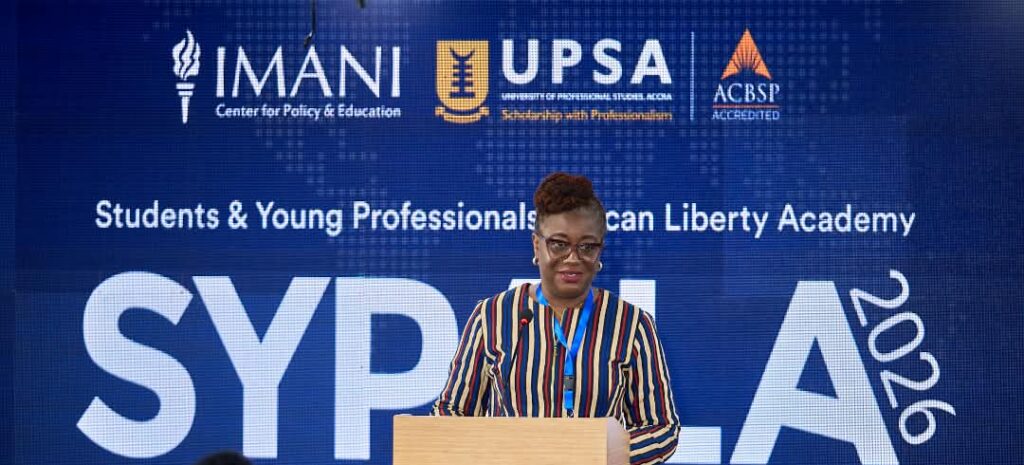
She cited Chisholm’s instruction that if you are not given a seat at the table, you should bring your own folding chair. She extended the metaphor to her own political practice. “We women should also start to carry our chairs; when you see them gathered, all men, put your chair back. I want to be part of this conversation.”
She said she raises the question wherever she goes, asking simply where the women are and how many are present, regardless of the setting or subject under discussion.
A Call to the Next Generation
Ms Dzogbenuku acknowledged agreement with an unnamed contributor, referred to in her remarks as Martin, that women themselves must also step up rather than wait for structures to change around them.
She called on the young leaders in the room to ensure that emerging political and institutional platforms commit to 50-50 representation from the outset, at the community, institutional, party and national levels alike.
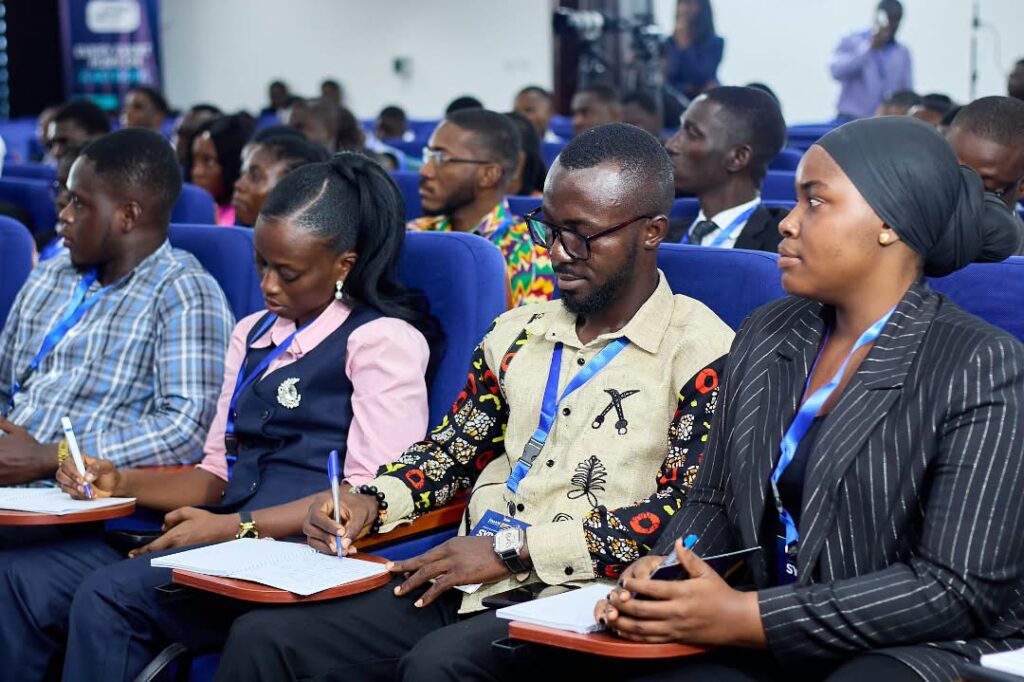
She argued that inclusion cannot be treated as an afterthought if the current generation is serious about leading differently. “It must be designed into every platform, every party, every institution and every policy from the beginning,” she said, closing her appeal to young people with a direct instruction to keep asking where the women and youth are represented in the rooms they enter.
READ ALSO: Gold Trading Operates On Low Margins – Bright Simons Warns