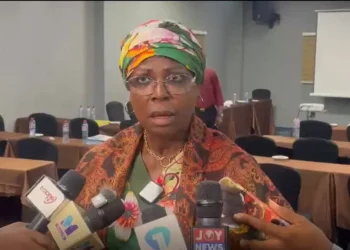
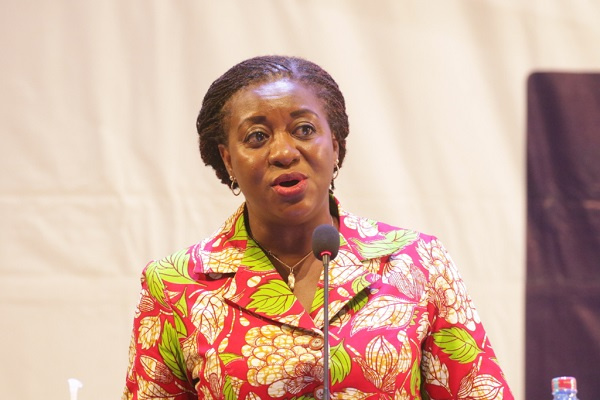
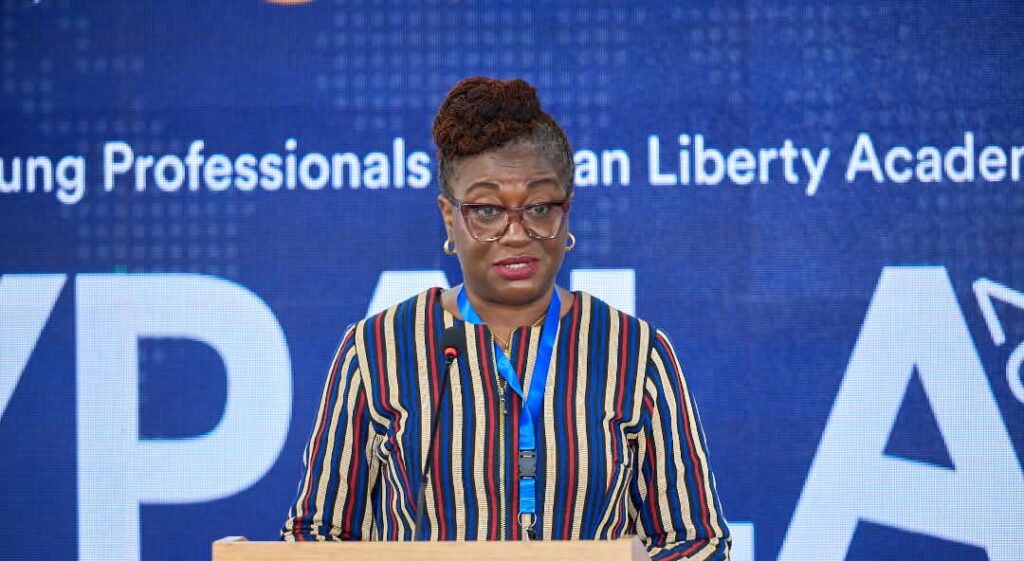
Bridget Dzogbenuku, Founder and Executive Director of Mentoring Women Ghana, has argued that Africa’s improving macroeconomic indicators mean little if ordinary people do not feel the benefit in their daily lives.
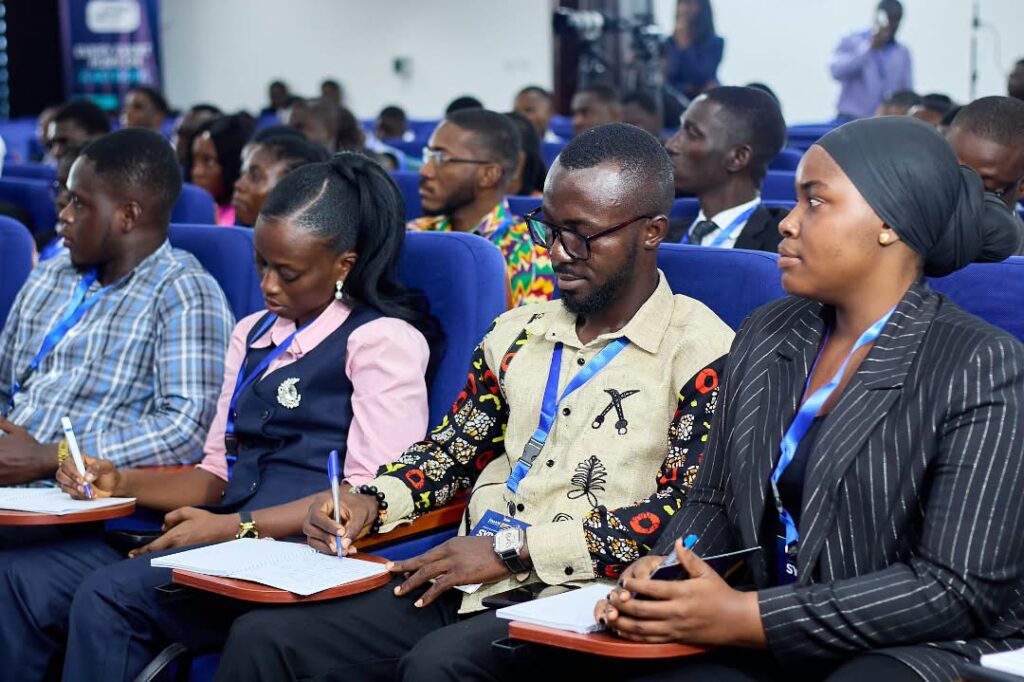
She told telling participants at the Students and Young Professionals African Liberty Academy that resilient economies must be measured by jobs, poverty reduction and stronger communities rather than growth rates alone.
Speaking at SYPALA 2026 in Accra, Dzogbenuku acknowledged genuine progress across African economies while insisting that the numbers driving official optimism, GDP growth, inflation management, digital innovation and resource wealth, do not by themselves constitute development for the people meant to benefit from it.
Real Progress, Measured Against Real Gaps
Ms Dzogbenuku opened with a broadly positive account of the continent’s economic trajectory.
She pointed to fast-growing markets, high GDP growth rates, improving inflation management and stronger revenue collection, alongside regional integration through the African Continental Free Trade Area and homegrown technology, including mobile money platforms, competing and sometimes collaborating with traditional banks.
She noted the continent’s substantial reserves of minerals, oil, gas and renewable energy potential, including abundant sunshine for solar power.
But she set that progress against a persistent gap in education and employment outcomes. Youth unemployment in Ghana stands at 36 percent, she said, even as secondary and tertiary institutions produce graduates who hold qualifications without the knowledge employers actually need.
“We are still grappling with quality education,” she said, describing a system that certifies without necessarily educating.
“How Does GDP Matter to Someone Producing Jewellery?”
Ms Dzogbenuku illustrated her central argument with an anecdote from her own presidential campaign, when limited party funding pushed her to visit small communities directly rather than rely on large-scale media campaigns. She recalled listening to a radio broadcast of a rival campaign event discussing GDP figures in a village she herself had visited.
“How does GDP matter to someone who is producing jewellery?” she asked, using the moment to argue that headline economic indicators can dominate political discourse while remaining disconnected from the daily concerns of the people living through them.
She said GDP, inflation figures and credit ratios tell useful stories when they move in a positive direction, but that superficial governance built on strong numbers does not feed people. “Inclusive and resilient economies must reach them where they live,” she said.
Measuring Development by What People Feel
Ms Dzogbenuku argued that the true test of economic resilience lies in social capital, the reduction of poverty, and the ability of communities to feed themselves, add value to what they produce and find markets for it.
She said health and education services delivered directly to people carry more weight than macroeconomic indicators held steady while daily life remains unchanged.
She framed this grassroots test as inseparable from the questions of leadership and inclusion she raised elsewhere in her address, arguing that Africa’s assets will ultimately be secured not by numbers alone but by people: young people prepared to lead, women included at every level, communities strengthened from the ground up, and institutions guided by values, courage and accountability.
A Closing Charge to Emerging Leaders
Ms Dzogbenuku closed by telling the young professionals and students in the room that they must not simply inherit the systems handed to them.
“You must improve them, open them up and make them serve the people better,” she said, framing the three-day academy’s discussions on inclusive governance, corruption, democracy, rule of law and digital transformation as tools toward that end rather than ends in themselves.
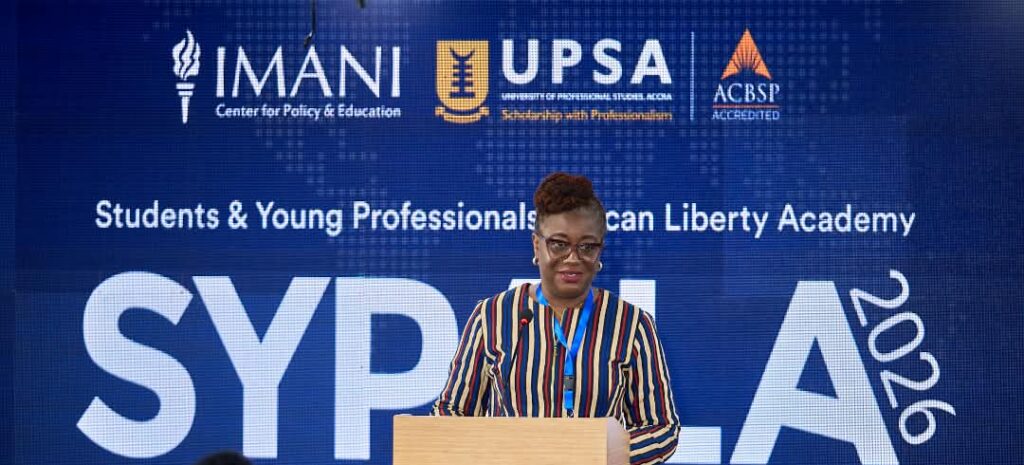
She urged participants to carry one connecting question through every session ahead: whose voices are missing from the room, and whose realities are missing from the solutions being proposed.
“Resilient economies and inclusive governance must be felt in the daily lives of ordinary people,” she said, closing her address with a call to lead with purpose, integrity and follow-through.
READ ALSO: “Carry Your Own Folding Chair,” Bridget Dzogbenuku Tells Women at SYPALA 2026