The Business Outsourcing Services Association of Ghana (BOSAG) has formally introduced SERVE24, a dedicated services export proposal designed to position Business Process Outsourcing (BPO) and digital services as a strategic engine of Ghana’s 24-Hour Economy and Accelerated Export Development Programme (24H+)
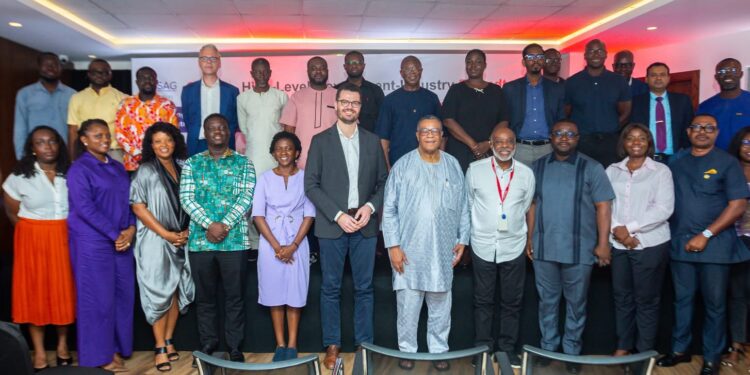
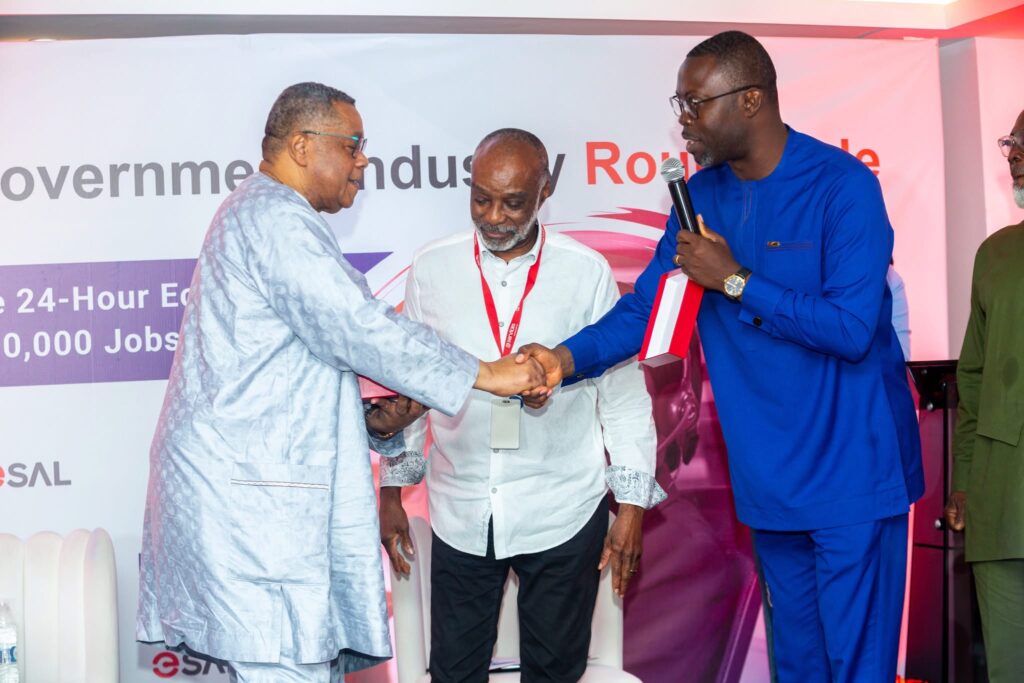
The proposal was unveiled at a high level government industry roundtable hosted at EServices Africa Limited (eSAL) in Accra, which brought together leaders from government, industry and development partners to align the outsourcing sector’s growth ambitions with national economic transformation priorities.
Presenting the strategic outlook, David Gowu, Chief Executive Officer of BOSAG, said SERVE24 is the Association’s blueprint for elevating outsourcing and IT-enabled services to the same strategic status as traditional export commodities.
According to Gowu, the proposal comes at a time when BOSAG is aggressively pursuing its five-year strategy targeting 100,000 outsourcing jobs by 2030. He noted that the country’s demographic dividend presents a readymade advantage, with more than 138,000 graduates entering the labour market each year.
“Ghana’s rapidly expanding talent pool is one of our biggest assets. What we need is a structured pathway to convert this talent into productive, export oriented work. Outsourcing remains one of the most practical and scalable pathways to do that.”
Mr. Gowu
He emphasised that Ghana possesses strong competitive fundamentals to become a leading global services destination.
These include political stability, strong English language proficiency, robust fibre optic connectivity, and a maturing ecosystem of both global and indigenous operators. The global outsourcing market is currently valued at over USD 1.5 trillion, yet Africa accounts for only 2.8 percent of that value.
Gowu argued that Ghana is well positioned to capture a significantly larger share, especially as global enterprises seek resilient, English-speaking, nearshore delivery locations. That potential, he said, is already being demonstrated on the ground.
BOSAG Creates 20,000 Jobs as Ghana’s Outsourcing Proves Viable
The presence of global industry leaders such as Teleperformance Group and Concentrix, operating alongside strong local champions like eServices Africa Limited (eSAL), proves the sector’s viability. Collectively, BOSAG members have already created employment opportunities for more than 20,000 young Ghanaians, many of whom have been trained to international service standards and are earning from export revenues.
SERVE24, he explained, seeks to build on this foundation by creating a dedicated services export focus within the 24-Hour Economy framework. Under the current structure of the Government’s flagship programme, eight sub-programmes which are Grow24, Make24, Build24, Fund24, Show24, Connect24, Aspire24 and Go24.
The essence of this is to address agriculture, manufacturing, infrastructure, financing, creative economy, logistics, human capital and governance. SERVE24 is being proposed as a complementary pillar that specifically unlocks the export potential of services.
The proposal has four key objectives: to unlock new domestic and foreign direct investment into BPO and GBS operations; to accelerate large scale job creation for educated youth; to expand delivery capacity beyond Accra into secondary cities; and to strengthen Ghana’s brand as a competitive global services hub.
Gowu noted that expanding into secondary cities is critical for inclusive growth and resilience. By decentralising delivery centres to regions such as Kumasi, Takoradi, Tamale and Cape Coast, the sector can tap into new talent pools, reduce operational costs, and drive regional economic development in line with the 24-Hour Economy’s focus on location-based incentives.
The roundtable also underscored the policy synergy between BOSAG and Government. Presidential Advisor on the 24-Hour Economy, Mr. Augustus Goosie Tanoh, who participated in the engagement, described outsourcing as a key driver of employment creation and foreign exchange earnings.
He noted that the sector directly addresses youth unemployment by hiring educated youth, training them to global standards, and paying them from export earnings.
“The 24-Hour Economy Secretariat will work with BOSAG through the Aspire24 programme to align curricula with the roles your members hire for, build training-to-employment pathways with commitments on both sides, and develop multilingual capability because the markets of AfCFTA and ECOWAS speak French and Portuguese as well as English.”
Mr. Tanoh
Mr. Tanoh said at the roundtable. He added that businesses seeking incentives under the 24-Hour Economy will undergo performance assessments tied to jobs, investment and productivity, with a public register to ensure transparency. Each incentive package, he noted, will include a sunset clause of four to five years.
For BOSAG, SERVE24 aligns perfectly with that performance based approach. The outsourcing model is inherently measurable for jobs created, foreign exchange earned, and skills transferred making it an ideal candidate for results linked support.
BOSAG believes that by elevating outsourcing as a strategic export sector, SERVE24 aims to help Ghana diversify its export base, which remains heavily reliant on gold and primary commodities, and build a resilient, knowledge-based economy that works around the clock.
“SERVE24 reflects our commitment to building a globally competitive outsourcing ecosystem capable of delivering large-scale employment and driving Ghana’s economic transformation. We are not just proposing jobs; we are proposing an export engine for the 24-Hour Economy.”
Mr.Gowu
Gowu concluded that BOSAG is now engaging the 24-Hour Economy Secretariat and other key ministries to formalise SERVE24 as part of the Accelerated Export Development Programme implementation roadmap.