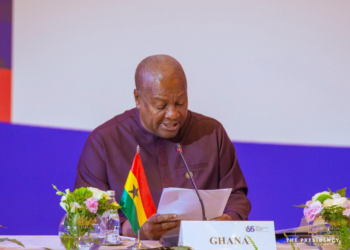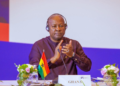
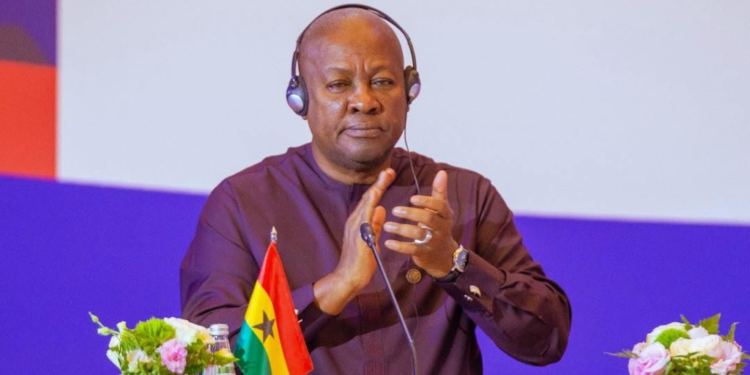
President John Dramani Mahama has accused the international community of selectivity and indifference in responding to some of the world’s most severe humanitarian crises, demanding universal enforcement of international law in Sudan and Gaza and calling for an end to the decades-long embargo against Cuba.
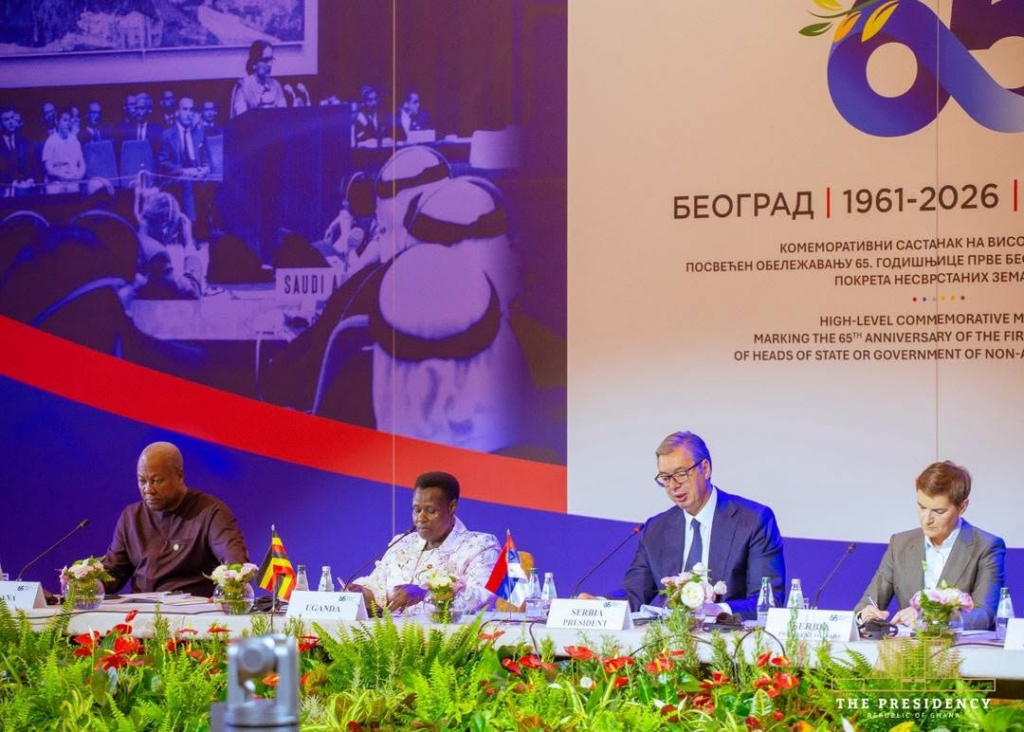
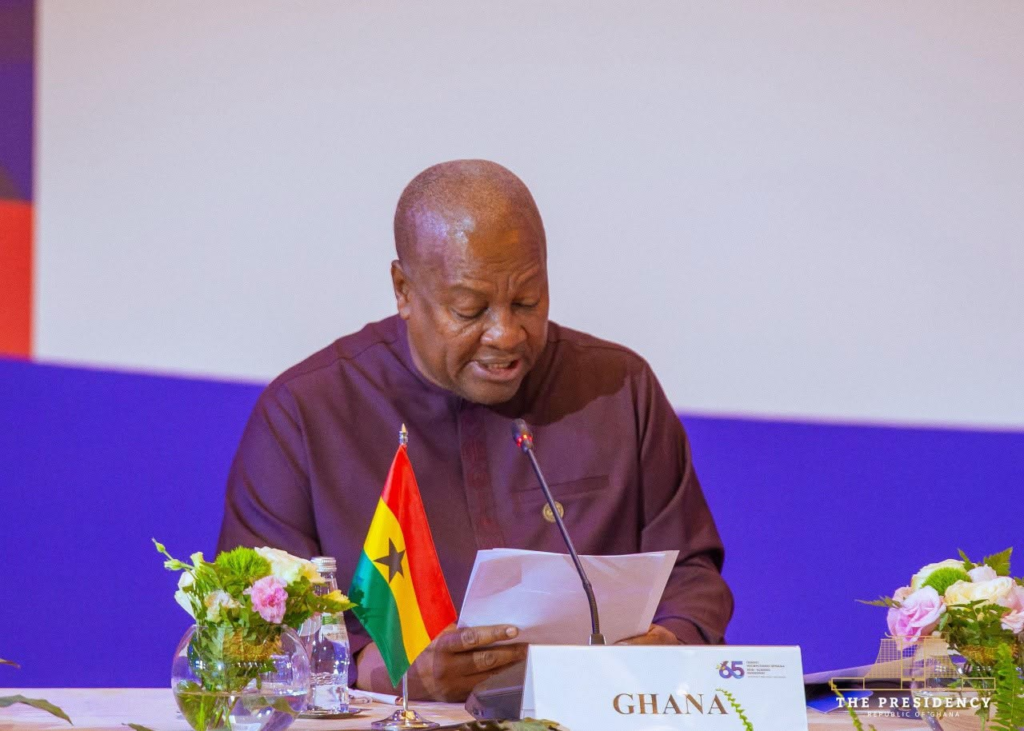
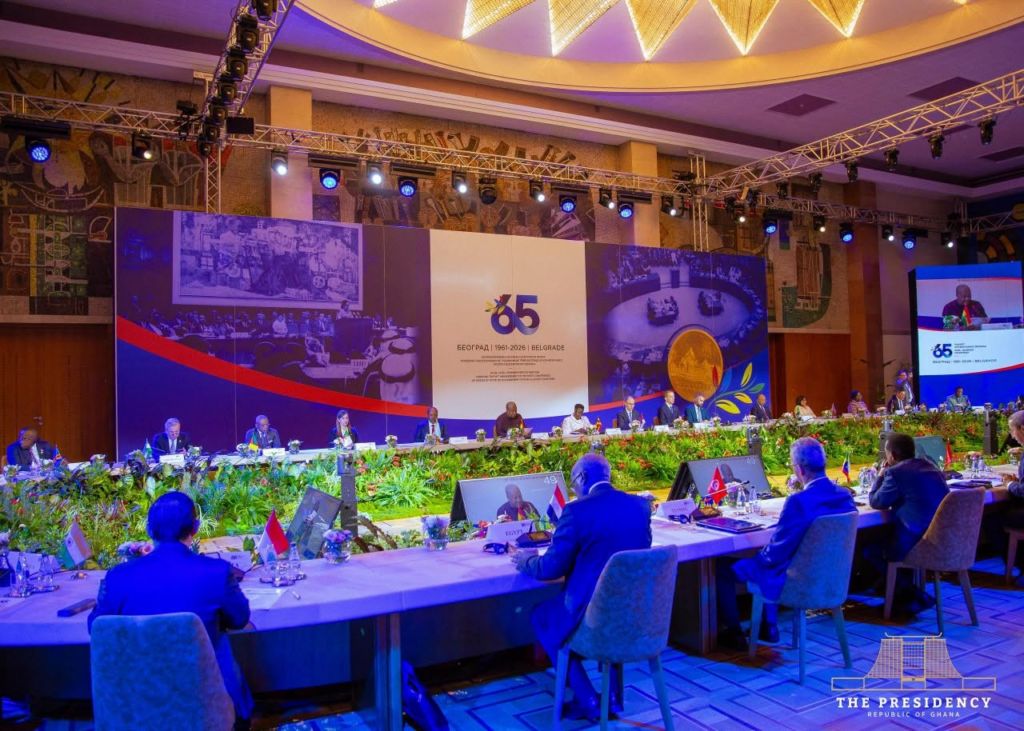
Mahama made the remarks at the 65th Anniversary High-Level Meeting of the Non-Aligned Movement in Belgrade, Serbia, using Ghana’s address at the commemorative summit to press the movement’s member states toward a more consistent application of international law across conflicts that he argued have not received equal global attention or urgency.
“Selectivity and Indifference”
President Mahama’s central charge was that the international system applies its own rules unevenly, protecting some populations while abandoning others depending on political convenience rather than principle.
He described the pattern as one of selectivity and indifference, language that framed his subsequent demands not as isolated grievances but as symptoms of a single underlying failure in how the world responds to crisis.
He named Sudan and Gaza specifically as cases where he said international law must be enforced universally rather than selectively, positioning both conflicts as tests of whether the rules-based international order the Non-Aligned Movement has long championed actually applies equally to all nations and peoples.
A Renewed Call to End the Cuba Embargo
President Mahama extended his critique beyond active conflict zones to include Cuba, calling for an end to the embargo that has constrained the island nation’s economy for more than six decades.
His inclusion of Cuba alongside Sudan and Gaza tied the issue directly to the Non-Aligned Movement’s founding commitments to sovereignty and self-determination, framing the embargo as another example of a major power imposing sustained hardship on a smaller nation without proportionate international pushback.
Climate Inequality as a Parallel Injustice
President Mahama linked his demands on Sudan, Gaza and Cuba to a broader call for aggressive action on what he termed global climate inequality, arguing that the same pattern of selective concern shapes how the international community responds to the climate crisis.
Developing nations that have contributed the least to global emissions continue to bear the highest costs of a warming planet, a disparity he treated as part of the same structural unfairness underlying the conflicts and embargo he had just addressed.
A Wider Case for Global Equity
President Mahama’s remarks on Sudan, Gaza and Cuba formed part of a broader address in which he outlined the Accra Reset, his strategic blueprint for reshaping international development cooperation around resource sovereignty, local industrial capacity and fairer trade terms.
He argued that Global South nations cannot continue serving merely as exporters of raw materials and importers of finished goods while bearing the environmental and social costs of extraction, a framing that echoed his criticism of double standards in how the international community treats humanitarian crises.
He also criticised the current global financial architecture, pointing to high borrowing costs, unsustainable debt burdens and limited access to predictable development capital as forces that continue to paralyse fiscal planning across developing nations.
He called on Non-Aligned Movement members to use South-South cooperation to build alternative financial and technological networks, ensuring member states participate in global supply chains as industrial equals rather than vulnerable suppliers.
“This is not a call for isolation, but for stronger, more equitable, and mutually beneficial partnerships with the international community. Our resources must finance our transformation, our industries must create dignified jobs, and our nations must participate in global value chains as equal partners.”
Taken together, President Mahama’s positions on Sudan, Gaza, Cuba, climate finance and the global financial system reflected a single argument threaded through his entire address in Belgrade: that fairness in the international system cannot be selective.
Whether the subject was armed conflict, a decades-old embargo, rising temperatures or the cost of borrowing, President Mahama framed each as evidence of the same imbalance, one that the Non-Aligned Movement, in his view, retains both the standing and the responsibility to challenge.
READ ALSO: Stonebwoy Officially Launches The Torcher Merchandise Collection Online