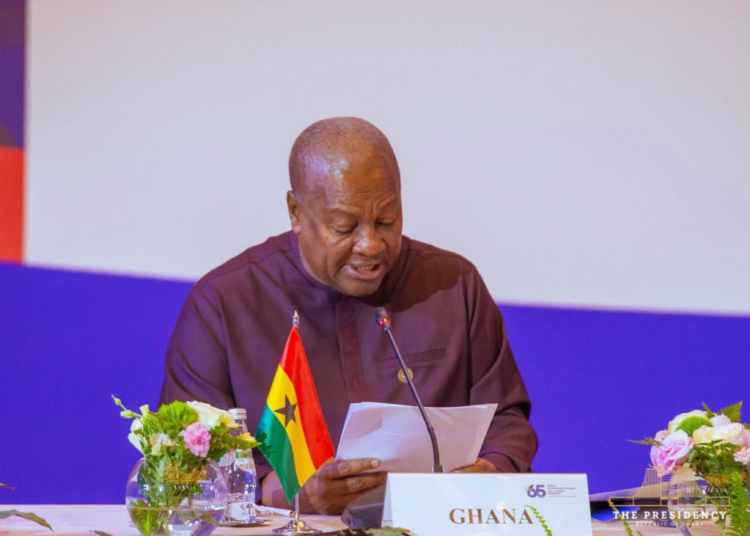
President John Dramani Mahama has called on the Non-Aligned Movement to preserve its strategic autonomy against the pressures of global power blocs, telling delegates in Belgrade, Serbia, that the movement must never be reduced to silence in the face of injustice, even as it resists alignment with competing geopolitical interests.
Speaking at the 65th Anniversary High-Level Meeting of the Non-Aligned Movement on Tuesday, September 1, 2026, President Mahama argued that the movement’s founding principles remain fully relevant in an increasingly fragmented, multipolar world, and that Ghana continues to reject any reading of non-alignment as neutrality toward conflict or the erosion of international law.
“In an increasingly fragmented and multipolar world, the non-aligned movement must preserve its strategic autonomy and resist the pressures of the politics of power blocks. We must neither be silent spectators of global development nor instruments of competing geopolitical interests.
“Rather, we must be an independent collective voice for peace, dialogue, disarmament, development and justice, capable of influencing the international system and advancing a more representative and equitable global order.”
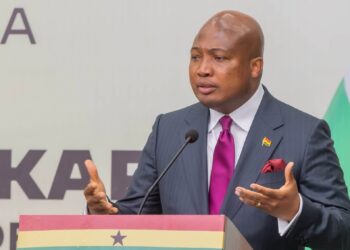
President Mahama delivers Ghana’s address at the 65th Anniversary High-Level Meeting of the Non-Aligned Movement in Belgrade.
He was direct in rejecting a passive interpretation of the movement’s founding stance. “Non-alignment has never been understood as neutrality in the face of injustice, conflict or the erosion of international law,” he said, positioning Ghana’s reading of the movement’s purpose as active engagement rather than detached observation.
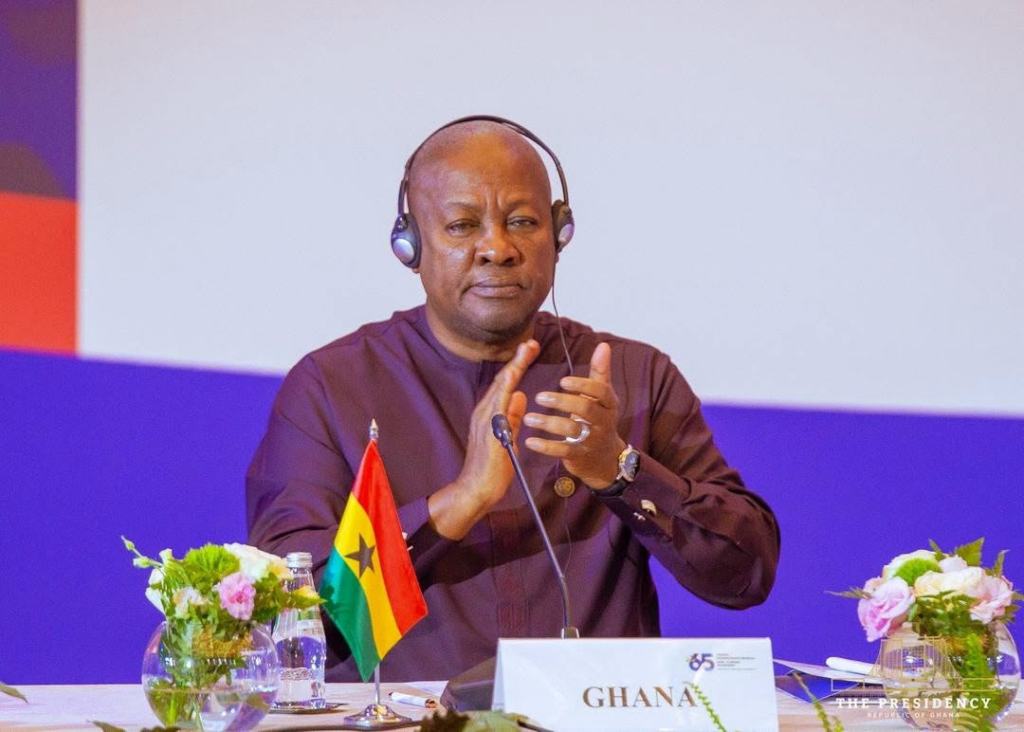
A Movement That Has Outgrown the Cold War
President Mahama traced the Non-Aligned Movement’s evolution from its Cold War origins to its present-day relevance, arguing that although it emerged as a political response to bipolar rivalry, its role has since expanded to address contemporary economic, political and developmental challenges.
He said the movement continues to advance the interests of the Global South and push for a fairer, more equitable international economic order. He pointed to the movement’s broad membership as a structural advantage, giving developing countries a collective voice within the multilateral system that individual states could not achieve alone.
He said NAM could further strengthen South-South cooperation and build common positions on development finance, trade, climate change, debt, technology and reform of the global financial architecture.
From Declarations to Action
President Mahama’s address, delivered at a meeting marking 65 years since the movement’s first conference of Heads of State or Government in the same city, repeatedly stressed the need to convert principle into practice. “We must move from declarations to actions,” he said, a line he anchored in the movement’s own founding history.
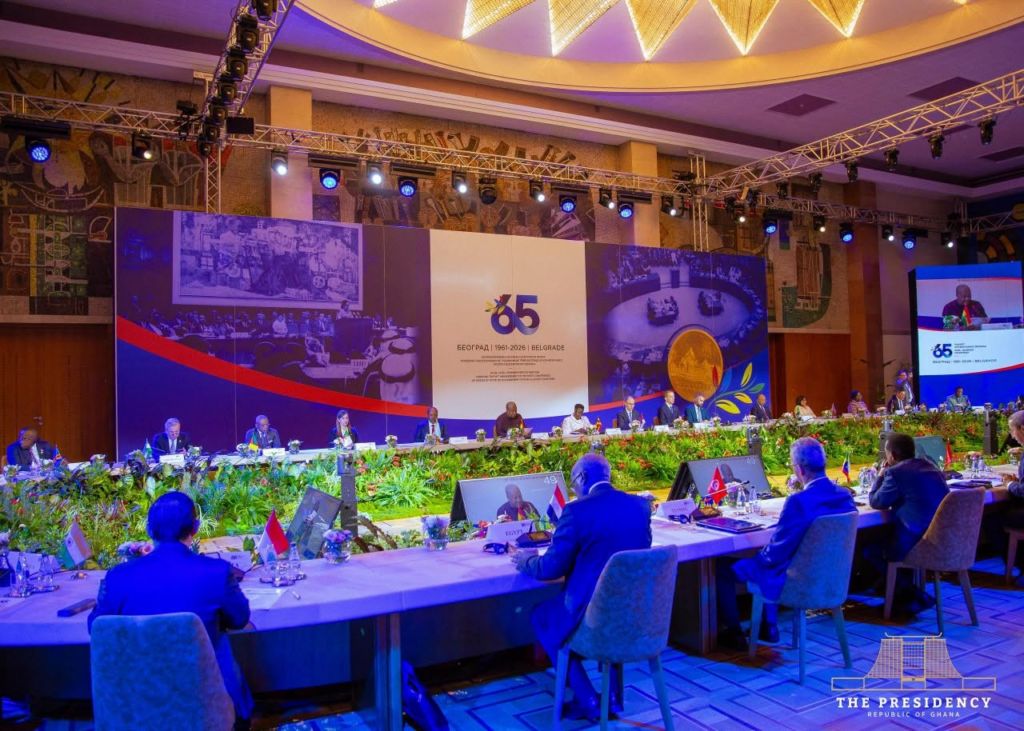
He recalled the position taken by former Yugoslav President Josip Broz Tito at that inaugural 1961 conference, who argued that non-aligned countries could no longer accept the status of observers and voters alone, and had the right to participate directly in resolving problems that endangered global peace.
“Here we are 65 years later,” President Mahama said, arguing that Tito’s assertion remains as relevant today as it was at the movement’s founding. He said NAM’s relevance should not be measured by the size of its membership but by its ability to use collective influence to produce coordinated diplomacy and tangible outcomes.
Unveiling the Accra Reset
President Mahama used the Belgrade platform to formally introduce the Accra Reset, a strategic blueprint aimed at advancing a fairer global economic order through resource sovereignty, local industrialisation, fair trade and stronger South-South cooperation.
He called for greater international support for developing countries, particularly through expanded climate finance, adaptation funding and investment in renewable energy, stressing that countries disproportionately affected by climate change have historically contributed the least to causing it.
He also argued that countries in the Global South must move beyond simply consuming technology developed elsewhere and become active participants in shaping the future of artificial intelligence, positioning technological sovereignty alongside resource and economic sovereignty as a defining challenge for the movement’s next chapter.
Building on Legacy While Adapting to Change
President Mahama closed his address by calling for stronger coordination among NAM member states to translate shared principles into practical action.
He said the movement must confront a new generation of challenges, including climate change, artificial intelligence, digital inequality and widening development gaps, while remaining a united voice for peace, sovereignty, sustainable development and a more just and equitable world.
He urged member states to draw on what he called the spirit of Belgrade, the same resolve that produced the movement’s founding declaration 65 years earlier. “With principle, purpose, and confidence, let us renew the spirit of Belgrade and translate our collective strength into practical action for the benefits of our people,” he said.
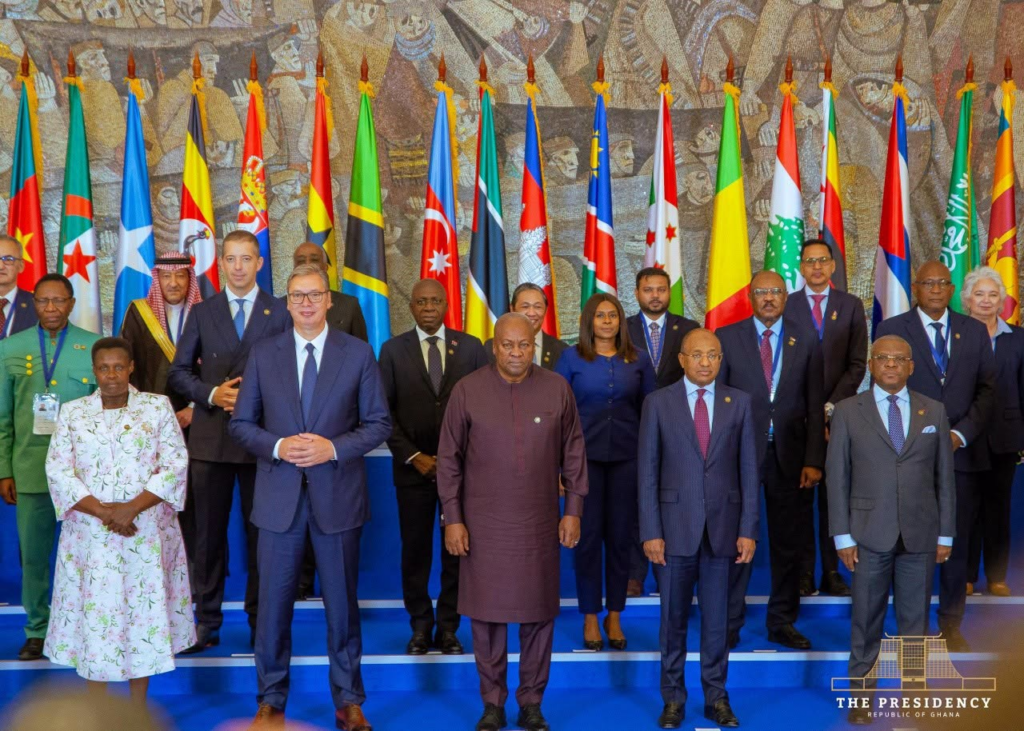
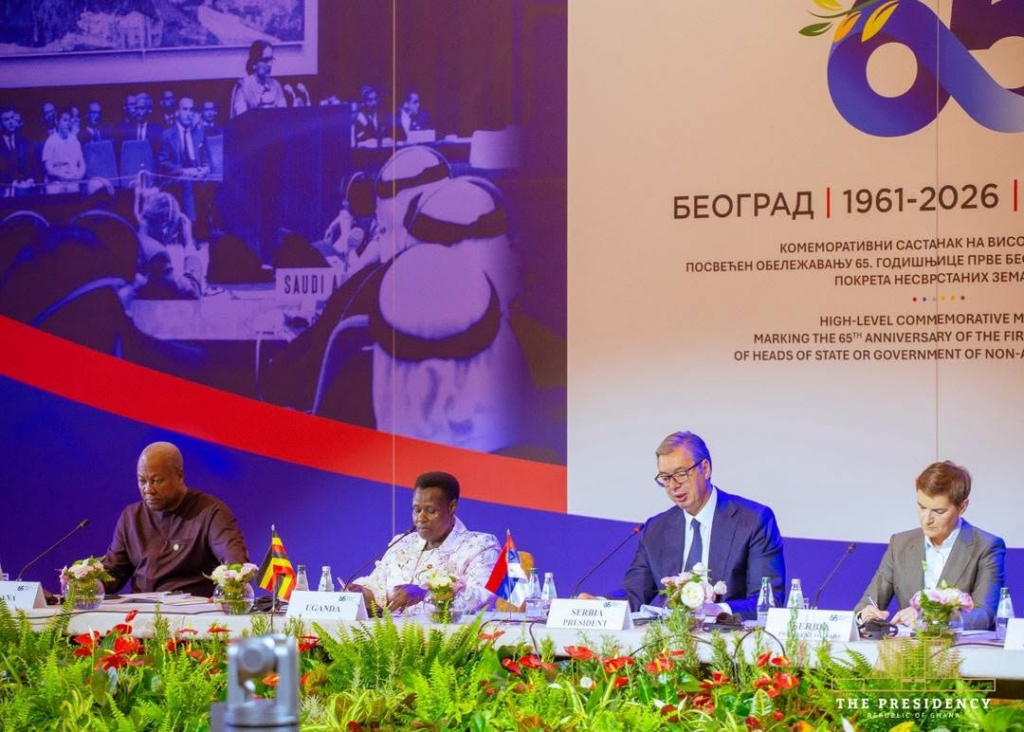
His remarks came alongside a bilateral meeting with Serbian President Aleksandar Vučić on the sidelines of the summit, part of a broader schedule of engagements during Ghana’s visit to Belgrade for the anniversary commemoration.
READ ALSO: GoldBod’s US$1.315bn FX Split Channels Dollars to Market, Reserves