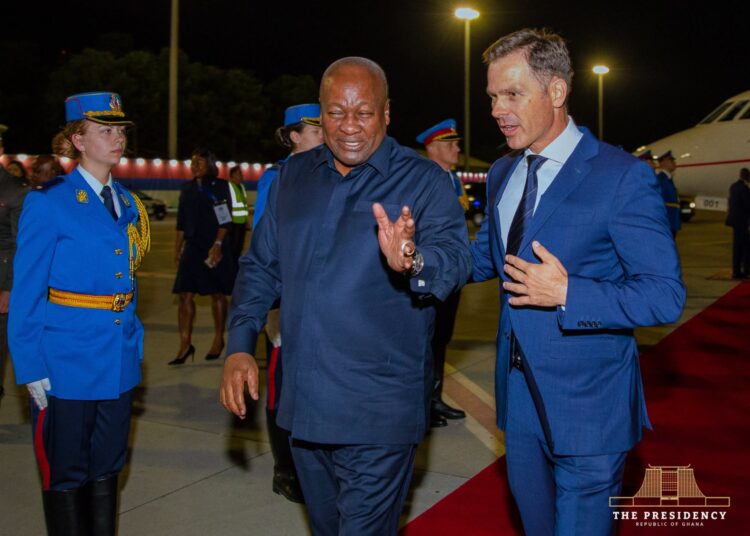
President John Dramani Mahama has arrived in Belgrade, Serbia, to attend a high-level meeting marking the 65th anniversary of the Non-Aligned Movement, a gathering that places Ghana back at the centre of a diplomatic project its first president helped found more than six decades ago.
President Mahama’s participation in the two-day commemoration, running from August 31 to September 1, 2026, comes as a Special Guest of Honour invited by Serbian President Aleksandar Vučić, who is hosting the meeting in the same city where the movement was formally launched in 1961.
The summit runs under the theme “The Legacy of Non-Alignment: Lessons for Today’s World,” and is expected to reaffirm the movement’s founding principles: sovereign equality among nations, respect for territorial integrity, non-interference in the internal affairs of states, peaceful coexistence and stronger economic cooperation among developing countries.
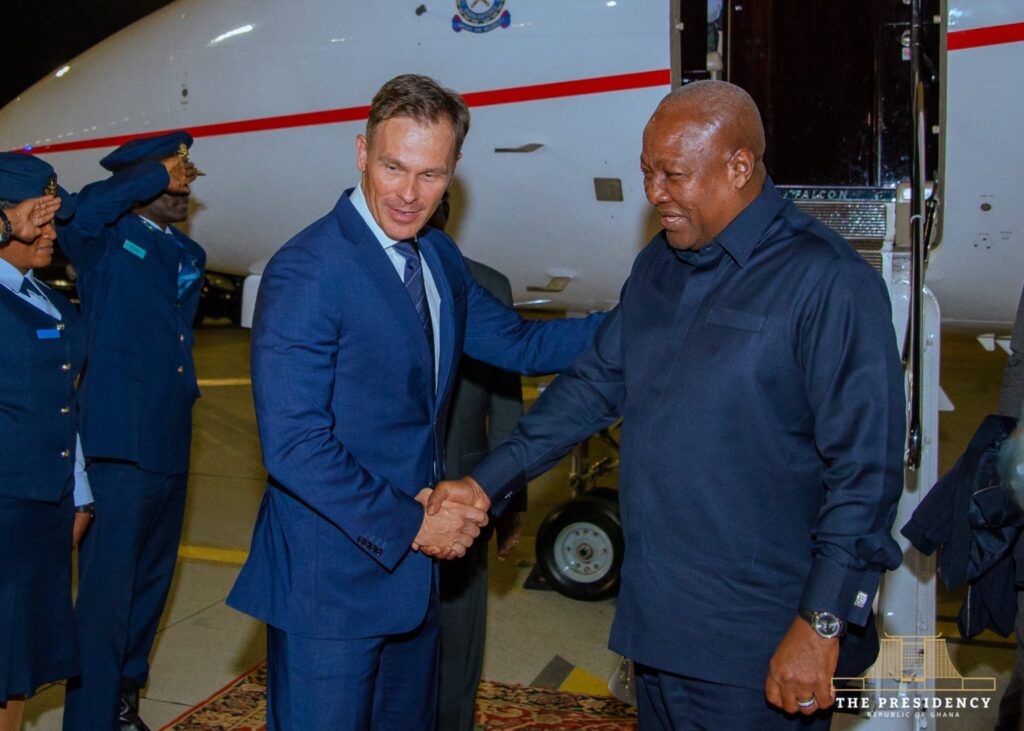
More than 30 countries from Africa, Asia, Europe and Latin America are represented at the gathering, according to organisers. With 120 member states, the Non-Aligned Movement remains the largest international grouping outside the United Nations, a scale that has persisted even as the Cold War rivalry that produced it has long since ended.
The movement was created to give developing nations an independent diplomatic path, allowing them to engage internationally without aligning with either the Western capitalist bloc or the Soviet socialist bloc.
Ghana’s Founding Role
Ghana’s connection to the movement runs directly through its first president. Dr Kwame Nkrumah was among the five leaders who spearheaded the Non-Aligned Movement’s founding vision, alongside Yugoslavia’s President Josip Broz Tito, India’s Prime Minister Jawaharlal Nehru, Egypt’s President Gamal Abdel Nasser and Indonesia’s President Sukarno.
Their work culminated in the first Non-Aligned Summit, held in Belgrade in September 1961, making Ghana one of the movement’s founding members from its very first gathering.
President Mahama’s attendance at the 65th anniversary meeting gives that history renewed visibility, positioning Ghana’s return to Belgrade as both commemorative and current, an opportunity to reassert relevance for a set of principles- sovereignty, non-interference and economic cooperation among developing states- that remain live questions in today’s geopolitical environment.
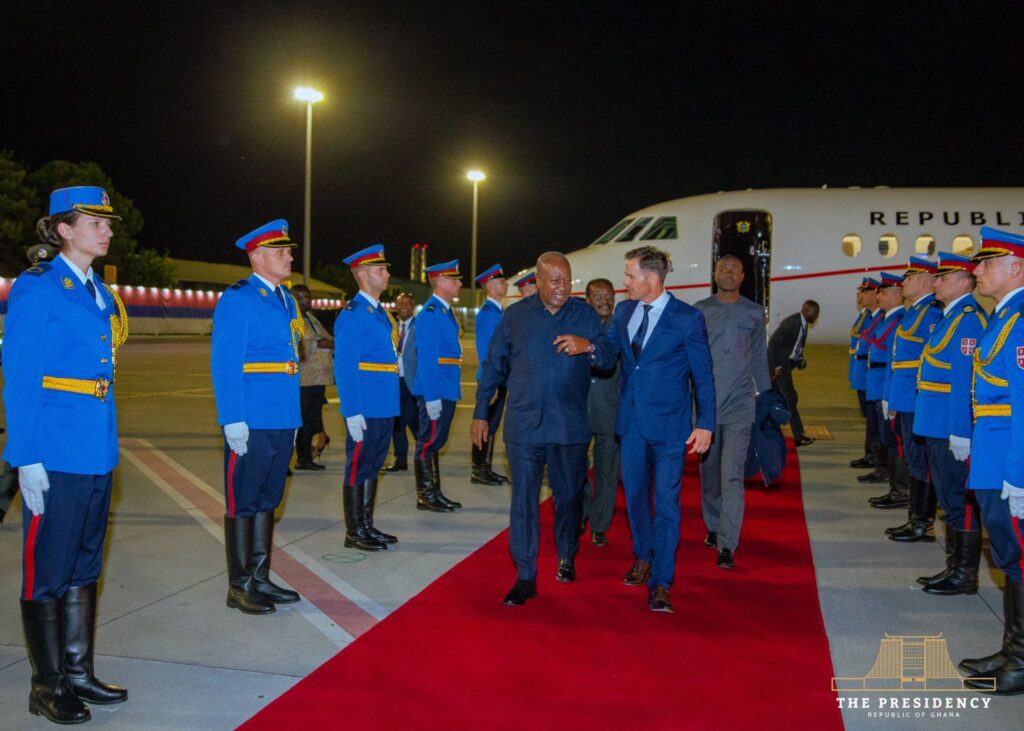
President Mahama’s arrival in Belgrade follows closely on the heels of another continental engagement. He travelled to Serbia directly after returning from Luanda, Angola, where he participated in the 21st Extraordinary Session of the Assembly of African Union Heads of State and Government, placing the Belgrade trip within a dense stretch of international travel rather than a standalone diplomatic outing.
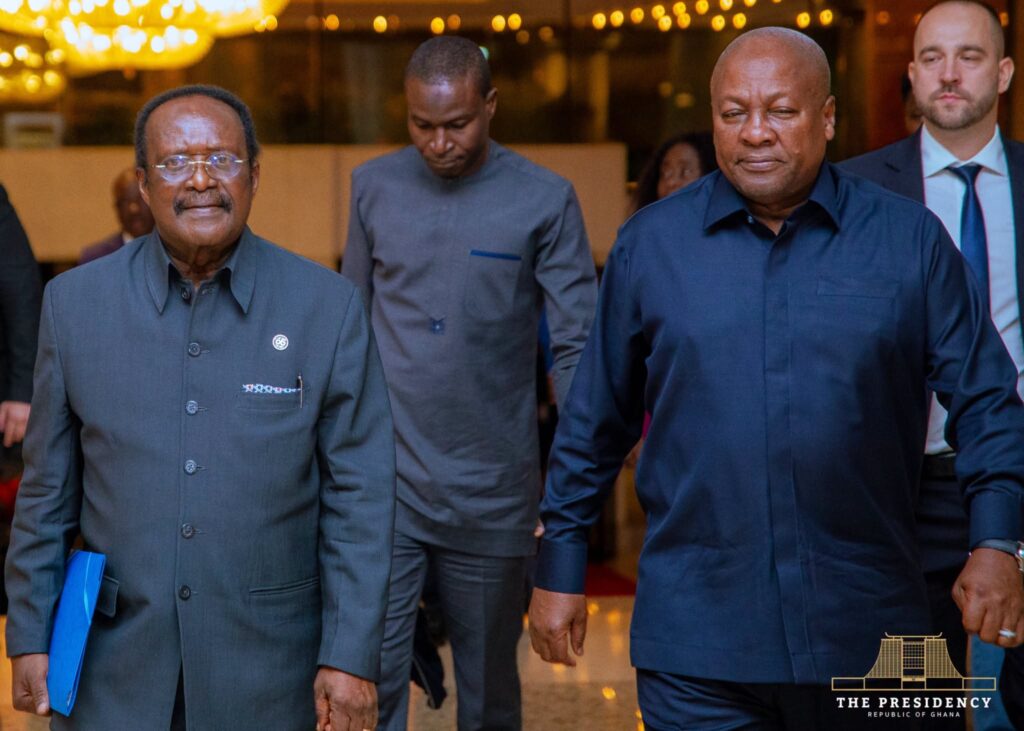
He was accompanied to the summit by the Minister for Foreign Affairs, the Deputy Chief of Staff in charge of Operations, and Special Envoy to the AES Countries, Colonel Larry Gbevlo-Lartey (Rtd.), a delegation that pairs Ghana’s top foreign policy official with a figure specifically tasked with managing relations among the Alliance of Sahel States, a grouping whose own posture toward international alignment has become an active regional question.
What the Meeting Signals
The Belgrade gathering offers no binding outcomes in the way a formal NAM summit might, but its symbolism carries weight for member states seeking to reassert an independent foreign policy identity amid renewed great-power competition.
For Ghana specifically, President Mahama’s presence connects the country’s current diplomatic posture, including its ongoing engagement with Russia, China and Western partners alike, to a founding tradition of non-alignment that Nkrumah helped establish at the same location 65 years ago.
READ ALSO: Ghana’s US$8.8bn Trade Surplus Meets a Reserve Paradox as Energy Payments Drain External Buffers