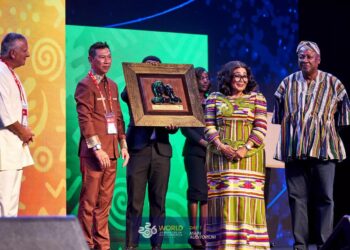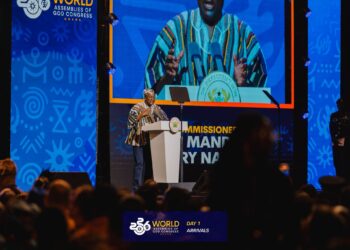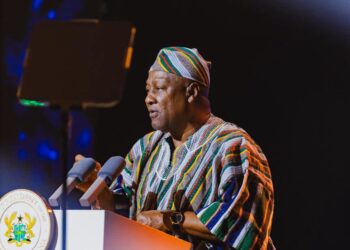

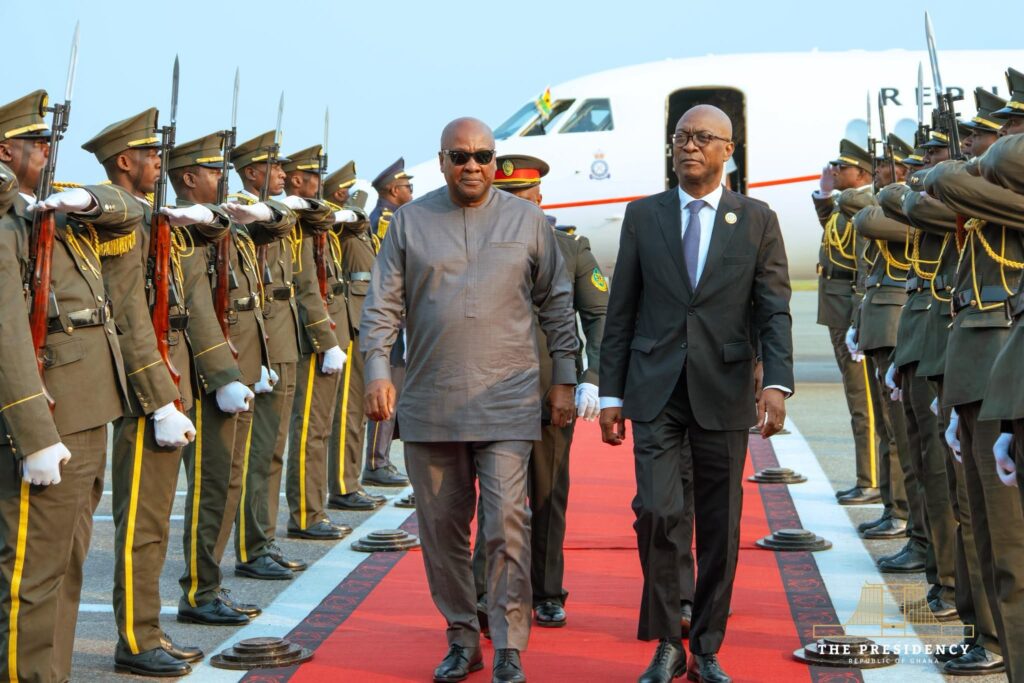
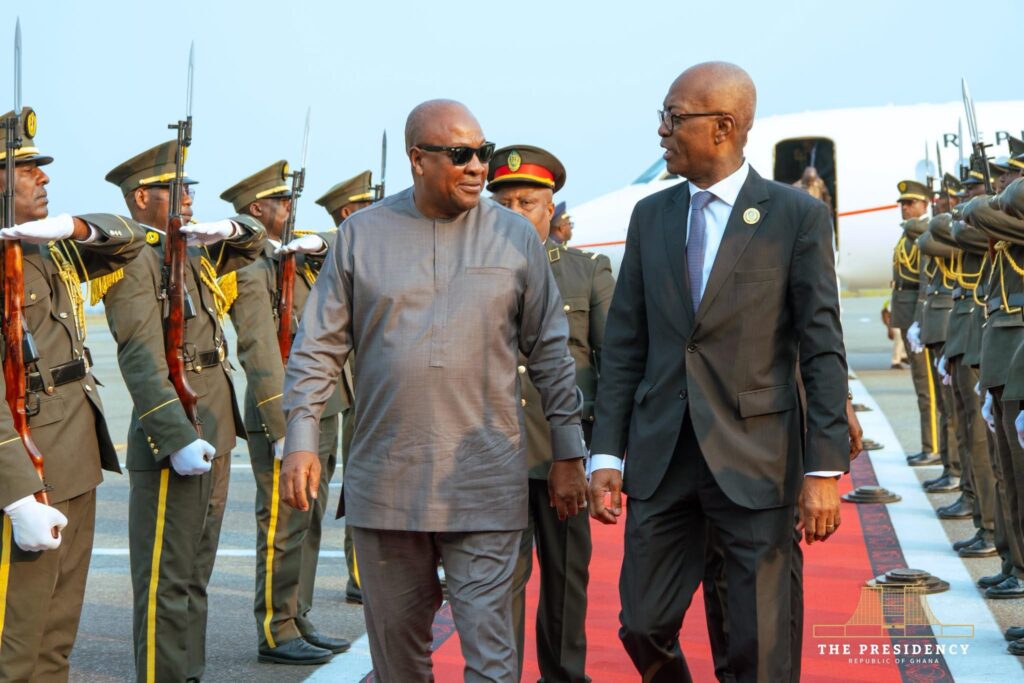
President John Dramani Mahama has arrived in Luanda for the 21st Extraordinary Session of the African Union Assembly of Heads of State and Government, convened to strengthen the continent’s machinery for preventing and resolving conflict.
The session sits on Sunday, 30 August, at the Luanda Convention Palace, hosted by Angolan President João Manuel Gonçalves Lourenço in his capacity as AU Champion for Peace and Reconciliation in Africa.
Leaders are being asked to adopt a package of three documents, a Decision, an Action Plan and an Implementation Matrix, drafted to close the gap between what the AU’s peace architecture promises on paper and what it delivers in the field.
The summit convenes as conflicts in Sudan, eastern Democratic Republic of Congo, the Sahel, the Horn of Africa and Mozambique continue to widen.
Executive Council Clears the Package
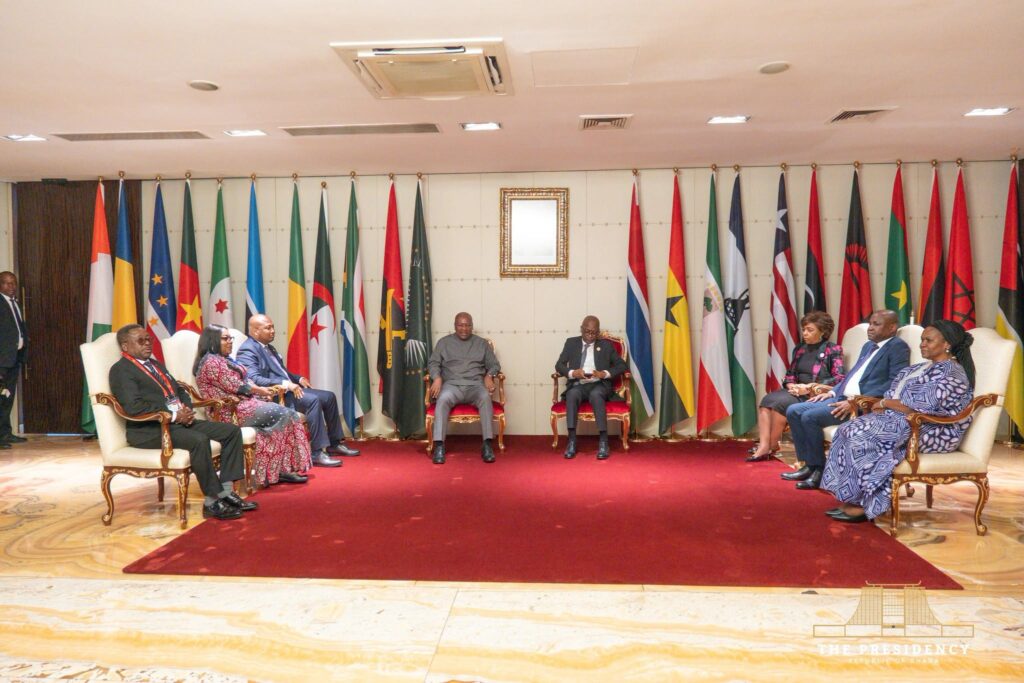
Foreign ministers did the preparatory work a day ahead of the leaders. The 26th Extraordinary Session of the Executive Council met in Luanda on Saturday under Burundi’s Foreign Minister Edouard Bizimana, who chairs the Council for the current term.
Bizimana confirmed that the draft decision, the action plan and the procedure for implementing the measures had been prepared and would go before the Assembly for approval. The Permanent Representatives Committee had reviewed the same documents by videoconference on 25 August.
The package targets four weaknesses. It seeks to sharpen the early warning and crisis response system, strengthen the role of the AU Peace and Security Council, deepen cooperation with regional organisations, and secure sustainable funding for peacekeeping.
Funding is the most persistent of those problems. African-led peace support operations have historically depended on external financing, leaving deployments vulnerable to decisions taken outside the continent. Any commitment the Assembly makes on predictable, African-sourced funding will be the clearest measure of whether Luanda produced something new.
The broader exercise is an assessment of the African Peace and Security Architecture and the African Governance Architecture, the two frameworks through which the Union is supposed to anticipate instability and respond to it. Leaders will consider how to improve coordination, responsiveness, implementation and financing across both.
The Coordination Problem
Overlapping mediation is among the difficulties the summit inherits.
Analysts tracking continental peace efforts have pointed to eastern DRC, where multiple initiatives involving regional bodies and outside actors have produced competing processes rather than a single track, and where regional economic communities have at times preferred to manage conflicts within their own structures rather than defer to the Union.
Researchers at the Institute for Security Studies have argued that the value of a session like this lies in whether it injects urgency into the Peace and Security Council’s work, producing stronger resolutions faster than the Council has managed to date.
The session stems from an initiative by Lourenço, who has held the peace and reconciliation portfolio since 2022. Angola is hosting as the initiator rather than as the sitting chair. It held the AU’s rotating chairmanship through 2025 and handed it to Burundi in February.
That distinction matters for what follows. A decision adopted at a summit convened by a champion rather than a chair depends heavily on the incoming chair’s appetite for carrying it forward, and the Implementation Matrix is the instrument meant to hold successive chairs to the timetable.
Ghana’s Stake in the Outcome
For Ghana, the Sahel file is the immediate concern. The country shares a northern frontier with Burkina Faso, where insurgent violence has pushed populations south, and Accra has invested in direct engagement with the Alliance of Sahel States after the three junta-led governments withdrew from ECOWAS.
President Mahama has positioned himself as a broker in that estrangement, arguing that isolating the three states serves neither ECOWAS nor the wider region. A continental framework that improves coordination between the AU and regional bodies would give that approach institutional backing it currently lacks.
The documents before the Assembly were still under review by the Permanent Representatives Committee days before leaders arrived, which is ordinary for AU summits and also a reminder of how much negotiation gets compressed into the final week.
Whether Luanda marks a shift will not be settled by the text adopted on Sunday. The Implementation Matrix commits the Union to a sequence of steps with responsible bodies attached, and the next scheduled checkpoint is the mid-year coordination meeting between the AU, the regional economic communities and regional mechanisms in October.
READ ALSO: Critical Mineral Ownership Alone Cannot Drive African Industrialization- Expert