The United States has carried out a new round of strikes against Islamic Revolutionary Guard Corps (IRGC) targets in Iran, according to U.S. Central Command (CENTCOM), escalating tensions between Washington and Tehran after the two countries exchanged fire for the first time in more than a month.
CENTCOM disclosed the attack in a post on X saying, “Today at 12 p.m. ET, U.S. forces began striking Islamic Revolutionary Guard Corps (IRGC) targets in Iran.” The command added that the strikes followed recent attempted attacks against commercial vessels in the strategically important waterway and U.S. personnel in the region.
The latest attacks come after a renewed exchange of military action between the United States and Iran that began over the weekend. Iran launched retaliatory strikes against U.S. military targets in Jordan and the United Arab Emirates after the United States attacked Iranian rocket launchers on Larak Island in the Strait of Hormuz.
Washington said that the Larak Island operation was intended to prevent Iran from launching rockets carrying naval mines into the waterway. Tehran, however, condemned the attack and vowed to respond.
The confrontation marks a significant escalation after a month of relative calm between the two countries. The renewed fighting has also raised fresh concerns over the security of the Strait of Hormuz, a critical international shipping route through which a substantial share of global energy supplies normally passes.
The Strait of Hormuz has emerged as one of the most sensitive points in the confrontation between Iran and the United States.The narrow waterway connects the Persian Gulf with the Gulf of Oman and serves as a major route for oil and gas exports from Gulf producers. Any sustained disruption can have consequences for energy prices, shipping costs and global supply chains.
Washington has accused Iran of preparing to use naval mines to threaten commercial vessels and restrict access to the strait. Iran has denied the U.S. characterisation of its actions and has maintained that it is responding to attacks against its territory and military personnel.
Trump also sought to reassure the public about the condition of the waterway, claiming Monday that the Strait of Hormuz was in “extremely good shape” and that many ships were continuing to transit. However, shipping-tracking data indicate that maritime traffic remains significantly below levels recorded before the war. The uncertainty has encouraged governments and shipping companies to closely monitor developments and assess the risks of operating in the region.
Trump Warns of Further Action
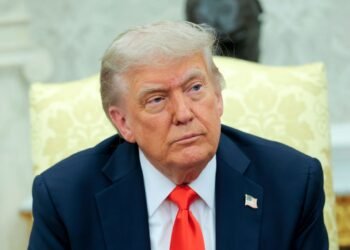
U.S. President Donald Trump acknowledged on Monday that additional military action against Iran could follow. Speaking at the Oval Office, Trump described the latest U.S. military operations as “very limited” but indicated that Washington remained prepared to strike if necessary.
Trump said, “It’s very limited,” pointing to what he described as extensive damage inflicted on Iran’s military capabilities during the six-month conflict. “Their navy is gone. Their air force is gone. Their surveillance equipment is almost entirely gone,” he said.
Trump nevertheless left open the possibility of further attacks, adding, “That doesn’t mean we won’t smack ’em. We’ll see what happens.” The President has repeatedly argued that the U.S. and Israeli military campaign has severely weakened Iran’s military and political structures.
He has also described Iran as a “failed nation,” citing economic difficulties, high inflation and damage to its armed forces. Trump’s latest comments suggest that while the administration may prefer to limit the scope of further military operations, Washington remains willing to use force in response to attacks against U.S. interests or attempts to disrupt international shipping.
The escalation comes as the Trump administration has increasingly emphasised economic pressure and diplomatic efforts alongside military action. The developments also come as Qatar, Oman and other regional governments continue diplomatic efforts aimed at preventing the confrontation from escalating further.
For now, the United States says its latest strikes are a response to specific threats posed by the IRGC. Iran, meanwhile, has vowed to defend itself against further attacks.The immediate concern is whether the latest exchange remains limited or develops into another sustained phase of military confrontation.
With the Strait of Hormuz at the centre of the dispute, further escalation could have consequences extending beyond the Middle East, particularly for global energy markets and international shipping.
READ ALSO: COCOBOD Pays GH¢2.68bn to Complete 2026 DDEP Obligations, Clears GH¢162m Cocoa Bills